Strategic Mastery: How China Emerged as the Sole Beneficiary of the Middle East Energy Crisis
A new report reveals how China's strategic oil reserves and dominance in renewable energy have made it the sole winner of the Strait of Hormuz crisis.
The Hormuz Crisis: A Global Energy Shock
The geopolitical landscape of the Middle East was thrust into chaos following joint military strikes by the United States and Israel on February 28, targeting key Iranian government and military installations. The escalation resulted in the death of Iran’s supreme leader, Ali Khamenei, and triggered a retaliatory closure of the Strait of Hormuz. As one of the world's most critical maritime chokepoints, the closure virtually halted the flow of oil and liquefied natural gas (LNG), sending global energy prices skyrocketing and leaving many Asian economies vulnerable.
The impact was disproportionate across the region. Prior to the blockade, approximately 80% of the oil and nearly 90% of the LNG transiting the strait were destined for Asian markets. While nations like India, Japan, and South Korea faced severe economic headwinds, a new report by the Asia Group thinktank concludes that China has not only weathered the storm but has emerged as the primary winner of the conflict.
The Shield of Strategic Reserves
China's ability to withstand the immediate shock of the energy crisis was no accident, but rather the result of long-term strategic planning. The report highlights Beijing's aggressive stockpiling strategy, which intensified in 2025 when China leveraged low global prices to bolster its reserves.
According to analysis by Erica Downs of the Centre on Global Energy Policy, China's crude imports rose from 11.1 million barrels a day to 11.6 million in 2025, with over 80% of that increase diverted into strategic stockpiles. By January, China possessed enough reserves to cover 104 days of imports, providing a critical buffer that its regional peers lacked.
A Green Revolution as an Economic Weapon
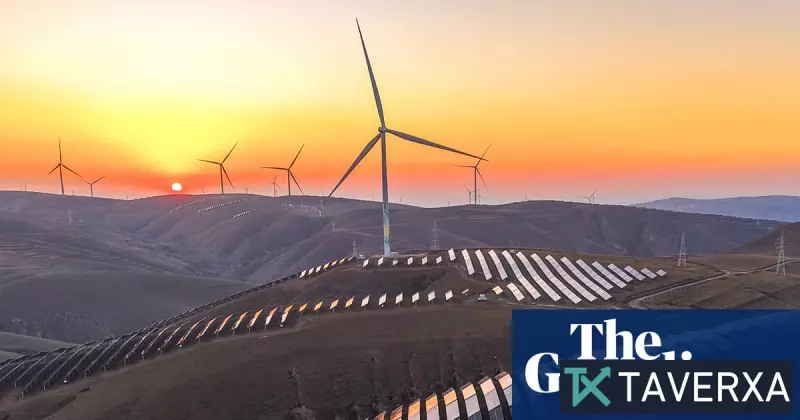
Beyond oil reserves, China's massive investment in renewable energy has transformed its energy security profile. Beijing has aggressively pivoted toward a non-fossil fuel future, installing 315GW of new solar capacity last year alone—accounting for more than half of the world's new solar installations.
With 1.4 terawatts of operating renewable capacity already online, China is well on its way to its 2030 goal of having half of its energy come from non-fossil sources. While coal still comprises over 50% of its energy mix, the rapid growth of wind and solar (aiming for a 30% share by 2030) has significantly reduced its reliance on the volatile Middle Eastern corridor.
Capitalizing on Global Desperation
The crisis has created a secondary economic windfall for Beijing. As other nations scramble to reduce their dependency on Middle Eastern oil to avoid future shocks, they have accelerated their own clean energy transitions. Because China dominates the global supply chain for solar panels and electric vehicles (EVs), this shift in global policy directly fuels Chinese exports.
The data reflects this surge: China's EV exports soared by over 110% in May compared to the previous year, and solar shipments jumped by 60% in April. By exporting these technologies at competitive prices, Beijing is cementing its industrial dominance over the green transition.
The Geopolitical Gambit
From a diplomatic perspective, the conflict serves as a powerful narrative tool for Beijing. By calling for a ceasefire and meeting with U.S. leadership, China positions itself as the rational, stabilizing force in contrast to the United States, which the Asia Group report suggests is now cast as the "destabilizing actor" whose entanglements impose costs on the global economy.
However, the victory is not without risks. Analysts like Drew Thompson note that China does not wish to supplant Washington as the region's security provider or hegemon. Furthermore, Wen-Ti Sung of the Atlantic Council suggests that the difficulty of navigating hostile waters in the Middle East may serve as a cautionary tale for Beijing regarding any potential military actions toward Taiwan.
Ultimately, the report concludes that China views the current global instability not as an existential threat, but as a series of manageable challenges and opportunistic gateways to global leadership.