End of Democracy? Daniel Ortega Declares an End to Elections in Nicaragua
President Daniel Ortega announces that Nicaragua will no longer hold elections, marking a definitive shift toward authoritarian rule and the suppression of political opposition.
A Defiant Stance Against Democratic Processes
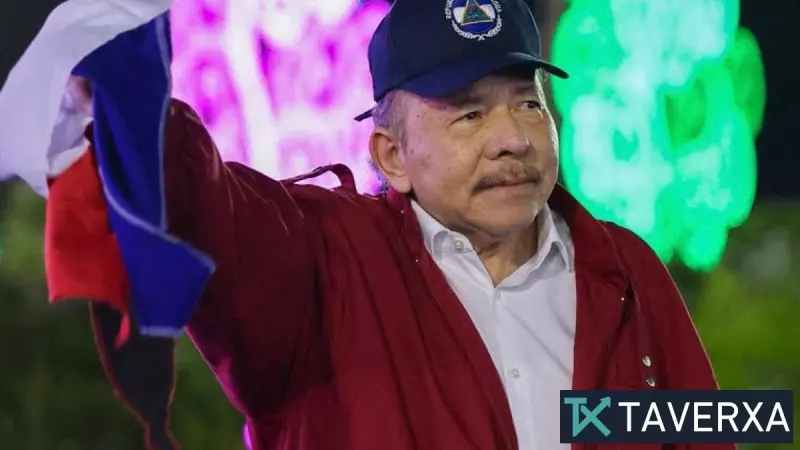
In a move that has sent shockwaves through the international community, Nicaraguan President Daniel Ortega has explicitly stated that the country will no longer hold elections. Speaking during a high-profile event on Sunday to commemorate the 47th anniversary of the 1979 Sandinista Revolution, the 80-year-old leader framed the cessation of electoral cycles not as a loss of democracy, but as a strategic necessity to protect the state from foreign influence.
Ortega, a Marxist who has held power since 2007, asserted that the move is designed to permanently block the political opposition. He claimed that opposition movements are merely puppets controlled by the United States, stating, “There won’t be any more elections here for them to try to seize the government and seize power.” He further added that the era of parties backed by the "Yankees" and the "Somocistas" is over, vowing that such influences would "never again" return to power in Nicaragua.
A History of Consolidation and Control
This latest declaration is the culmination of years of steady power consolidation. Ortega's grip on the nation has tightened significantly over the last decade. The 2021 general elections were widely condemned by international observers and democratic nations after the government launched a severe crackdown on dissent, arresting potential rivals and stripping opposition candidates of their ability to run.
To further solidify his familial dynasty, Ortega recently extended the presidential term to six years. Additionally, his wife, Rosario Murillo, was appointed as co-president, effectively creating a dual-leadership structure that ensures continuity and control within the executive branch.
Human Rights Concerns and Global Condemnation
The international community, led by the UN's Human Rights Council, has grown increasingly critical of the regime. Experts have described the administration of Ortega and Murillo as a repressive regime, citing a systemic pattern of arbitrary detentions, torture, and extrajudicial executions. The persecution of civil society and independent media has become a hallmark of their governance.
The turning point for many critics occurred in 2018, when a brutal government crackdown on anti-government protesters resulted in the deaths of more than 300 people. In the years since, the government has utilized legal weaponry to silence critics, stripping hundreds of citizens of their nationality and forcing thousands more to flee the country to avoid imprisonment.
From Revolutionary to Autocrat
Daniel Ortega’s political trajectory is one of the most complex in Latin American history. He first rose to prominence as a revolutionary leader who helped overthrow the U.S.-backed dictator Anastasio Somoza in 1979. He served as president from 1985 to 1990, implementing socialist reforms that aligned with the Sandinista vision.
However, the revolutionary spirit of his youth has seemingly been replaced by an uncompromising authoritarianism. In a stark irony, Ortega has now detained many of the very Sandinista National Liberation Front revolutionaries who were once his closest comrades-in-arms, proving that no one is safe from the regime's purge of perceived enemies.