Fragile Ceasefire Shattered: Israeli Air Strike Kills Family of Three in Deir el-Balah
A devastating Israeli air strike in Deir el-Balah killed a family of three, including a six-year-old girl, highlighting the ongoing violence despite a brokered ceasefire.
Tragedy in Deir el-Balah: A Family Lost
In a devastating blow to the fragile hopes of peace in the Gaza Strip, a targeted Israeli air attack on a residential apartment in Deir el-Balah has left a family shattered. The strike claimed the lives of Omar Abu Qassem, his wife Asma, and their six-year-old daughter, Habeeba. The only survivor of the onslaught was another child, who was recovered by Palestinian Civil Defence teams after they fought through flames to extinguish the fire ignited by the missile strike.
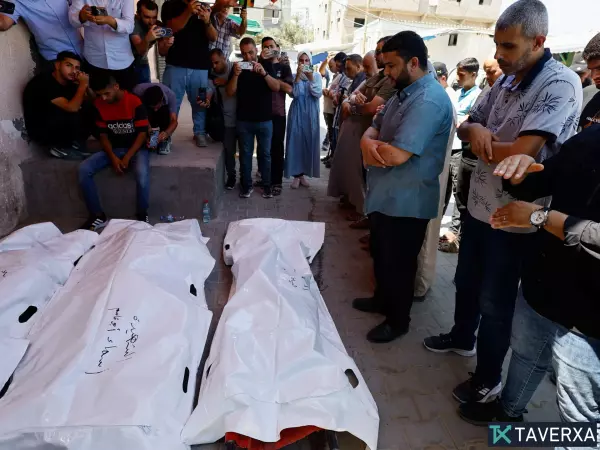
The tragedy unfolded on Wednesday, July 15, 2026, leaving a community in mourning. Images from Al-Aqsa Martyrs Hospital show a sea of grief as relatives and neighbors gathered to pray for the deceased, highlighting the personal toll of a conflict that continues to claim innocent lives.
Escalation Amidst a 'Ceasefire'
This attack comes at a time when the territory is technically under a United States-brokered ceasefire agreed upon in October. However, the reality on the ground suggests a starkly different narrative. Despite the diplomatic agreement, Israeli air forces have maintained a campaign of near-daily strikes across Gaza.
According to data provided by the Gaza Ministry of Health, the 24-hour period surrounding this attack saw at least 12 bodies brought to hospitals, with 18 others wounded. The human cost since the October ceasefire is staggering: more than 1,100 people have been killed by air strikes, including at least 275 children. This persistent violence has created a psychological crisis among the youth; the United Nations sexual and reproductive health agency reports that a harrowing 96 percent of children in Gaza believe death is imminent.
Wider Campaign of Destruction
The strike in Deir el-Balah was not an isolated incident. On the same day, Israeli forces targeted a rehabilitation center in Gaza City and a public park in Khan Younis. The park was particularly significant as it served as a makeshift shelter for hundreds of displaced families who had fled their homes in search of safety, only to find themselves in the crosshairs of military operations.
The Israeli military has defended the Deir el-Balah strike, claiming the operation was intended to target a Hamas fighter. Such justifications have become common as Israel continues its broad military campaign.
A Landscape of Ruin
To understand the scale of the current devastation, one must look at the cumulative impact of the war that began in October 2023. Following a Hamas-led attack in southern Israel that killed approximately 1,200 people and saw 240 taken captive, Israel launched a massive military offensive. To date, more than 73,200 Palestinians have been killed, including over 21,000 children.
The sheer volume of ordnance dropped on the narrow strip of land is unprecedented in modern urban warfare. Israel has deployed roughly 223,000 tonnes of explosives—a figure that is 16 times greater than the payload of the atomic bomb dropped on Hiroshima in 1945. The result is a territory largely reduced to rubble, with the majority of its population displaced and living in precarious conditions.
The Stalled Path to Peace
As the humanitarian crisis deepens, the prospect of a permanent resolution remains elusive. Diplomatic efforts are currently stalled regarding the second, more complex phase of the ceasefire. This phase would require Hamas to disarm and Israel to execute a full withdrawal from the Gaza Strip.
With demands for tunnel maps and arms tests creating friction at the negotiating table, the cycle of violence continues, leaving civilians—like the Abu Qassem family—to pay the ultimate price for a geopolitical deadlock.
Related Posts