South Africa Deploys Security Forces as Tensions Over Immigration Reach Breaking Point
South African authorities deploy police and military to prevent anti-immigrant violence as vigilante groups set a June 30 deadline for foreign nationals to leave.
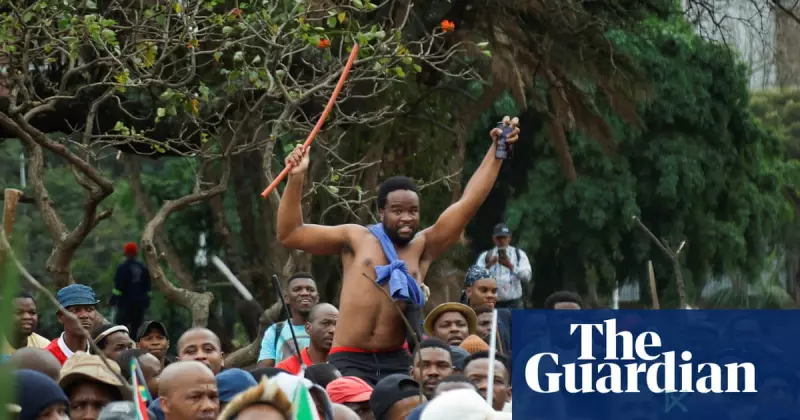
A Nation on High Alert
South African authorities have mobilized police units and military assets across key cities, including Johannesburg and Durban, in a massive security operation aimed at forestalling potential civil unrest. The deployments follow calls from vigilante groups, most notably 'March and March,' which issued an ultimatum for undocumented foreign nationals to vacate the country by June 30.
The Shadow of Past Violence
The government’s heavy-handed security posture is driven by a profound fear of repeating the catastrophic xenophobic violence of 2008, which resulted in at least 62 deaths and widespread looting. Officials are also mindful of the instability experienced in July 2021, when the country witnessed its most severe unrest in the post-apartheid era. Local businesses in Johannesburg's central business district took the preemptive step of remaining closed on Tuesday, fearing the impact of the predicted protests.
Vigilante Rhetoric and Real-World Consequences
While representatives of the 'March and March' movement have publicly insisted on a peaceful demonstration, the atmosphere on the ground is increasingly volatile. For several weeks, groups of men brandishing sticks and chanting 'abahambe'—a term calling for the departure of foreigners—have been documented targeting informal traders. Reports from Mozambique indicate that at least five of its nationals have been killed in these sporadic, targeted incidents.
Economic Scapegoating and Regional Response
South Africa, the continent's most industrialized economy, is currently battling one of the world's highest unemployment rates. In this environment of economic scarcity, foreign-born residents—who represent only about 4% of the population—are frequently scapegoated for systemic failures. Despite the narrative pushed by protest groups, official crime statistics do not support the claim that migrants are responsible for the nation's crime wave. Nevertheless, the fear has prompted a diplomatic response, with several nations including Nigeria, Ghana, and Malawi, initiating repatriation efforts to protect their citizens before the June 30 deadline.