Spain's Tactical Masterclass: Key Takeaways from the 2026 World Cup Final Victory
Explore the key takeaways from the 2026 World Cup final as Spain defeats Argentina. Discover how tactical mastery and youth talent secured La Roja's victory.
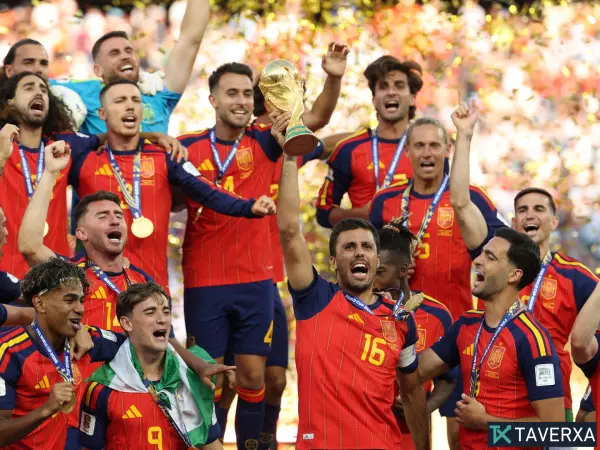
Spain has officially cemented its status as the world's footballing superpower following a clinical 1-0 extra-time victory over Argentina in the 2026 World Cup final. The triumph not only secures La Roja their second world title but also adds to an unprecedented trophy haul that includes recent successes in the Euros, the Olympic Games, and the Women's World Cup, proving that the Spanish footballing model is currently unrivaled.
Tactical Dominance and Possession Control
Spain's path to victory was paved by an uncompromising commitment to possession-based football. By prioritizing ball mastery, the Spanish side successfully turned the final into a game of keep-away, effectively suffocating Argentina’s creative engine and rendering Lionel Messi largely ineffective for the duration of the match. Defensively, the pairing of Pau Cubarsi and Aymeric Laporte provided a masterclass in positioning and finesse, supported by goalkeeper Unai Simon, whose proactive style thwarted multiple high-stakes offensive transitions.
The Rise of the Young Generation
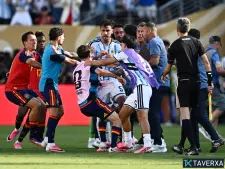
While the pre-tournament narrative heavily featured teenage sensation Lamine Yamal, it was a collective effort from the wings that ultimately broke the deadlock. Following a red card for Argentina’s Enzo Fernandez, Spain capitalized on their numerical advantage. The decisive moment arrived when Pedro Porro delivered a precise back-post cross, setting up Nico Williams to head the ball down for Ferran Torres, who struck a clinical half-volley to secure the lead. The emergence of young talents like the 19-year-old Cubarsi, affectionately dubbed 'Cubarsito' by the fans, highlights a thriving youth development system.
Rodri’s Midfield Stewardship
Despite registering zero goals or assists across eight matches, Rodri’s impact was beyond statistical measurement. His role as the heartbeat of the team—dictating tempo and anticipating defensive shifts—was instrumental in maintaining control. Having battled back from knee surgery, his physical conditioning and tactical intelligence justified his presence as the team's anchor, allowing his teammates to operate with greater creative freedom.
Reflecting on the Tournament Format
The 2026 World Cup was arguably the most logistically challenging in history. While FIFA President Gianni Infantino hailed it as the 'greatest of all time,' the expansion to a 48-team format and a grueling 104-game schedule raised questions about the quality of the spectacle. The overblown pre-match pageantry and lengthy intervals were viewed by many as unnecessary distractions from the pure tension of the sport, fueling debate on whether bigger always equates to better in the global game.
A Difficult Night for Argentina
For Lionel Messi and Argentina, the defeat marks a somber recurrence of heartbreak at East Rutherford, the site of previous final losses. The Argentine side struggled to bridge the gap between their midfield and their star talisman, ultimately failing to break down a resilient Spanish defense that conceded only a single goal throughout the entire tournament.