Dual Allegiances and Divided Streets: Morocco’s World Cup Win Stirs Emotions in the Netherlands
Following Morocco's dramatic penalty shootout victory over the Netherlands in the 2026 World Cup, celebrations in Amsterdam were marred by clashes with police in The Hague.
A Tense Clash Beyond the Pitch
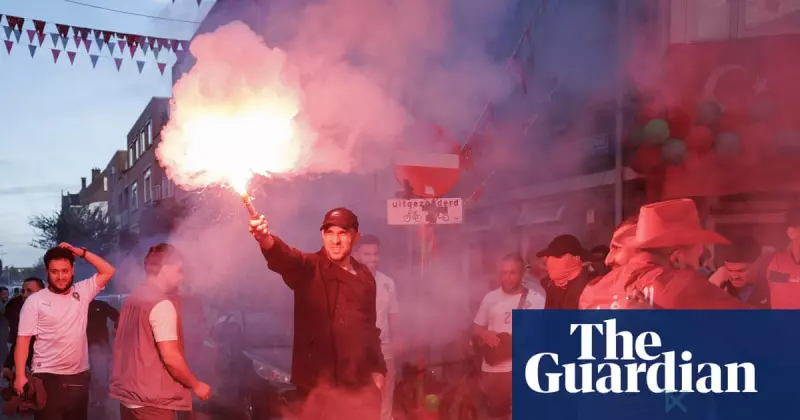
The 2026 World Cup last-32 fixture between the Netherlands and Morocco was always poised to be a volatile event for the Dutch-Moroccan community. What began as a highly anticipated football match rapidly evolved into a deeper conversation about identity, loyalty, and social cohesion. When the final penalty shootout concluded with Morocco eliminating the Netherlands, the aftermath split the nation’s streets into two distinct realities: joyful, communal celebration in some districts and violent unrest in others.
The Human Dilemma of Dual Identity
With approximately 440,000 residents of Moroccan descent living in the Netherlands, the pre-match period was marked by the question: “Who are you supporting?” While many treated the debate as a good-natured exploration of heritage, others faced intense pressure. Figures like former Dutch international Ibrahim Afellay publicly threw their support behind the Atlas Lions, highlighting a growing trend where dual-heritage players and fans increasingly identify with their roots. This trend has been exacerbated by the rhetoric of right-wing politicians, most notably Geert Wilders, whose long history of targeting the Muslim and Moroccan communities has further alienated those who might otherwise have supported the Dutch squad.
A Tale of Two Cities: Celebration and Conflict
As the final whistle blew, the atmosphere in the Netherlands diverged sharply. In Amsterdam, the reaction was largely defined by euphoria. Despite a late equalizer by the Dutch, Morocco’s tactical superiority and clinical performance in the penalty shootout secured a historic win. In the capital’s neighborhoods, supporters—some draped in both orange and Moroccan colors—shared quiet moments of camaraderie, with fans even congratulating their counterparts.
However, in The Hague, the mood took a darker turn. Authorities reported incidents of police being pelted with fireworks and glass bottles, leading to at least ten arrests. Similar arrests were reported in Rotterdam, highlighting that for some, the match served as a lightning rod for broader social frustrations rather than just a sporting contest.
Sports as a Mirror of Modern Society
Morocco’s emergence as a footballing powerhouse—currently ranked sixth globally and coming off a strong performance in previous tournaments—underscores their legitimacy on the world stage. Yet, the friction observed during and after the match suggests that football in Europe continues to operate in a complex space where politics, immigration, and national identity intersect. As the World Cup continues, the events of this match serve as a poignant reminder that while the digital world often fuels division through viral rhetoric and provocation, the physical reality of community is often more nuanced and, in many places, surprisingly harmonious.