Calculated Escalation: Why Iran is Targeting Gulf States While Avoiding US Naval Assets
Analysis of why Iran is targeting civilian and military infrastructure in Gulf states while avoiding direct confrontation with US naval assets and Israel.
A Complex Game of Geopolitical Chess
As the military confrontation between the United States and Iran intensifies, a striking pattern has emerged in Tehran's retaliatory strikes. While the U.S. has targeted critical Iranian infrastructure—including railway stations, power facilities, and telecommunications networks—the Islamic Revolutionary Guard Corps (IRGC) has shifted its focus toward civilian and military targets within the Gulf states and Jordan, conspicuously avoiding direct engagement with U.S. naval assets and Israel.
Military and political analysts suggest that this is not a random selection of targets, but rather a calculated strategy designed to exert maximum political pressure on the Trump administration without triggering a full-scale regional war that could jeopardize the Iranian regime's survival.
The Logic of Avoidance: Why US Naval Assets are Off-Limits
The decision to spare U.S. aircraft carriers and destroyers is rooted in both military pragmatism and political fear. Retired Lebanese Brigadier General Elias Hanna notes that targeting naval assets would almost certainly provoke a "devastating" U.S. response. Beyond the risk of escalation, naval assets are among the most difficult targets to hit due to their sophisticated, multi-layered air defense systems.
Professor Abdullah al-Shayji of Kuwait University further argues that Tehran is acutely aware of the lethal capabilities of the USS George W. Bush and USS Abraham Lincoln, which are stationed within 150km of the Iranian coast. For Iran, the cost of killing even a single U.S. service member currently outweighs any perceived strategic gain, leading them to avoid the "gates of hell" that a direct naval clash would open.
The 'Proxy Pressure' Strategy: Targeting the Gulf
If the U.S. is the primary adversary, why are Kuwait, Bahrain, and Jordan bearing the brunt of the missiles? Tehran justifies these attacks by claiming that U.S. operations are launched from military bases within these countries. Professor Atifeh Taghiani of the University of Tehran argues that international law permits retaliation against any territory used to launch attacks.
However, critics dismiss this narrative as outdated propaganda. Al-Shayji points out that most current U.S. strikes originate from aircraft carriers in international waters, not from Gulf bases. Instead, analysts believe Iran is using these neighboring states as leverage, hoping that the diplomatic and economic pressure on Gulf governments will force them to persuade Washington to cease its hostilities.
Humanitarian Costs and Regional Fallout
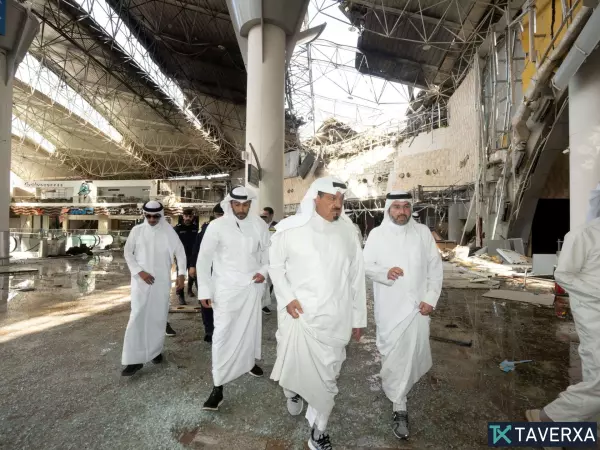
The strategy has a darker side: the targeting of civilian infrastructure. During the peak of the summer heat, Iranian strikes have hit water desalination plants in Kuwait. Because these populations are heavily dependent on desalinated water, such attacks are viewed by critics as a deliberate attempt to make civilian life unbearable to achieve political goals.
This approach is further isolating Iran. By attacking countries like Kuwait—which has historically been among the most opposed to normalization with Israel—Tehran is eroding its remaining regional credibility and pushing Gulf states to seek new security frameworks that reduce their reliance on U.S. protection.
The Strategic Outlook: A Fragile Equilibrium
The conflict, which ignited in late February following joint U.S.-Israeli strikes, remains in a state of precarious tension. Despite a memorandum of understanding signed in June to extend a ceasefire, both sides continue to accuse the other of violations.
Further complicating the map is the behavior of Iran's allies. The Houthis in Yemen have largely remained on the sidelines to avoid the catastrophic losses currently being faced by Hezbollah in Lebanon. This lack of regional support increases the pressure on Tehran, forcing it to rely on a 'one-sided deterrence equation' where it hits softer targets to save face domestically while avoiding a direct war with a superpower.