The Voice of the White Wolf: Doug Cockle Reflects on 21 Years as Geralt of Rivia
Doug Cockle reflects on 21 years of voicing Geralt of Rivia in The Witcher games, discussing the struggle for the character's emotional depth and the art of voice acting.
Two Decades of the Witcher
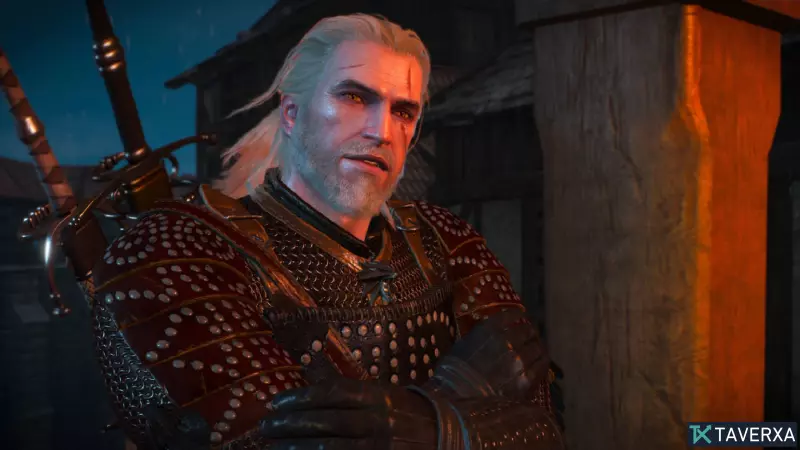
For over twenty years, one voice has defined the brooding, cynical, yet deeply compassionate nature of Geralt of Rivia. Doug Cockle, the actor behind the White Wolf, has spent 21 years breathing life into the protagonist of The Witcher game series. With an estimated 15,000 to 20,000 lines of dialogue recorded since 2005, Cockle's journey is as much about artistic evolution as it is about professional endurance.
The physical toll of the role is often invisible to the player. Cockle reveals that the intense effort required to record the grunts, impacts, and visceral sounds of swordplay—while standing perfectly still in a recording booth—once caused him to nearly pass out. This experience underscores his philosophy of acting: being '90% character and 10% actor.' He believes in total commitment to the role while maintaining just enough professional restraint to survive the process.
Fighting for Geralt's Heart
In the early days of the franchise, the creative directive was stark: Geralt should be emotionless. Based on the lore of the Trial of the Grasses, the mutations that create a Witcher were meant to strip away human feeling. For years, the feedback Cockle received was simple: 'No emotion, Doug. Flatten him out.'
However, Cockle pushed back against this interpretation. He argued that a completely void character is impossible for a human audience to relate to. He posits that Geralt does not lack emotion, but rather consciously suppresses it because letting feelings dictate his actions in a dangerous world could be fatal. This nuance—the choice of restraint—is what gave Geralt his depth.
This emotional thawing is evident throughout the series. From the first game to the Blood and Wine expansion, players can hear Geralt evolve, forming deeper bonds of friendship and romance. Cockle notes that the writers eventually embraced this, realizing that Geralt could be both a killing machine and a soulful being.
The Art of 'Guided Improv'
The process of bringing these scripts to life is often a high-wire act. Cockle describes his recording sessions as 'guided improv.' Often receiving scripts only the night before—sometimes consisting of dozens of pages—he frequently sees the lines for the first time as he speaks them into the microphone.
This method allows for genuine, first-time reactions. He may spend several minutes wringing a single line of dialogue, shifting the stress or adding a pause to find the exact emotional beat. This collaborative and instinctive approach prevents the performance from ever feeling 'flat,' ensuring that the character's humanity shines through every grunt and sigh.
Beyond the Booth: AI and Human Expression
When not voicing the Witcher, Cockle is a connoisseur of narrative-driven games that tug at the heartstrings, citing titles like What Remains of Edith Finch and Tin Hearts as favorites. This passion for emotional storytelling fuels his skepticism toward the use of AI in creative arts.
While he acknowledges the 'miraculous' potential of AI in fields like medicine, he argues that AI cannot create art. To Cockle, AI merely combines existing information; it does not possess the lived experience required for true creativity. 'Human expression has meaning,' he asserts, emphasizing that art is the act of turning one's entire being into something new.
Destined for the School of the Wolf
In a twist of fate, Cockle's connection to the wolf predates his employment by CD Projekt Red. As a 21-year-old, long before he knew Geralt, he got a tattoo of a howling wolf—a reflection of his lifelong love for the animal and the works of Jack London.
When reflecting on his legacy, Cockle laughs at the irony: he was 'School of the Wolf' long before he ever held a silver sword. For two decades, he has worn the mark of the wolf on his skin, and for twenty-one years, he has given that wolf its voice.