The High Cost of Digital: Sony's Plan to Kill Physical PS5 Discs by 2028
Sony plans to stop producing physical PS5 games by 2028. Discover the staggering storage costs and hardware prices required to go all-digital.
The End of an Era: Sony's Shift to All-Digital
In a move that has sent shockwaves through the gaming community, Sony officially confirmed during its Q3 earnings call that it is "cautiously" moving toward a future without physical media. CFO Lin Tao revealed that the company plans to cease the production of physical versions of PlayStation games starting in 2028. This transition marks a pivotal shift in the industry, mirroring a broader trend toward digital distribution and subscription-based models.
The announcement has sparked immediate backlash. While some users prefer the convenience of digital libraries, a vocal segment of the community is concerned about the loss of true ownership. In a digital-only ecosystem, consumers typically purchase a 'license' to access content rather than owning a tangible copy, leaving their libraries vulnerable to server shutdowns or license revocations.
The Storage Crisis: A Mathematical Nightmare
The shift to digital isn't just a matter of ownership; it's a matter of hardware capacity. As game fidelity increases, so do file sizes. To illustrate the scale of this problem, a comprehensive analysis was conducted on the 37 first-party games released for the PlayStation 5 since its 2020 launch.
The results are staggering. From blockbusters like God of War Ragnarök and Spider-Man 2 to the MLB The Show series and The Last of Us Part I, the total storage required to house these titles is approximately 2,989.1 GB—nearly 3 terabytes of data.
Given that the standard PS5 comes with a 1TB SSD, the internal storage is nowhere near sufficient to handle a complete first-party library. When accounting for the console's operating system and inevitable day-one patches, users will need a minimum of a 4TB storage solution to avoid the constant cycle of deleting and re-downloading games.
The Exploding Cost of Memory
The timing of Sony's digital push couldn't be worse for the consumer's wallet. The global market for RAM and NAND flash storage is currently experiencing a price surge, largely driven by the massive demand for memory in AI-driven infrastructure. This supply constraint is trickling down to consumer electronics, causing price hikes for everything from smartphones to high-end SSDs.
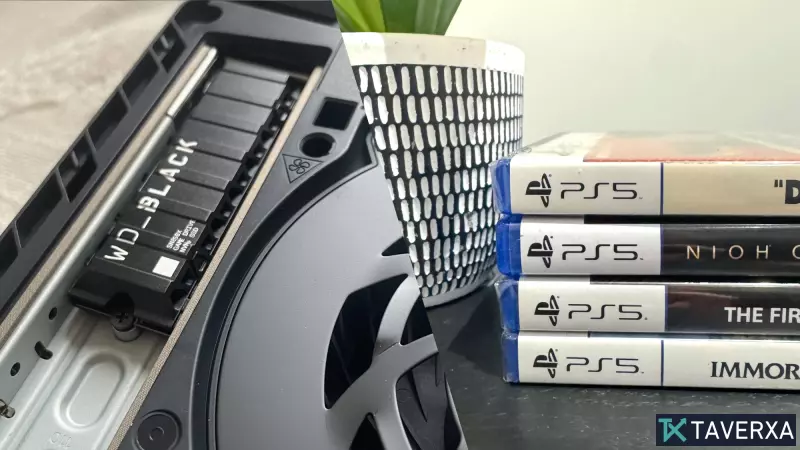
For PS5 owners looking to expand their storage via the recommended m.2 NVMe SSDs, the costs are becoming prohibitive. An officially licensed 4TB WD Black NVMe SSD, for instance, is currently retailing around $789.99 on Amazon—roughly $400 more than the same drive cost just a year ago. To put this in perspective, the cost of a 4TB expansion drive is now nearly equivalent to the price of a PS5 Pro console.
Looking Toward 2028 and Beyond
The outlook for the next few years remains bleak for those hoping for a price drop. Industry warnings from major manufacturers like SK Hynix suggest that 2027 could be one of the worst years for memory pricing. This suggests that by the time Sony fully pulls the plug on physical discs in 2028, the cost of the necessary storage hardware may be at an all-time high.
Gamers are now caught in a precarious position: facing a loss of physical ownership while simultaneously paying a premium for the digital storage required to replace it. As the industry marches toward a potentially disc-less PlayStation 6, the financial and technical burden of 'owning' a game library is shifting heavily from the manufacturer to the consumer.