The Best 55-Inch TVs of 2026: Top Picks for Movies, Gaming, and Budget Buy
Discover the best 55-inch TVs for 2026. Based on expert testing, we compare the LG C5, Hisense QD7, and Samsung S90F for movies, gaming, and budget value.
Finding the Perfect Balance: Why 55 Inches?
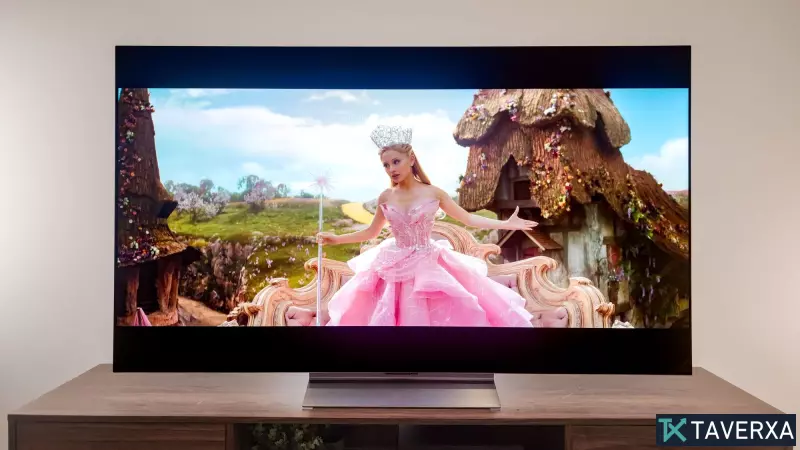
When shopping for a new television, the 55-inch screen size has become the industry's 'sweet spot.' It offers a significant upgrade in immersion over 48 or 50-inch models without occupying as much wall real estate as the increasingly common 65-inch displays. For those furnishing a bedroom, a shared living space, or a dorm, a 55-inch TV provides an expansive cinematic experience while remaining compact enough for tighter environments.
One of the primary advantages of the 55-inch tier is performance. Unlike smaller screens, which often face power limitations that result in lower peak brightness, 55-inch panels typically utilize full-scale hardware, ensuring vivid colors and high contrast across the board.
Top Recommendation: The Best Overall 55-Inch TV
LG C5 OLED: The Versatile Powerhouse
For the vast majority of consumers, the LG C5 OLED remains the gold standard. While the newer C6 has entered the market, the C5 is currently the smarter purchase due to significant price drops that make it an incredible value proposition without sacrificing high-end performance.
The C5 excels in image vibrancy and color accuracy. Its OLED technology provides perfect black levels, which is essential for modern, moody cinematography. Whether you are watching a visually dense film or a high-action sports event, the 120Hz refresh rate ensures smooth motion with minimal blur.
- Pros: Exceptional brightness, industry-leading color, and a highly comprehensive webOS platform.
- Cons: The unique remote design can be polarizing, and it lacks ATSC 3.0 tuner support.
The Budget Champion: High Performance, Low Cost
Hisense QD7 QLED: The Value King
If you want a cinematic experience without a premium price tag, the Hisense QD7 is the standout choice. Utilizing quantum dot crystals, this TV transforms backlight into rich reds and greens, producing an image that is surprisingly sharp and vibrant for its price point.
The QD7's ability to dim LEDs individually allows for impressive local dimming, making it a viable option for fans of dark, atmospheric series like Stranger Things. While it does run the ad-heavy Amazon Fire TV interface and features a slower 60Hz refresh rate, the sheer picture quality makes these compromises easy to overlook for the average viewer.
- Pros: Accurate colors, supports Dolby Vision, and excellent upscaling.
- Cons: Sluggish user interface and less effective in very bright rooms.
The Gamer's Choice: Built for Speed
Samsung S90F OLED: The Ultimate Console Companion
For those who prioritize PlayStation 5 or Xbox Series X gaming, the Samsung S90F OLED is the definitive choice. What separates the S90F from the competition is its dedicated focus on low latency and gaming utility.
With a measured input lag of just 9.1ms, the S90F provides a competitive edge in online gaming. It features four HDMI 2.1 ports and a dedicated Gaming Hub that automatically enables Game Mode when a console is detected. Combined with a 120Hz refresh rate and near-perfect contrast, it transforms any gaming session into a high-fidelity experience.
- Pros: Near-perfect contrast, exceptionally thin design, and top-tier gaming features.
- Cons: Lacks Dolby Vision support and has average built-in audio.
Expert Buying Guide: How to Choose
Before investing in a new display, consider your primary environment and use case:
- Room Lighting: If your room has many windows, prioritize TVs with high peak brightness and anti-reflective coatings, such as the LG C5.
- Primary Use: For movie buffs, prioritize OLEDs for their contrast. For gamers, look for HDMI 2.1 ports and refresh rates of at least 120Hz.
- Software Preferences: Consider whether you prefer the integration of Google TV, Samsung's Tizen, or Amazon's Fire TV.
Our Testing Methodology
To ensure objective results, every TV is put through a two-stage evaluation. First, units are tested in a controlled lab using colorimeters and spectroradiometers to measure precise brightness and color accuracy. Second, the TVs undergo real-world testing with a variety of content—from the kaleidoscopic colors of The Super Mario Bros. Movie to the deep shadows of Christopher Nolan's cinematography—to see how the hardware performs in actual living room conditions.