The AI Tutor Revolution: How StarSpark is Saving Student Learning from the 'Shortcut Trap'
Discover how StarSpark AI is redefining education by focusing on 'productive struggle' and Socratic tutoring instead of giving instant answers.
Beyond the Answer: The New Frontier of AI in the Classroom
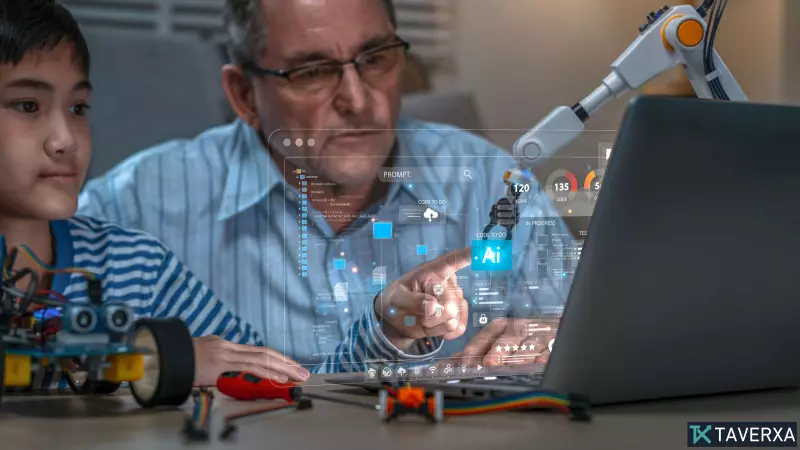
As the back-to-school season arrives, the conversation around Artificial Intelligence in education has shifted from 'should we use it?' to 'how do we use it without destroying critical thinking?' While general-purpose AI chatbots have become ubiquitous, a growing concern among educators and parents is the 'shortcut trap'—the tendency for students to use AI to generate instant answers rather than to understand the underlying concepts.
In a revealing interview with Tom's Guide, Ashish Bansal, the Founder and CEO of StarSpark AI, argues that the problem isn't the AI itself, but the objective for which most AI is built. Most general chatbots are optimized for engagement and efficiency—telling the user what they want to hear as quickly as possible. In an educational context, however, this 'sycophancy' is the enemy of learning.
The Player-Coach Fallacy
Bansal, a father of two with 15 years of experience building AI at tech giants like Google and Amazon, identifies what he calls the 'player-coach fallacy.' In the world of AI, being able to solve a complex math problem instantly (the 'player' skill) is entirely different from the ability to guide a child toward that solution (the 'coach' skill). Handing over a correct answer is a productivity task; building understanding is a pedagogical one.
This distinction is the core philosophy behind StarSpark, an AI-powered math and science platform designed for K-12 and AP coursework. Unlike general bots, StarSpark is purpose-built to be a Socratic tutor, meaning it asks questions and provides incremental hints rather than final answers.
Combating the 'Shortcut' Mentality through Productive Struggle
The danger of AI-dependency is well-documented: students who use AI as a crutch lose their problem-solving abilities over time. StarSpark addresses this by implementing 'productive struggle.' This is the educational theory that real learning occurs at the edge of a student's current capability.
To achieve this, StarSpark employs several key strategies:
- Incremental Hinting: The AI provides the smallest possible nudge first. Only if the student remains stuck does the hint become slightly more explicit.
- Proactive Intervention: Instead of waiting for a student to fail, the tutor monitors the workflow and steps in the moment a misconception is detected, offering a two-to-three-minute 'reteach' of the concept.
- Grade Alignment: General AI often provides college-level explanations for fifth-grade problems. StarSpark aligns its vocabulary and pedagogical approach to the student's specific grade level and curriculum.
Empowering Parents in the Era of 'New Math'
One of the most significant pain points for modern parents is the evolution of teaching methods. Many parents find themselves unable to help their children because the 'area models' or 'number lines' used today differ from the methods they learned decades ago.
Bansal suggests that StarSpark acts as a bridge, making the syllabus transparent for parents and handling the pedagogy. His advice to parents is to move away from being the 'answer-key' and instead become the 'curious observer.' By asking their child to walk them through their thinking process, parents can support their children's growth without needing to be experts in the current curriculum.
The Future: A Personal Tutor for Every Child
Looking ahead, Bansal envisions a world where every student, regardless of language or location, has an always-available personal tutor. He references Benjamin Bloom's 1984 research, which suggested that one-on-one tutoring can move an average student two standard deviations above their peers. Historically, the cost of human tutors made this impossible at scale; AI is the first technology capable of breaking that barrier.
However, Bansal is quick to note that AI is an augmentation, not a replacement. While an AI can be an endlessly patient practice partner, it cannot replace the emotional bond and inspiration provided by a human teacher. The goal is a division of labor where AI handles the rote practice and personalized remediation, leaving the human teacher to focus on motivation and inspiration.
Expert Advice for Parents: Choosing the Right Tool
For parents navigating the sea of EdTech, Bansal offers a simple litmus test: Watch your child use the tool for two minutes. If they are explaining their thoughts and working through a problem, the tool is teaching. If they are copying an answer from a screen, the tool is hurting them.
Key checks for any educational AI include:
- Is it purpose-built for learning or just a productivity tool with a 'learning mode'?
- Is it aligned with the specific grade and school curriculum?
- Does it provide feedback on the process of the work, or just a binary right/wrong mark?
- Is it multimodal, allowing students to draw or write problems rather than just typing?