Samsung Unveils Mind-Blowing 40,000-Nit Micro-OLED Display: The Future of Visuals
Samsung Display has developed a revolutionary RGB OLEDoS micro-OLED display reaching 40,000 nits. Discover how this tech will transform XR headsets and AR glasses.
A New Era of Luminance
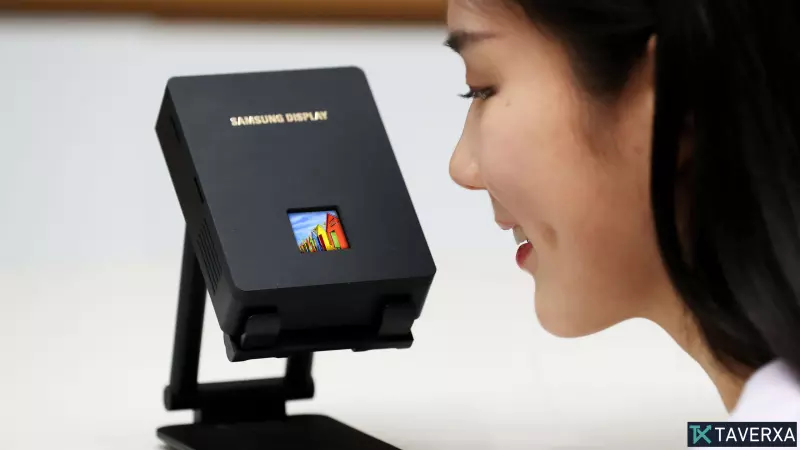
In the relentless pursuit of the perfect image, display technology has consistently pushed the boundaries of brightness and color. However, Samsung Display has just unveiled a breakthrough that makes current flagship screens look dim by comparison. The company has developed a micro-OLED display capable of reaching a staggering 40,000 nits, representing a quantum leap in luminance that could redefine how we interact with digital content.
What is RGB OLEDoS?
The technology behind this feat is known as RGB OLEDoS (Red Green Blue Organic Light-Emitting Diodes on Silicon), more commonly referred to as micro-OLED. While traditional OLED screens deposit organic materials onto glass substrates, OLEDoS integrates these materials directly onto a silicon wafer. This architecture allows for much higher pixel density and smaller form factors.
Samsung's specific implementation focuses on a 'true' RGB approach. Unlike white OLEDoS, which requires a color filter to create a full spectrum, RGB OLEDoS utilizes direct color emission. This eliminates the need for filtering, which significantly boosts light efficiency, extends the lifespan of the pixels, and enables the unprecedented brightness levels reported.
Which Gadgets Will Get It First?
Despite the impressive numbers, consumers shouldn't expect a 40,000-nit 65-inch living room TV anytime soon. The current prototype is only 1.3 inches across. Due to its compact size and extreme brightness, this technology is tailor-made for Extended Reality (XR) devices, including VR and AR headsets.
Mixed-reality headsets, such as the Apple Vision Pro or Samsung's own upcoming XR ventures, require immense brightness to maintain realism. Because the displays are positioned inches from the user's eyes, any lack of vibrancy or poor contrast is immediately apparent. By utilizing RGB OLEDoS, Samsung aims to provide a sharp, lightweight, and incredibly bright experience that makes virtual objects indistinguishable from reality.
Comparing Micro-OLED to Current TV Tech
For the average home entertainment enthusiast, the 40,000-nit figure might seem overkill, but it highlights the gap between wearable tech and home cinema. Current high-end displays use different strategies to achieve brightness:
- QD-OLED: Found in the Samsung S95 series and Sony Bravia 8 II, this uses a quantum dot layer to enhance color and brightness, typically peaking between 2,500 to 3,000 nits.
- RGB Mini-LED: Featured in the Hisense UR9 and Samsung MR95F, this technology replaces white backlights with smaller, vibrant RGB LEDs for superior color control and high peak brightness.
- Super Quantum Dot: Utilized in TCL's X11L, offering extreme luminance without relying on individual RGB LEDs.
The Path Forward
While micro-OLED is currently relegated to small-scale displays for headsets, the innovation paves the way for future iterations of wearable tech and perhaps, eventually, specialized high-brightness monitors. As Samsung continues to refine the silicon-wafer process, the dream of truly lifelike, sunlight-bright digital imagery moves one step closer to reality.