Roku Select Series 4K QLED TV (65R5D5) Review: Budget Big-Screen Ambition Falls Short
Is the Roku Select Series 4K QLED TV a bargain or a bust? Read our comprehensive review of the 65R5D5 and see why brightness issues hold it back.
Introduction: High Ambitions on a Budget
Roku has long been celebrated for its commitment to simplicity. In a world where smart TV interfaces have become cluttered with intrusive advertisements and complex menus, Roku's streamlined approach has made its TV lineup a favorite for those who just want to get to their content. However, the new 2026 Roku Select Series 4K QLED TV (model 65R5D5) proves that a great interface cannot compensate for mediocre hardware.
Aimed at consumers seeking a massive 65-inch screen for under $400, the Select Series attempts to balance size and technology. While it manages to deliver some surprising wins in audio and usability, the core experience—the picture quality—is plagued by a lack of brightness that makes it difficult to recommend in a competitive market.
Pricing and Market Positioning
Retailing at approximately $379 (discounted from $449) at retailers like Best Buy, the 65-inch model sits in the upper-middle tier of Roku's 2026 strategy. While the smaller 43-inch variant relies on standard LED technology, the 50-inch through 85-inch models utilize QLED (Quantum Dot) panels to enhance color volume.
When compared to its siblings, the gap is evident. The step-up Plus Series adds Mini-LED backlighting and Dolby Vision for a significant jump in contrast, while the Pro Series targets enthusiasts with a 120Hz refresh rate. For most users, the Select Series is the "entry-level" gateway to a large QLED screen, but the trade-offs are steep.
Design and Hardware Connectivity
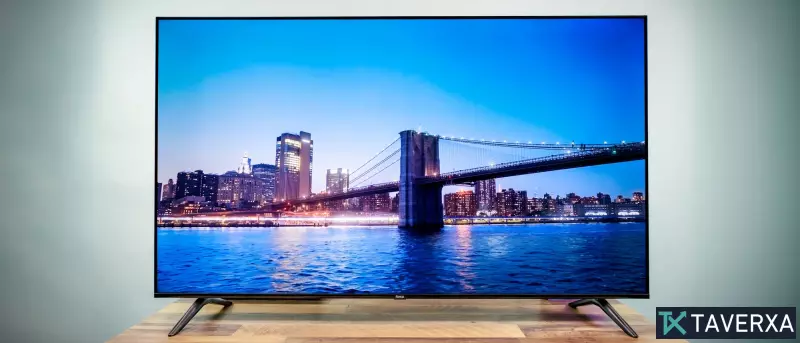
Visually, the Roku Select Series follows the budget blueprint: a chunky 3.3-inch depth, a thin black bezel, and two simple plastic feet. It isn't a design marvel, but it is functional and supports standard VESA wall mounting (400 x 300 mm).
On the connectivity front, Roku provides a generous amount of ports, albeit dated standards. You'll find four HDMI 2.0 ports, one of which supports eARC for seamless soundbar integration. While the lack of HDMI 2.1 means no 4K/120Hz gaming, the screen's native 60Hz refresh rate makes this a moot point for most. Other additions include a USB-A port for local media, an Ethernet port for stable streaming, and a standard antenna input.
Performance Analysis: The Brightness Bottleneck
The most critical failure of the Roku Select Series is its luminance. In lab tests, the TV's HDR brightness hit an all-time low for its class, measuring just 334.6 nits—a fraction of the average for competing 65-inch sets. This lack of "punch" results in a muddy image, especially in dark scenes.
- SDR Content: Standard definition and HD content look decent and color-accurate, particularly in Filmmaker or Movie mode.
- HDR Content: This is where the TV struggles. Without Dolby Vision support and lacking sufficient brightness, HDR content often looks faded. Scenes from Stranger Things appeared grayish, and the vibrant colors of Bridgerton were muted by a disappointing pallor.
- Motion Handling: On a positive note, the TV handles fast motion respectably, making it acceptable for sports and casual gaming.
Audio Performance: A Surprising Highlight
Surprisingly, the audio is one of the few areas where the Select Series punches above its weight. Despite utilizing basic 10-watt speakers, the sound is crisp and clear. Testing with music videos and action-heavy shows like Stranger Things revealed booming explosions and distinct dialogue without significant distortion. Switching to "Movie" sound mode further expands the soundstage, providing a more immersive experience than typically found in budget sets.
The Roku Experience: Interface and Privacy
The Roku OS remains a gold standard for usability. The interface is intuitive, and the remote is streamlined with helpful voice search and dedicated app shortcuts. However, the hardware in the Select Series feels slightly sluggish, with occasional lag when navigating the menu.
Prospective buyers should be aware that Roku is primarily a data company. The interface is supported by the ad-funded Roku Channel, and the company has faced legal scrutiny—including a lawsuit from the Florida Attorney General—regarding the collection and sale of sensitive user data. While common among smart TVs, it is a point of consideration for privacy-conscious consumers.
Final Verdict: Should You Buy It?
The Roku Select Series 4K QLED TV is a mixed bag. It offers a massive screen and a legendary interface for a very low price. However, the disappointing brightness and mediocre HDR performance make it a poor choice for bright living rooms or dedicated home cinemas.
If you are strictly loyal to the Roku ecosystem and need the cheapest possible 65-inch screen, this will suffice. But for those who value image quality, alternatives like the TCL QM6K, Hisense QD7, or Vizio Mini-LED Quantum offer significantly better performance for a similar price point.