Political Tension Peaks as US Official Celebrates Iran's World Cup Exit
US Homeland Security Secretary Markwayne Mullin sparks controversy after celebrating Iran's narrow elimination from the 2026 World Cup amid geopolitical tensions.
Geopolitical Friction Meets the Beautiful Game
The intersection of international diplomacy and professional sports took a sharp turn toward hostility following Iran's elimination from the 2026 World Cup. In a candid and controversial statement, Markwayne Mullin, the US Secretary of Homeland Security, expressed an unfiltered sense of joy over the Iranian national team's failure to advance past the group stages, transforming a sporting result into a geopolitical victory.
A 'Happy Dance' Over Sporting Failure
Speaking during a formal World Cup security briefing, Secretary Mullin did not mince words regarding the departure of the Iranian delegation. "I’m just glad they’re done, and they’re not coming back," Mullin stated. He went as far as to suggest that the news of their exit was cause for celebration, adding, "I was so happy when we were able to pull their visas and said they could leave the US soil, and I might’ve sung a song or two or maybe even danced a happy dance."
The remarks highlight the extreme tension between Washington and Tehran, suggesting that for some US officials, the tournament was less about football and more about the strategic movement and presence of Iranian nationals on American soil.
A Tournament Marred by Controversy
Iran's journey to the 2026 finals was fraught with instability long before the first whistle blew. The team's participation remained precarious for months following devastating air strikes launched by the United States and Israel against Iran in February of the same year. This backdrop of military conflict cast a long shadow over the squad's preparations and their eventual arrival in North America.
Once at the tournament, the Iranian federation alleged a pattern of systemic mistreatment by US authorities. The team's head coach, Amir Ghalenoei, described his players as the "most oppressed" participants in the competition, citing restrictive measures and targeted harassment.
Logistical Hurdles and 'Oppressive' Stipulations
The friction was evident in the logistical arrangements provided to the team. While most nations enjoy stable base camps, Iran was forced to relocate its training base to Tijuana, a city on the Mexican border, after being denied their original planned base in Tucson, Arizona.
Furthermore, the Iranian delegation complained about a strict mandate requiring them to leave the stadium and city immediately following each match. When questioned about these rigorous constraints, Secretary Mullin dismissed the claims of oppression, framing the restrictions as a mutual agreement. "That was just an agreement we had – to just go ahead and let them go," Mullin explained, claiming the arrangement was made with FIFA to ensure the team returned to their camp where they would be "more comfortable."
Heartbreak on the Pitch
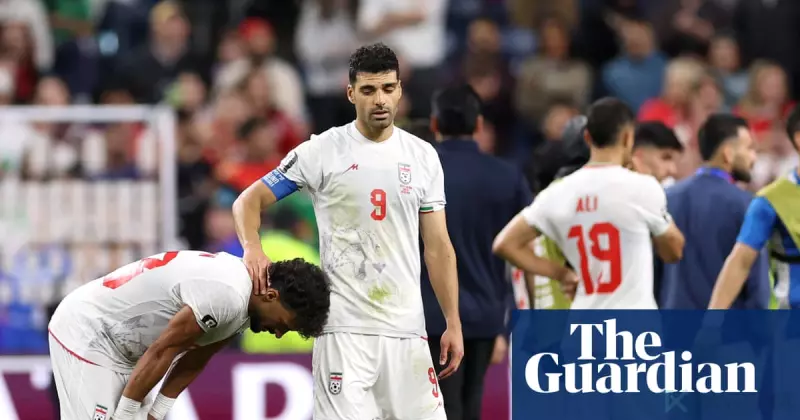
On the field, Iran's exit was a matter of razor-thin margins. The team managed to secure draws in all three of their group-stage matches, showcasing resilience despite the surrounding political chaos. Their hopes of qualifying for the last 32 were extinguished in a dramatic final clash against Egypt, where a critical, marginal offside call denied them a victory that would have seen them advance. As the final whistle blew, it marked the end of a grueling campaign that was as much a diplomatic battle as it was a sporting one.