Google Pixel 11 Pro Fold Hands-On: Is it Truly More 'Ultra' Than Samsung's Foldable?
Is the Google Pixel 11 Pro Fold better than the Samsung Galaxy Z Fold 8 Ultra? Discover the specs, AI features, and design of Google's latest foldable.
The New Titan in Foldables: A First Look
In the rapidly evolving landscape of foldable smartphones, the battle for supremacy usually boils down to a clash between Google and Samsung. With the arrival of the Pixel 11 Pro Fold, Google isn't just iterating; it's aiming directly at the premium 'Ultra' segment. While Samsung's recent offerings have leaned into a trendier, wider form factor, Google is doubling down on the needs of power users who prioritize expansive, tall displays for productivity and media consumption.
Priced at $1,899, the Pixel 11 Pro Fold represents a $100 increase over its predecessor, yet it positions itself as a superior value proposition compared to the Galaxy Z Fold 8 Ultra. By offering a brighter display, enhanced durability, and deeply integrated AI, Google is making a strong case that 'Ultra' isn't just a brand name—it's a performance standard.
Design and Ergonomics: Toughness Meets Utility
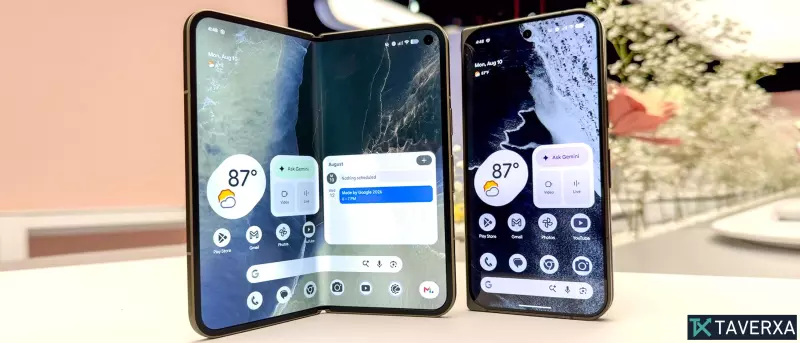
One of the most immediate improvements is the front cover display. At 6.5 inches, the screen feels significantly less 'squished' than the Fold 8 Ultra, providing a more natural typing experience and better app scaling. This is achieved through a strategic reduction in bezel size and the implementation of rounded corners, which make the device far more comfortable to hold for extended periods.
While Samsung still holds the crown for sheer thinness and weight, Google has made significant strides. The Pixel 11 Pro Fold weighs 8.4 ounces and measures 10.1mm when closed—a notable decrease from the Pixel 10 Pro Fold. More importantly, Google has prioritized ruggedness. The device features an IP68 rating for water and dust resistance and introduces a glass composite back that is marketed as shatterproof, offering peace of mind that Samsung's more delicate chassis lacks.
The 'HiLight' Feature: Innovation or Gimmick?
Adding a touch of flair to the hardware is the 'HiLight' LED on the back. This colorful light can be customized to glow in different colors depending on who is calling, allowing users to identify notifications while the phone is face-down. It also animates during interactions with Gemini Live. While visually striking, early impressions suggest the feature may lean more toward being a gimmick than a daily necessity, though it adds a unique personality to the device.
Visual Brilliance: A New Standard for Brightness
The displays are where the Pixel 11 Pro Fold truly shines. Both the main and cover screens reach a staggering peak brightness of 3,600 nits, comfortably surpassing the 3,000 nits found on the Galaxy Z Fold 8 Ultra. This ensures perfect visibility even under direct midday sunlight.
While the crease on the interior screen is slightly more visible than Samsung's, the utility is undeniable. Google has included a 'laptop mode' (similar to Samsung's Flex Mode) and a unique multitasking layout that allows users to view YouTube Shorts while simultaneously interacting with comments on the side of the screen.
Multitasking Reimagined: The Power of Bubbles
While Samsung allows for three open apps side-by-side, Google takes a different approach to productivity. The Pixel 11 Pro Fold introduces 'bubbles'—floating app windows that can be placed anywhere on the screen. This allows users to toggle between multiple active tasks without being locked into a rigid split-screen grid, providing a more fluid and customizable workflow.
Cameras and the 'Magic' of Capture
The camera system is a powerhouse, featuring a 48MP wide sensor that captures 58% more light than previous generations. This is complemented by a 10.5MP ultrawide with Macro Focus and a 10.8MP telephoto lens offering 5x optical zoom—beating Samsung's 3x zoom on the Fold 8 Ultra.
The standout software feature is 'Magic Capture.' In this mode, the phone simultaneously shoots photos and videos, using AI to automatically curate the best moments from the sequence. For content creators, the 'Creative Studio' adds professional-grade tools, including a built-in teleprompter and advanced sound level controls.
AI Integration and Performance
Under the hood, the Pixel 11 Pro Fold is powered by the Tensor G6 chip, one of the first in the world built on a cutting-edge 2nm process. This transition translates to higher speeds and increased efficiency. Despite having a slightly smaller 4,806 mAh battery than the previous model, Google claims a 24-hour battery life thanks to a 20% boost in chip efficiency.
The AI experience is led by Gemini. New features include 'Gemini Spark,' which handles background tasks like summarizing emails into spreadsheets, and 'Rambler,' a speech recognition tool that edits out filler words (like 'uhs' and 'ums') in real-time. Additionally, 'Proactive Intelligent Suggestions' can surface your calendar or book a restaurant table directly within a messaging app without requiring you to switch screens.
Final Outlook: The Verdict
The Pixel 11 Pro Fold is a formidable leap forward. It is thinner, faster, and tougher than its predecessor, offering a superior zoom and a more usable front screen. While the Galaxy Z Fold 8 Ultra remains the champion of portability and raw app-splitting capacity, Google wins on brightness, durability, and AI intelligence.
For users who want a device that feels like a true 'Ultra' powerhouse—and who don't mind a slightly heavier chassis in exchange for a shatterproof back and smarter software—the Pixel 11 Pro Fold is the definitive choice for 2026.