Budget vs. Flagship: Can a $329 Phone Really Compete With the iPhone 17 Pro Max?
Can a $329 budget phone beat a $1,199 flagship? We compared the TCL NXTPAPER 70 Pro and iPhone 17 Pro Max across 25 photos to test daylight, low-light, and zoom performance.
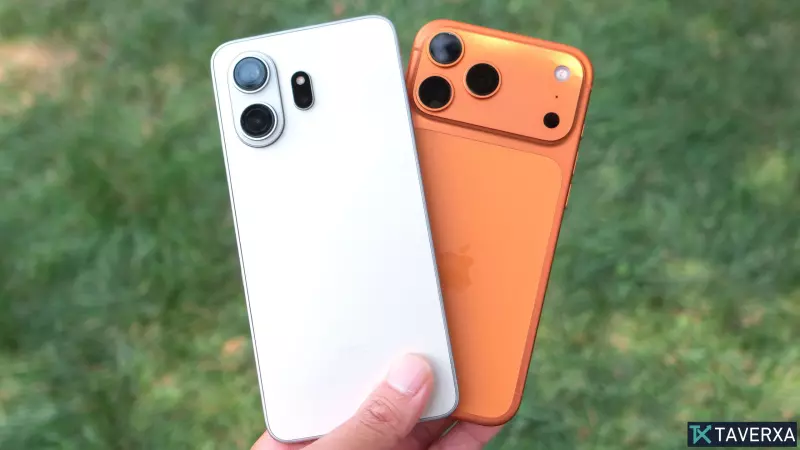
The Great Smartphone Camera Divide: Value vs. Luxury
For years, the prevailing wisdom in the tech world has been simple: if you want professional-grade photography from your pocket, you have to pay a premium. The industry has conditioned consumers to believe that rich colors, intricate details, and capable low-light performance are exclusive to four-figure flagships. Budget phones, meanwhile, have often been stereotyped as devices that produce 'cheap-looking' images, suitable for a quick social media post but unsuitable for anything more substantial.
However, as the gap between budget and ultra-premium hardware widens, a new question emerges: have we reached a point of diminishing returns? To find out, we put the budget-friendly TCL NXTPAPER 70 Pro ($329) head-to-head against the industry titan, the iPhone 17 Pro Max ($1,199), across 25 real-world photographic scenarios.
Hardware Breakdown: On Paper vs. In Practice
Before diving into the results, it is essential to look at the specifications. On paper, the TCL NXTPAPER 70 Pro holds its own with a 50MP main sensor and a surprisingly high-resolution 32MP selfie camera. The iPhone 17 Pro Max, while utilizing a slightly lower megapixel count on its main 48MP sensor, leverages superior aperture (f/1.78) and a sophisticated triple-lens array that includes a dedicated 48MP telephoto lens with 4x optical zoom.
Daylight Performance: Closing the Gap
In bright, ideal lighting, the disparity between the two devices is remarkably slim. In several shots, the TCL NXTPAPER 70 Pro delivered compositions and exposures that nearly mirrored the iPhone. From urban street scenes to outdoor architecture, the budget phone captured the essence of the moment with impressive clarity.
However, the 'devil is in the details.' Upon closer inspection of ultrawide shots, the iPhone's 48MP ultrawide sensor provides significantly more definition and edge-to-edge sharpness compared to the TCL's 8MP ultrawide. Similarly, while the TCL uses digital cropping to achieve zoom, it cannot compete with the iPhone's dedicated optical telephoto lens, which maintains crisp edges where the budget phone begins to produce a 'watercolor' smudge effect.
The Low-Light Battle: A Different League
If daylight is where the budget phone competes, low-light is where the flagship dominates. This is the area where the $870 price difference becomes most apparent. The iPhone 17 Pro Max's night mode transforms near-total darkness into a visible, balanced scene, preserving color accuracy and pulling detail out of the shadows.
The TCL NXTPAPER 70 Pro struggles significantly in these environments. In many night shots, the budget device produces flat, grainy images or silhouettes, failing to gather enough light to define the subject. While it performs decently when there is some ambient light available, it lacks the raw light-gathering power and computational processing required for true nighttime photography.
Selfies and Portraits: Artificiality vs. Realism
In the realm of selfies, the TCL's 32MP sensor is a powerhouse, occasionally offering more facial definition than the iPhone's 18MP setup. However, the iPhone excels in the way it processes the image. In portrait modes, the iPhone's bokeh (background blur) is progressive and natural, whereas the TCL occasionally relies on aggressive over-sharpening that can look artificial upon closer inspection.
The Final Verdict: Do You Need the Flagship?
The results of this 25-photo experiment suggest that for the average user who primarily shares photos on social media and shoots in daylight, the TCL NXTPAPER 70 Pro offers incredible value. It proves that budget phones are no longer a total compromise; they are now 'good enough' for the vast majority of daily needs.
That said, the iPhone 17 Pro Max remains the king for those who demand versatility. Whether it's the ability to crop deeply into a photo without losing detail, professional-grade low-light performance, or a realistic portrait blur, the flagship's hardware justifies its cost for power users. For everyone else, the era of the 'cheap' camera may finally be over.