Beyond Tracking: The Rise of Real-Time Sleep Intervention Technology
Move beyond passive sleep tracking. Discover how the new era of sleep intervention tech uses real-time data to prevent wake-ups and improve long-term health.
The Evolution of the Sleep Industry: From Passive Data to Active Solutions
For years, the consumer sleep tech market has been dominated by 'passive tracking.' Millions of users have strapped smartwatches, rings, and patches to their bodies to wake up to a 'sleep score'—a numerical representation of how poorly they rested. While these devices succeeded in exposing a global sleep crisis, they left users with a critical void: knowledge without action. Knowing you woke up at 3 a.m. is far less helpful than having a system that prevents the wake-up from happening in the first place.
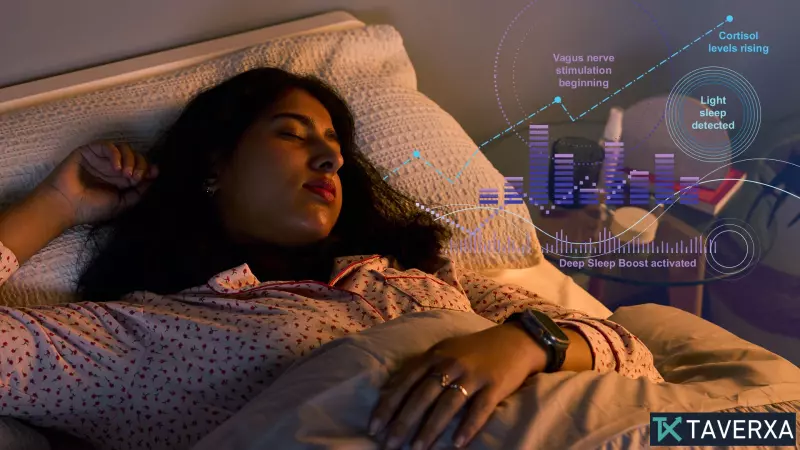
We are now entering the era of sleep intervention. This new school of technology doesn't just read the data; it 'writes' a solution in real-time, actively modifying the user's biological or environmental state to ensure deeper, more restorative rest.
Moving Off the Wrist: The Comfort Revolution
One of the primary barriers to consistent sleep tracking has been the 'wearable fatigue' associated with bulky watches. To combat this, the industry is pivoting toward non-intrusive and screen-free form factors.
Innovations like the Oura Ring 5 and Fitbit Air focus on minimalism, while other companies are moving the technology off the body entirely. Bedside solutions such as the Sleepal lamp and the Withings Sleep Mat allow users to monitor their health without wearing a single device, proving that the most effective technology is often the kind you don't feel.
The Science of Precision: Brainwaves and Cortisol
To move from tracking to intervention, tech needs higher-fidelity data. Standard wearables estimate sleep stages via heart rate and movement, but the next generation is tapping into the brain itself.
Devices like the Elemind headband and NextSense earbuds employ brainwave monitoring (such as capturing Alpha waves) to identify the exact moment a user begins to drift toward wakefulness. Meanwhile, Adaptyx is pushing boundaries by tracking cortisol—the stress hormone—in real-time. By understanding the 'cortisol awakening response,' these devices can potentially modulate the body's internal rhythm to prevent premature waking.
How Sleep Intervention Works in Real-Time
Sleep intervention operates as a 'closed loop' system: the device monitors a biological marker, identifies a disruption, and immediately deploys a counter-measure.
- Neurological Intervention: Headbands like Elemind and Muse S Athena can detect brain activity that precedes a wake-up and use auditory or sensory cues to soothe the brain back into a deep sleep state.
- Environmental Adjustment: Systems like Eight Sleep and Orion adjust mattress temperature in real-time. If the tracker detects the user is overheating (a common cause of 3 a.m. wake-ups), the bed cools down instantly to maintain the optimal sleep temperature.
- Sensory Optimization: Personalized scent systems like Kimba use olfactory triggers to encourage relaxation and optimize the sleep-wake cycle based on individual biology.
The Bigger Picture: Sleep as Preventative Medicine
The shift toward intervention is not just about convenience; it is about long-term health. Deep sleep is a critical biological lever tied to memory consolidation, metabolic health, and the clearing of proteins linked to Alzheimer's disease.
Experts suggest that by treating sleep as an active intervention rather than a passive metric, technology can transition into a form of 'electronic medicine.' While these devices are not replacements for doctors or treatments for severe sleep apnea, they offer a non-pharmaceutical way to enhance wellness and potentially mitigate chronic diseases associated with long-term sleep deprivation.
Bottom Line: The Future of Rest
As we look toward the next decade, the 'sleep score' will likely become a legacy metric. The future belongs to personalized, invisible, and active systems that act as a secondary autonomic nervous system—monitoring our biology and fixing problems before we even realize they are happening. Sleep is no longer just something we track; it is something we can actively restore.