Beyond the Stoic: How Doug Cockle Saved Geralt of Rivia from Being Emotionless
Discover how Doug Cockle defied CD Projekt Red's orders to keep Geralt emotionless, shaping The Witcher into the legendary RPG it is today.
The Voice That Defined a Legend
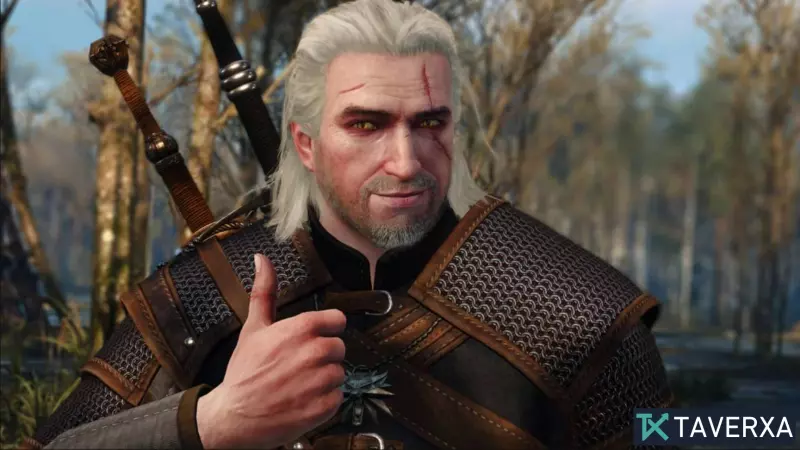
For millions of players worldwide, the gravelly, seasoned voice of Geralt of Rivia is synonymous with The Witcher series. However, the iconic portrayal of the White Wolf we know today was almost very different. Recent revelations have shed light on a creative clash between the voice actor, Doug Cockle, and the developers at CD Projekt Red during the early stages of the franchise's development.
At the heart of the conflict was the fundamental interpretation of what a Witcher actually is. In the lore, Witchers undergo mutations that are said to strip them of their emotions, leaving them as cold, efficient killing machines. CD Projekt Red initially wanted this lore translated literally into the game's performance, directing Cockle to deliver his lines with a flat, robotic, and entirely emotionless tone.
"We Are Not Creatures Without Emotions"
Doug Cockle, however, saw a danger in this approach. He argued that a completely devoid-of-emotion character would be impossible for players to bond with and, more importantly, would be boring to play as for dozens of hours. Cockle challenged the directive, pushing back against the studio's insistence on a sterile delivery.
He contended that while Witchers might be less emotional than the average human, they were not mindless automatons. To create a compelling protagonist, Cockle insisted on injecting nuance, irony, and subtle emotional depth into Geralt's voice. He believed that the tension between Geralt's professional stoicism and his internal moral compass was where the true character lived.
The Impact of Creative Defiance
The decision to ignore the strict "emotionless" guidelines proved to be a turning point for the series. By adding layers of weariness, dry humor, and occasional warmth to Geralt's voice, Cockle transformed him from a generic monster-hunter into a complex anti-hero. This depth allowed players to feel the weight of Geralt's loneliness and the genuine affection he held for characters like Ciri and Yennefer.
Had Cockle followed the original directives to the letter, The Witcher 3: Wild Hunt might have lacked the emotional resonance that propelled it to become one of the most beloved RPGs of all time. The chemistry between the voice acting and the narrative writing created a synergy that made the world of the Continent feel lived-in and authentic.
A Lesson in Collaborative Art
This behind-the-scenes struggle highlights the importance of the relationship between developers and performers. While the writers provide the script, the actor provides the soul. In this instance, the actor's intuition about character psychology superseded the literal interpretation of the lore, resulting in a more sophisticated and enduring performance.
Today, Geralt stands as a masterclass in character design—a man of few words, but whose every grunt and sigh conveys a world of experience. It serves as a reminder that sometimes, the best creative results come from knowing when to push back against the plan.