Apple Watch Series 11 Review: A Battery Breakthrough and Health Innovation
The Apple Watch Series 11 finally breaks the battery ceiling with 24-hour life, adds hypertension alerts, and introduces daily sleep scores. Read our full review.
Breaking the 18-Hour Barrier
For over a decade, Apple Watch users have lived by a strict charging ritual. The 18-hour battery life ceiling was a known constant, turning the flagship smartwatch into a device that required a nightly power boost. However, the Apple Watch Series 11 finally shatters this limitation. Now rated for a full 24 hours of battery life with the always-on display enabled, the Series 11 transforms the user experience. In real-world testing, this shift means you can charge your watch in the morning and comfortably make it through the entire day and evening without anxiety. For those who utilize Low Power Mode, the endurance stretches further to 38 hours, providing a reliable safety net for long trips.
Design, Durability, and Display
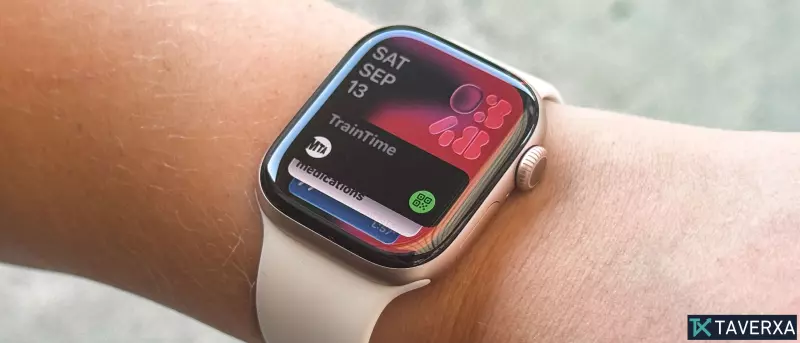
Visually, the Series 11 maintains the refined aesthetic introduced in the Series 10, featuring a thinner profile and a larger screen. While the dimensions remain consistent, Apple has introduced a new 'Space Grey' aluminum option that adds a modern touch to the palette. For those seeking luxury, the Titanium cases in Gold, Natural, and Slate remain available.
A critical upgrade for the active user is the display's durability. The LTPO3 wide-angle OLED screen now features glass that is twice as scratch-resistant as previous generations. This is a welcome refinement for anyone who has suffered the inevitable scuffs of daily wear. While the 2,000-nit brightness is impressive, it's worth noting that it doesn't quite reach the 3,000-nit peak of the Apple Watch Ultra 3, which remains the gold standard for high-glare outdoor environments like golf courses or mountain trails.
Next-Gen Health Monitoring: Hypertension and Sleep
Apple continues to pivot the Watch toward being a comprehensive health tool. The standout feature is the new hypertension alert system. While the Series 11 is not a clinical blood pressure monitor, it employs a sophisticated algorithm and the optical heart rate sensor to establish a 30-day baseline. If the watch detects signs of high blood pressure, it triggers a notification advising the user to seek medical evaluation or use a traditional blood pressure cuff. This feature is FDA-cleared and available in over 150 countries, notably supporting older models like the Series 9 and Ultra 2 via software updates.
Further enhancing the wellness suite is the Daily Sleep Score. Following the lead of competitors like Garmin and Oura, Apple now provides a numeric score out of 100. This score isn't arbitrary; it is calculated based on sleep duration, consistency of bedtime, and the frequency of interruptions, allowing users to pinpoint exactly where their sleep hygiene needs improvement.
watchOS 26: Intelligence and Interface
The hardware is supported by watchOS 26, which introduces the 'Liquid Glass' interface and a new 'Flow' watch face that blends fluid colors with elegant numerals. For fitness enthusiasts, the new 'Workout Buddy' provides a personalized AI coaching experience, though it requires an Apple Intelligence-compatible iPhone to function fully. Other quality-of-life improvements include a new wrist-flick gesture to dismiss notifications and live message translations.
Despite these additions, Siri remains a point of contention. In a landscape where Google Gemini is making the Pixel Watch and Galaxy Watch feel more proactive, Siri's integration still feels conservative. The hope is that future updates will unlock a more context-aware AI that makes voice interaction truly seamless.
Final Verdict: Should You Upgrade?
The Apple Watch Series 11 represents a 'sweet spot' of evolution. By solving the battery life dilemma and doubling down on health alerts and durability, Apple has created a compelling case for anyone using a Series 8 or older. While those on a Series 10 may find the incremental changes too subtle to justify the cost, first-time buyers and long-term users will find the 24-hour battery and hypertension monitoring to be genuine game-changers.