AMD Redefines AI Compute: The 31,000 Gigabyte Server Rack
AMD has unveiled a 256-core CPU and the massive Helios server rack, which packs a staggering 31,000 gigabytes of HBM4 VRAM, highlighting the massive divide between consumer and enterprise AI hardware.
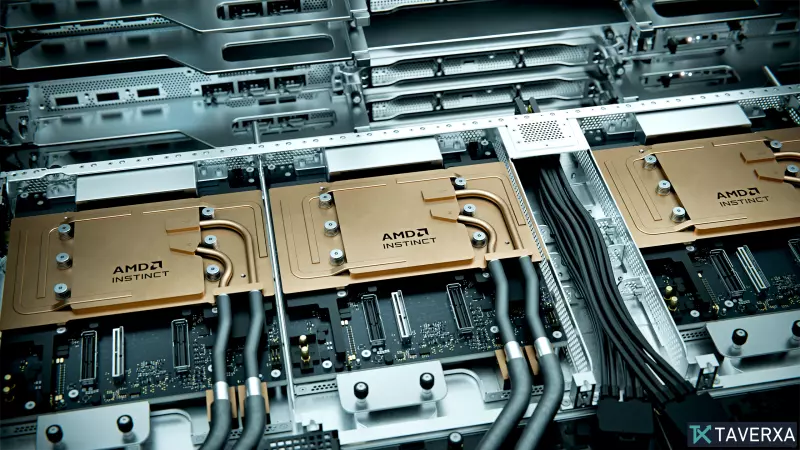
At the recent Advancing AI 2026 event, AMD delivered a stark reminder of the widening divide between consumer technology and enterprise-grade hardware. While the average PC enthusiast struggles to justify the cost of a 16GB graphics card for gaming, AMD has unveiled a massive leap forward in server-side computing power.
The Rise of the 256-Core Beast
The headline act was the new 6th Gen EPYC 9006 Series (SP7) processor. Featuring a staggering 256 cores and 512 threads on a single chip, with boost clocks hitting 5.15GHz, this chip isn't just powerful—it's a paradigm shift. Designed for the high-overhead demands of 'agentic' AI, these processors handle complex sandbox environments and massive memory states that would crush any standard consumer CPU.
Helios: A 31,000 Gigabyte Monster
Perhaps even more jaw-dropping is the Helios Rackscale solution. This single server cabinet houses 18 compute trays, each packed with 72 AMD Instinct MI455X GPUs. The result is a unified system offering 31 terabytes (31,000 GB) of HBM4 VRAM and 1.7 petabytes per second of memory bandwidth.
To put this into perspective, a single Helios rack provides the raw memory bandwidth equivalent to approximately 1,900 Nvidia RTX 5070 Ti desktop GPUs working in perfect unison.
The Silicon Inequality Gap
This announcement highlights the intense competition for resources in the current AI-dominated tech landscape. As manufacturing capabilities are funneled into these massive, high-profit enterprise solutions, consumers are left wondering when the 'RAMageddon' cycle of high prices and limited supply will end. While the sheer scale of the Helios system is a testament to human engineering, it serves as a sobering reminder of where the future of high-end silicon is being directed.