A Decade of Pixels: Why Google Continues to Build Smartphones in an AI-Driven Era
After 10 years of Pixel phones, explore why Google continues to make hardware and how the Pixel 11 aims to win the AI war against Apple and Samsung.
The Ten-Year Journey of the Google Pixel
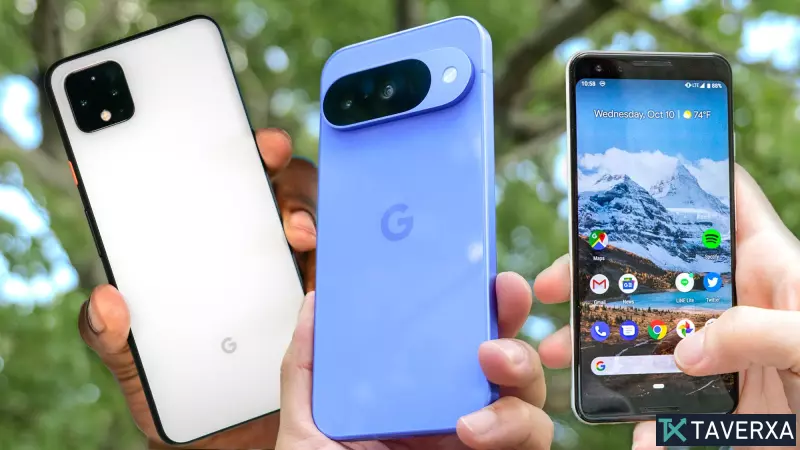
It is difficult to overstate the shift in the smartphone landscape since the first Google Pixel debuted a decade ago. While Google had previously collaborated with partners like HTC for the Nexus series, the original Pixel marked the first time the company took full ownership of both the hardware and the software experience. Launching with a 5-inch OLED display and an 8MP camera, the Pixel wasn't trying to win a spec war; it was attempting to redefine the flagship experience by integrating Google's services deeper into the silicon and glass.
From the start, Google bet on computational photography—using sophisticated algorithms to elevate image quality rather than relying solely on larger sensors. This philosophy paved the way for the current era of AI-integrated mobile devices, with Google Assistant being a cornerstone of the operating system long before the current generative AI boom.
Analyzing the Market: Success or Strategic Niche?
Despite a decade of iteration, Google remains a relatively small player in terms of global volume. According to data from IDC, Google's global market share lingers around the 10th position. However, the narrative is more nuanced when looking at specific regions. In the United States, Google's market share grew fourfold between 2020 and 2025, reaching approximately 4.1%. In Japan and the UK, the company has secured a stronger foothold, ranking as the No. 3 brand in both territories.
Industry analysts suggest that Google's lower global volume is a deliberate strategic choice rather than a failure. Unlike Apple or Samsung, who distribute in over 120 territories, Google restricts official hardware sales to roughly 22 countries. This prevents Google from directly "dethroning" the hardware ecosystems of its most vital Android partners, such as Samsung and Xiaomi. The Pixel serves as a high-profile showcase—a "North Star"—for what Android can achieve when software and hardware are perfectly synced.
The AI War: Gemini as the Core Value Proposition
The driving force behind the continued existence of the Pixel line is the escalating AI war. With the rise of Large Language Models (LLMs) like Gemini, Google needs a first-party device to act as a counterweight to Apple's ecosystem. By owning the hardware, Google can release AI features on its own timeline without waiting for partner approval.
The development of the custom Tensor chip was a pivotal move in this strategy. It enabled breakthroughs like Magic Eraser on the Pixel 6 and Photo Unblur on the Pixel 7. Most recently, the Pixel 9 introduced Gemini Live, allowing for real-time, continuous voice interactions. As competitors like Samsung integrate multiple AI engines (such as Gemini and Perplexity) into their devices, Google must use the Pixel to prove it remains the undisputed leader in AI-native mobile experiences.
Looking Ahead: The Pixel 11 and the Future of Form Factors
As the "Made by Google" event approaches, anticipation is building for the Pixel 11 series, which is expected to include the standard Pixel 11, Pro, Pro XL, and the Pro Fold. Rumors suggest the Pixel 11 will be powered by a cutting-edge 2nm Tensor G6 chip, designed to accelerate on-device AI tasks and enhance low-light photography via Night Sight.
One of the most anticipated features is "Gemini Proactive Assistance," which would allow the AI to analyze on-screen notifications and app data to anticipate user needs—such as suggesting a restaurant based on a text conversation. Additionally, a new "HiLight LED" on the Pixel 11 Pro may provide ambient visual cues when interacting with Gemini.
Conclusion: A Calculated Gamble
Google finds itself in a delicate balancing act: it wants to champion the ideal AI-first smartphone without alienating the partners that keep Android dominant. While the Pixel may not yet be a household name on the scale of the iPhone, its role has evolved from a mere product to a strategic tool for AI deployment. Whether the Pixel 11 can finally break through to the mass market depends on whether Google decides to move beyond its current niche and aggressively expand its global distribution and marketing presence.