Greece Deploys Advanced Heat-Seeking Satellites to Combat Escalating Wildfire Crisis
Greece is revolutionizing its wildfire response by deploying a fleet of heat-seeking satellites and drone networks to improve fire detection, prediction, and operational efficiency.
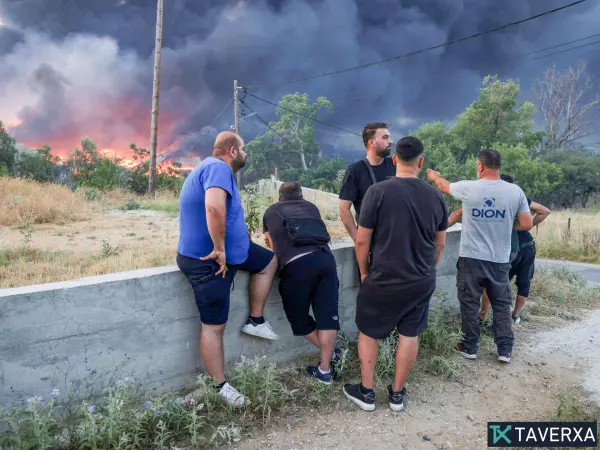
As Greece faces increasingly frequent and intense wildfire seasons fueled by climate change, the Hellenic Space Center (HSC) is spearheading a high-tech revolution in fire management. In a critical shift from traditional observation methods, the nation is now integrating cutting-edge thermal imaging satellite technology to bolster its defense against the 10,000 forest and field fires that strike the country annually.
The Precision of Thermal Surveillance
Operating from a specialized tasking room in Athens, engineers are utilizing data from four new satellites orbiting 550km above the Earth. Unlike standard imaging, these satellites specialize in thermal detection. By monitoring real-time changes in ground temperature and humidity, these assets can predict fire-prone areas hours before an ignition occurs. Furthermore, their ability to peer through dense smoke allows ground commanders to identify precise 'hot spots,' enabling more accurate water-bombing missions by aviation units.
A Multi-Layered Defense Strategy
Beyond the orbital hardware, Greece is rapidly scaling up its surveillance infrastructure. The current fleet of four satellites is being supplemented by access to 20 additional units from OroraTech, ensuring constant coverage of the country's 132,000 square kilometers. Later this year, seven more multi-spectral satellites—built by Open Cosmos—are slated for launch. These will provide granular data on vegetation health, chlorophyll levels, and moisture stress, offering a comprehensive view of environmental vulnerability.
From Reactive to Predictive
The strategy relies on a "triad" of information: satellite data provides the big picture, drone networks offer the tactical view, and ground personnel deliver the operational reality. The use of drones has already proven highly effective, with the fleet expanding from 40 units two years ago to 105 today. This digital oversight has not only improved response times—crucial when a fire can be extinguished with a bucket of water in its first minute—but has also served as a tool for law enforcement. Through drone-assisted forensic investigations, the number of arson-related arrests has more than doubled in recent years, reaching over 400 annually.
By transitioning to a model of early warning and rapid precision, Greece hopes to mitigate the catastrophic losses seen in recent years, such as the devastating blazes on Evia and in Western Thrace. As officials state, this technological integration is no longer a luxury, but a necessity in an era of unprecedented climate volatility.