US Civil Rights Groups Challenge Trump Administration's Sanctions on International Criminal Court
DAWN and TAAG file a lawsuit against the Trump administration, claiming sanctions on the International Criminal Court (ICC) violate US citizens' First Amendment rights.
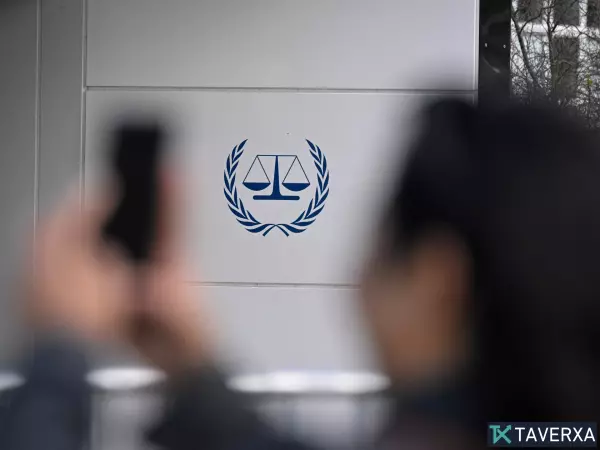
Constitutional Crisis: US Citizens Sue Over ICC Sanctions
In a significant legal escalation, two prominent Washington, DC-based organizations have filed a lawsuit challenging the Trump administration's aggressive sanctions regime against the International Criminal Court (ICC). The legal action, brought forward by the DAWN rights organization and the Taxpayers Alliance Against Genocide (TAAG), argues that these sanctions constitute an overreach of executive power and a direct violation of the constitutional rights of American citizens.
The core of the dispute lies in a series of executive orders initiated in February 2025. These measures were implemented by the Trump administration in direct response to the ICC issuing arrest warrants for Israeli Prime Minister Benjamin Netanyahu and former Defence Minister Yoav Gallant, targeting their alleged role in actions within Gaza.
Stifling Free Speech and Human Rights Advocacy
The plaintiffs contend that the sanctions are not merely diplomatic tools but are being used to police the political expression of millions of Americans. By imposing penalties on ICC officials, judges, and prosecutors, as well as the individuals and organizations that support their investigations, the administration is effectively chilling free speech.
According to the lawsuit, these actions violate the First Amendment, limiting the ability of US citizens to engage in Palestine-related human rights advocacy. The groups argue that the sanctions prevent Americans from communicating with international tribunals and associate with sanctioned parties, thereby creating a "climate of fear" for those seeking accountability for international crimes.
The Legal Battle: IEEPA and the Constitution
A pivotal point of the legal challenge centers on the International Emergency Economic Powers Act (IEEPA) of 1977. The lawsuit asserts that the Trump administration has misused this act, which explicitly prohibits the president from using sanctions to restrict "personal communications" or the transmission of "informational materials."
This is not the first time the administration's approach to the ICC has faced judicial scrutiny. A federal judge in New York previously ruled in favor of two law professors, agreeing that the sanctions infringed upon their First Amendment rights to advise the ICC prosecutor. Furthermore, the sanctions against UN Special Rapporteur Francesca Albanese were briefly overturned by a court in May, though they were later reimposed upon appeal.
A "Whole-of-Government" Campaign to Dismantle the ICC
The lawsuit arrives as the US government signals a more aggressive stance toward the Hague-based court. US Secretary of State Marco Rubio recently pledged a "whole-of-government response" to dismantle the ICC, claiming the court threatens the integrity of the US political and legal system.
While the US is not a signatory to the Rome Statute and therefore does not recognize the ICC's jurisdiction over its own citizens, the court maintains that it can investigate crimes committed on the territory of member states. This has led to ongoing tensions regarding US military and intelligence personnel's actions in Afghanistan, as well as the current situation in Gaza.
Voices for Justice
Omar Shakir, executive director of DAWN, described the administration's tactics as using a "blunt instrument" to punish human rights defenders. His legal representative, Joseph Pace, emphasized that while the US government has the power to plead its case on the world stage, it cannot legally criminalize American citizens for sharing a contrary perspective with an international court or seeking justice for alleged war crimes.
As the legal battle progresses, it stands as a critical test of the balance between national security interests and the fundamental constitutional rights of US citizens to advocate for international human rights.