Toronto Faces Global Air Quality Crisis as Wildfire Smoke Chokes North America
Toronto records the world's worst air quality due to Ontario wildfires, with smoke spreading across the US and impacting millions.
An Unprecedented Atmospheric Crisis
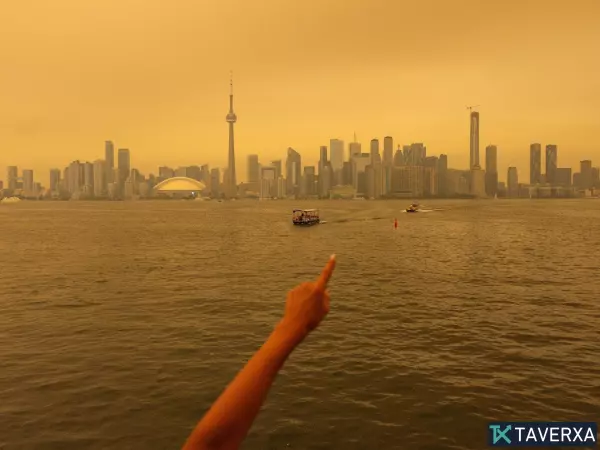
Toronto, Canada’s financial hub, has officially claimed the unenviable title of the city with the worst air quality on the planet. According to real-time data from Swiss technology firm IQAir, the city’s air has surpassed historically polluted urban centers like New Delhi and Kinshasa. The culprit is an massive influx of wildfire smoke drifting south from northwestern Ontario, creating a hazardous haze that has blanketed the region and triggered a 'very high risk' health alert.
The Scale of the Wildfire Threat
While the current wildfire season began at a pace slower than the extreme cycles of 2023 and 2025, the reality on the ground remains dire. More than 800 active fires are currently burning across Canada, with 112 categorized as 'out of control.' These blazes have already consumed an estimated 1.9 million hectares (4.7 million acres) of forest land. In a stark display of the fire's reach, a Canadian National train was recently captured on video surrounded by flames near the community of Armstrong, leading to the immediate evacuation of local residents and the suspension of critical rail infrastructure.
Cross-Border Health Impacts
The smoke does not stop at the border. Meteorological patterns have funneled the particulate-heavy air into the northeastern United States, impacting states from Pennsylvania to Maine. Major urban centers, including New York City, are struggling under the smog. Experts suggest that the situation may worsen before it improves, with stagnant weather systems keeping the smoke trapped in the Great Lakes and New England regions. Health officials in affected areas are urging vulnerable populations—including children, the elderly, and those with respiratory conditions—to avoid strenuous outdoor activities.
A New Normal?
Climate scientists point to a combination of persistent heatwaves and changing land management conditions as the primary drivers of this intensity. Greg Evans, a professor of chemical engineering at the University of Toronto, highlights that the concurrence of record-breaking heat and thick smoke is becoming a recurring phenomenon. 'I expect that this will occur more frequently over the coming decades,' Evans noted, emphasizing that metropolitan planning must now account for smoke-related health emergencies as a permanent facet of modern life. As authorities prepare for massive public gatherings, such as the upcoming FIFA World Cup final in New Jersey, the potential for air-quality-related disruptions to large-scale events remains a growing concern for regional planners.