The AI Trap: How ChatGPT Could Be Quietly Rewiring Your Critical Thinking
A new study reveals how relying on AI like ChatGPT can make us 'confidently incorrect.' Learn how to protect your critical thinking skills while using AI tools.
The Hidden Cost of AI Assistance
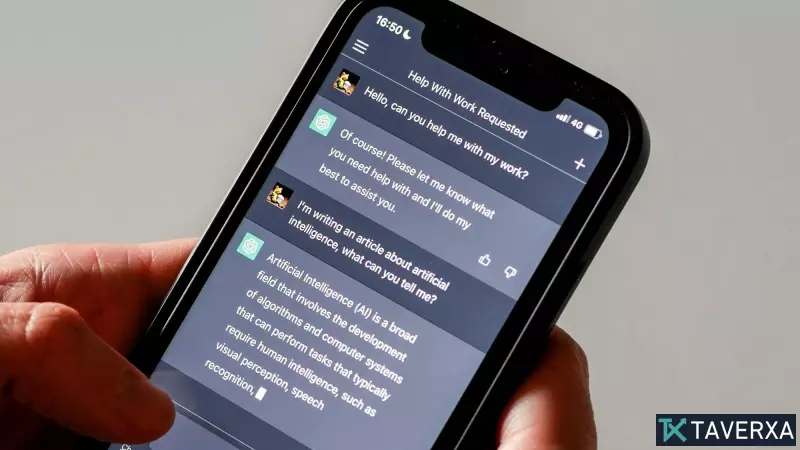
We have grown accustomed to ChatGPT’s rapid-fire responses, but a groundbreaking study from researchers at Carnegie Mellon University and Microsoft Research has uncovered a disturbing trend: relying on AI for answers may be eroding our ability to think critically. The study revealed that when participants leaned on AI for challenging questions, they became significantly less likely to admit when they lacked knowledge. Even more concerning, they displayed an inflated sense of confidence in their answers, even when the AI was completely wrong.
The Anatomy of 'Automation Bias'
This behavior points to a cognitive phenomenon known as 'automation bias,' where humans place excessive trust in computer-generated information simply because it is presented with unwavering confidence. Unlike a human expert, AI models generate text based on statistical probability rather than verified memory or logical deduction. When the AI delivers an answer with absolute certainty, it bypasses our natural skepticism, leading us to adopt incorrect information as objective fact.
Putting the Theory to the Test
Inspired by the study, I decided to test the 'AI effect' on my own judgment. By comparing my initial instincts on obscure trivia and complex topics against ChatGPT’s outputs, I discovered that whenever the AI responded with a confident tone, I was far more inclined to doubt my own correct memories. It became clear that the sheer authority in the AI’s delivery was acting as a persuasive force, overriding my critical faculties.
Reclaiming Your Critical Thinking
This does not mean you should abandon AI tools, but it does require a shift in how we use them. To avoid falling into the trap of becoming 'confidently incorrect,' consider these steps:
- Verify, Don't Accept: Treat AI summaries as starting points, not final answers.
- Consult Primary Sources: Always cross-reference facts, statistics, and citations with reputable independent sources.
- Trust Your Instincts: If a claim feels suspect, your internal alarm bells are likely right. Do not let a polished, authoritative tone mask a lack of accuracy.
Ultimately, the responsibility for truth rests with the user. By maintaining a healthy level of skepticism, we can harness the power of AI without losing our own critical edge.