Samsung Galaxy Z Fold 8 Reality Check: Does the 'Crease-Free' Display Actually Last?
After 7 days of real-world testing, we reveal if the Samsung Galaxy Z Fold 8 truly delivers a crease-free display or if physics eventually wins.
The Hype vs. The Reality of Foldable Screens
When the Samsung Galaxy Z Fold 8 first hit the market, the tech community was buzzing with a singular, ambitious claim: the end of the foldable crease. Initial reviews and hands-on demonstrations suggested that Samsung had finally conquered the most persistent annoyance of foldable technology. With the introduction of a new titanium alloy film and a reinforced back plate, the display appeared taut, smooth, and virtually seamless upon unboxing.
For the first few days, the illusion held. The 'Flex Titanium' display lived up to the early hype, offering a viewing experience that felt closer to a traditional slab phone than any previous foldable. However, a critical question remained: would this 'crease-free' experience survive the rigors of daily use?
The Seven-Day Verdict: Physics Always Wins
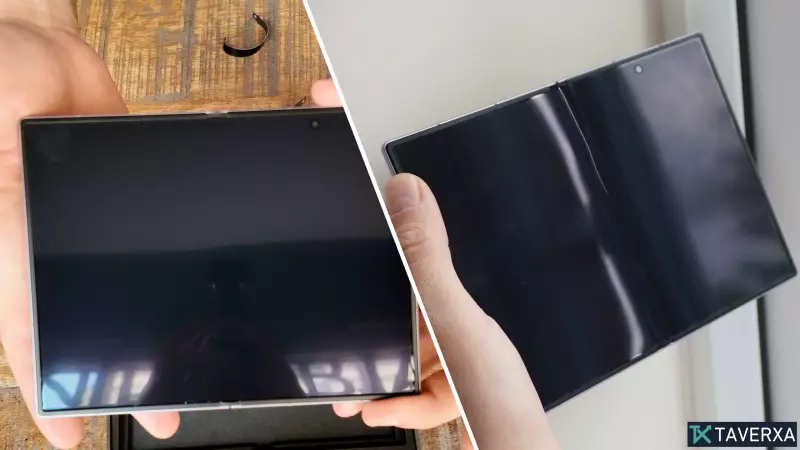
After a full week of intensive 'daily driving'—which included multitasking during gym sessions, endless web browsing, and a steady stream of TikTok scrolling—the truth emerged. By day seven, the invisible crease had returned. While it isn't as deep or distracting as the ruts found on older generations, the once-seamless surface has settled into a visible line.
This phenomenon isn't a defect of a single unit, but rather a result of what engineers call 'plastic deformation.' Despite the advanced materials, the act of folding and unfolding a screen hundreds of times a day subjects the display layers to immense mechanical stress. Combined with the natural heat generated by the device's processor, the materials eventually lose their factory-fresh tension and begin to settle into the mechanical trench of the hinge.
Analyzing the Impact: Is It a Dealbreaker?
To be clear, the reappearance of the crease does not make the Galaxy Z Fold 8 a bad device. In terms of tactile feel, the experience remains largely unchanged; your finger doesn't encounter a significantly deeper dip than it did on day one. The issue is primarily visual.
Interestingly, Samsung's praised anti-reflective coating may actually play a role in making the crease more apparent. When held against harsh light sources, such as a sunlit window, the distortion in the reflection highlights the rut, making the crease more noticeable than it might be on a more reflective screen.
Pros and Cons of the New Form Factor
- The Good: The passport-style dimensions make the Z Fold 8 significantly more pocketable than its predecessors. The aspect ratio is also vastly improved for content consumption, making it feel more like a natural evolution of the smartphone.
- The Bad: The $1,899 price tag is a steep investment. When paying a premium, users expect a level of longevity and 'perfection' that is currently at odds with the laws of physics.
Final Thoughts: A Step Forward, Not a Leap
Samsung has undoubtedly made the most significant progress toward a seamless screen in the history of the Z Fold series. The crease is objectively less intrusive than it was on the Z Fold 7 or the Google Pixel 10 Pro Fold. However, describing the display as 'crease-free' is a temporary illusion rather than a permanent feature.
For those considering the upgrade, the Galaxy Z Fold 8 remains a fantastic piece of hardware. But buyers should enter the experience with realistic expectations: until a fundamental breakthrough in material science occurs, every foldable will eventually show its age at the fold.