UN Secretary-General Warns of Humanitarian Catastrophe as UNRWA Faces Crippling Funding Gap
UN chief Antonio Guterres warns that millions of Palestinians are at risk due to a $100m UNRWA funding gap and restrictive Israeli policies.
A Precarious Future for Millions
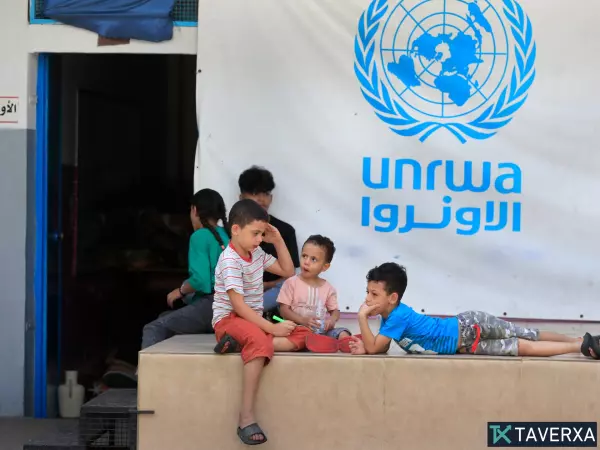
United Nations Secretary-General Antonio Guterres has issued a stark warning regarding the precarious state of the United Nations Relief and Works Agency for Palestinian Refugees (UNRWA). During a critical donor conference, Guterres revealed a pressing $100 million funding shortfall, asserting that the safety and basic welfare of millions of Palestinian refugees currently hang in the balance. The UN chief emphasized that the agency is operating under extreme pressure, caught between a severe financial crisis and restrictive operational hurdles.
Compounding Crises in Gaza, West Bank, and Lebanon
The funding gap is not the only obstacle facing the agency. Guterres highlighted a "triple threat" of instability affecting the regions where UNRWA operates. In the Gaza Strip, living conditions have been described as "utterly appalling," with the population facing systemic collapse. Simultaneously, the occupied West Bank has seen an escalation in violence by Israeli settlers, and Lebanon—which provides shelter to a significant number of Palestinian refugees—has been rocked by intensified Israeli attacks.
According to Guterres, the combination of sweeping restrictions imposed by Israel and the current cash shortfall is pushing the agency's capacity beyond a breaking point, threatening the very existence of essential services for 2.6 million refugees across Gaza, the West Bank, East Jerusalem, Jordan, Lebanon, and Syria.
The Political War on Aid: Disinformation and Restrictions
Beyond the financial deficit, the UN Secretary-General denounced a concerted effort to undermine UNRWA through what he termed "disinformation, smear campaigns, and diplomatic roadblocks." He characterized the agency as a "stabilizing force in an age of instability," arguing that attempts to delegitimize the organization only serve to endanger the millions who rely on its schooling, healthcare, and social services.
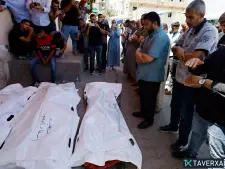
The human cost of this conflict is devastating. Guterres noted that since October 2023, 390 UNRWA personnel have been killed by Israeli forces in Gaza, illustrating the extreme risks faced by humanitarian workers on the ground.
The Impact of U.S. Funding Cuts and Allegations
The financial instability was exacerbated in January 2024 when the United States, historically UNRWA's largest donor, suspended its funding. This move followed Israeli allegations that a small number of agency staff participated in the October 7, 2023, attacks led by Hamas. While Israel claimed widespread complicity, the UN’s Office of Internal Oversight Services conducted an investigation into 19 staff members. The findings indicated that nine employees "may have been involved," while no evidence or insufficient evidence was found against the remaining ten.
In response to these allegations, Guterres noted that UNRWA has taken decisive steps to implement institutional reforms and update policies regarding the political activities of its staff to maintain neutrality and transparency.
International Outcry and the Path Forward
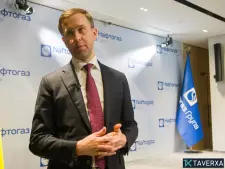
The international community has largely remained supportive of the agency's mandate, which was renewed by the UN General Assembly six months ago with overwhelming support. Ahmet Yildiz, Turkiye’s permanent representative to the UN, echoed the Secretary-General's concerns, stating that UNRWA is facing "unprecedented political attacks." Yildiz further claimed that Israeli actions constitute blatant violations of international law, intended to obstruct Palestinian refugees from their right to return to their land.
As the world awaits the official announcement of voluntary contributions, the message from the UN is clear: without urgent financial backing and the removal of operational restrictions, the humanitarian infrastructure supporting millions of the world's most vulnerable people may collapse entirely.