Ugreen DXP2800 GT vs DXP4800 GT: Which NAS Fits Your Storage Needs?
Comparing the Ugreen DXP2800 GT and DXP4800 GT NAS devices to help you decide which is better for replacing your cloud storage.
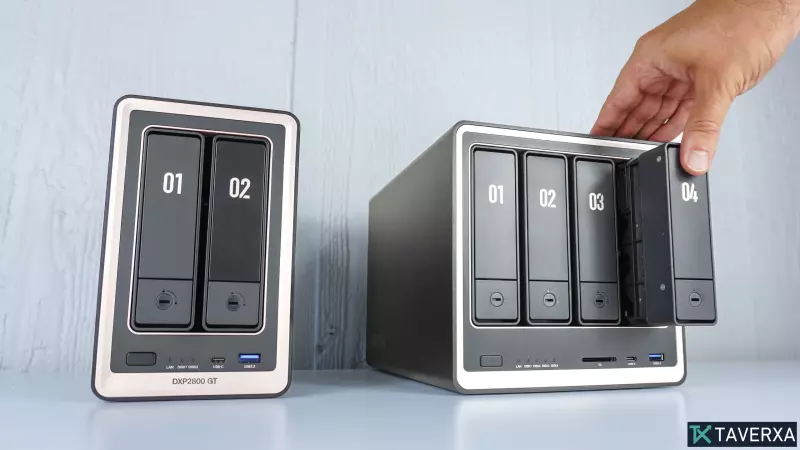
As monthly costs for cloud storage continue to rise, many users are looking for a more cost-effective, long-term solution. Network Attached Storage (NAS) devices have emerged as the go-to alternative, offering users full control over their data while providing accessibility similar to popular cloud platforms. We recently evaluated two of Ugreen's latest enthusiast-focused NAS enclosures—the two-bay DXP2800 GT and the four-bay DXP4800 GT—to help you determine which model best serves your storage workflow.
Understanding the Difference
Both the Ugreen DXP2800 GT and the DXP4800 GT are built on the robust AMD Ryzen Embedded R2514 processor and come with 8GB of DDR4 RAM, which is expandable to 64GB. The primary distinction lies in their physical capacity and connectivity. While the DXP2800 GT serves users needing a compact, desk-friendly device, the DXP4800 GT targets those requiring massive storage overhead and advanced networking capabilities.
Design and Form Factor
Ugreen has moved away from the traditional dark aesthetics of their older models, opting for a striking black chassis with rose gold accents. The DXP2800 GT is significantly more compact at 9.1 x 4.3 x 7 inches, making it ideal for home offices or placement on a bookshelf. The DXP4800 GT, measuring 10.1 x 7 x 7 inches, is physically broader to accommodate its four drive bays and features a convenient, front-facing SD card reader, which is a major convenience for content creators.
Connectivity and Performance
Both devices feature a high-speed 10Gbps USB-C port and a 10Gbps USB-A port on the front panel, allowing for rapid file transfers from external drives. However, the networking capabilities diverge around the back. The DXP4800 GT includes dual 10GbE ports, which can be aggregated to achieve 20 Gbps bandwidth—a massive benefit for multi-user environments or 4K video editing. In contrast, the DXP2800 GT includes a single 10GbE port, which is more than sufficient for most single-user or small office scenarios.
RAID and Scalability
Your choice of NAS will dictate your data protection strategy. The two-bay DXP2800 GT supports Basic, JBOD, RAID 0, and RAID 1. If you prioritize data safety, RAID 1 is the standard, though it cuts your usable capacity in half. The four-bay DXP4800 GT unlocks more versatile configurations, including RAID 5 and RAID 6, which provide a better balance between storage capacity and fault tolerance. Additionally, both models support two M.2 NVMe slots for high-speed SSD caching, which can drastically improve system responsiveness.
Final Verdict
For the solo power user or home office professional looking for a quiet, compact, and high-performance device, the DXP2800 GT is an excellent, efficient choice. If, however, you require high-capacity expansion, advanced RAID redundancy, and top-tier networking for a collaborative workstation, the extra investment in the DXP4800 GT is well worth it.