Trump Administration Launches Aggressive Campaign to 'Disable' International Criminal Court
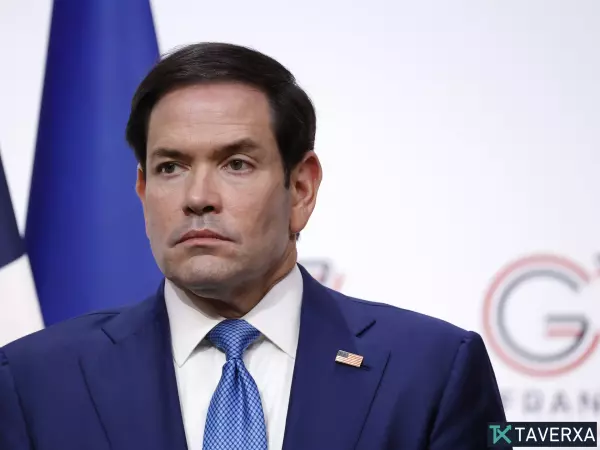
The Trump administration, led by Secretary of State Marco Rubio, vows to 'systematically disable' the International Criminal Court through sanctions and diplomatic pressure.
A New Front in the Battle Over Global Jurisdiction
The administration of U.S. President Donald Trump has dramatically escalated its confrontation with the International Criminal Court (ICC), unveiling a strategic "whole-of-government" response aimed at systematically disabling the Hague-based tribunal. In a coordinated strike involving a State Department news release, a pointed video statement from Secretary of State Marco Rubio, and a high-profile op-ed in the Wall Street Journal, the U.S. government has signaled its intent to neutralize the court's perceived threat to American sovereignty.
This offensive represents a significant hardening of U.S. foreign policy, shifting from mere opposition to an active campaign to dismantle the operational capacity of the world's highest court for prosecuting war crimes, genocide, and crimes against humanity.
The Rhetoric of 'American Resolve'
Secretary of State Marco Rubio did not mince words in his address, framing the ICC's activities not as legal proceedings, but as an act of aggression. Rubio accused the court of "waging a war" against the United States, asserting that the tribunal uses "statutes, compacts, and the force of so-called international law" as weapons to undermine the U.S. political and legal systems.
"If they believe they can deprive us of our sovereignty, we will teach them the full meaning of American resolve," Rubio declared, suggesting that the administration views any attempt to hold U.S. personnel accountable under international law as an intolerable infringement on national independence.
Strategic Levers and Potential Sanctions
While the State Department has not yet detailed every tactical move, the "actions under consideration" outline a multi-pronged approach to coerce the ICC and its supporters:
- Diplomatic Pressure on Allies: The U.S. is urging countries that rely on American military and law enforcement partnerships to explicitly reject the ICC's authority to prosecute U.S. officials.
- Conditioning Assistance: The administration has signaled "increased scrutiny" for nations that continue to recognize the ICC's jurisdiction while simultaneously receiving U.S. foreign aid or security assistance.
- Targeted Penalties: The U.S. plans to expand the use of sanctions and travel bans against ICC personnel and the affiliated human rights organizations that provide the court with evidence.
The Legal Friction: The Rome Statute
The core of the conflict lies in the Rome Statute, the treaty that established the ICC in 2002. The United States is not a signatory to the statute, meaning it has not formally consented to the court's jurisdiction. However, the ICC maintains that it can investigate crimes committed on the territory of member states, even if the accused is a citizen of a non-member state like the U.S.
This has led to long-standing tensions over investigations into alleged war crimes in Afghanistan and, more recently, probes into actions involving U.S. allies, most notably Israel. While the Biden administration previously lifted sanctions imposed by Trump during his first term, the fundamental U.S. opposition to the court's jurisdiction remained a constant across administrations.
Expert Analysis: Why Now?
International law experts are questioning the timing of this sudden escalation. William Schabas, a professor of international law at Middlesex University London, noted that the ICC has not taken direct action against the U.S. since January 2025. He suggests the Trump administration may be acting preemptively, speculating on potential future investigations into U.S. military strikes in the Caribbean, the conflict with Iran, or the controversial abduction of Venezuelan leader Nicolas Maduro.
Schabas also posits that the U.S. may be sensing a moment of weakness. With the ICC currently grappling with internal scandals involving lead prosecutor Karim Khan, the administration may believe the tribunal is vulnerable to a "death blow." Conversely, Raed Jarrar of the DAWN rights organization warns that this campaign is not merely about the ICC, but about dismantling the "rules-based international order" to ensure that the most powerful nations remain above the law.