Toyota Prius vs. Hyundai Elantra Hybrid: Which Fuel-Sipping Champion Wins in 2026?
We pitted the 2026 Toyota Prius against the 2026 Hyundai Elantra Hybrid for a week. Discover which hybrid wins on fuel economy, performance, and value.
The Battle for Hybrid Supremacy
For decades, the Toyota Prius has been the undisputed gold standard for hybrid efficiency. It didn't just define a category; it became a cultural icon of sustainability. However, the automotive landscape has shifted. With gas prices remaining volatile and manufacturers pushing the boundaries of electric integration, the competition is fiercer than ever. Enter the 2026 Hyundai Elantra Hybrid, a challenger that aims to disrupt Toyota's long-standing reign by offering a blend of traditional sedan comfort and cutting-edge efficiency.
To determine which vehicle truly earns the title of 'Hybrid King,' we put both the 2026 Toyota Prius Limited AWD and the 2026 Hyundai Elantra Hybrid Limited through a rigorous week of real-world testing. From city commutes to long-distance highway hauls, here is how these two efficiency experts stack up.
Technical Specifications: A Tale of Two Powertrains
At first glance, the spec sheets suggest a close race, but the philosophies differ. The Prius utilizes a punchier 2.0L 4-cylinder engine delivering 196 horsepower, paired with an All-Wheel Drive (AWD) system for enhanced traction. The Elantra Hybrid takes a more conservative approach with a 1.6L 4-cylinder engine producing 139 horsepower, focusing on Front-Wheel Drive (FWD) simplicity.
| Feature | Toyota Prius Limited AWD | Hyundai Elantra Hybrid Limited |
|---|---|---|
| Engine | 2.0L 4-Cylinder (AWD) | 1.6L 4-Cylinder (FWD) |
| Horsepower | 196 hp | 139 hp |
| Combined MPG | 49 mpg | 50 mpg |
| Tested Price | $40,270 | $31,285 |
Design: Futuristic Hatchback vs. Conventional Sedan
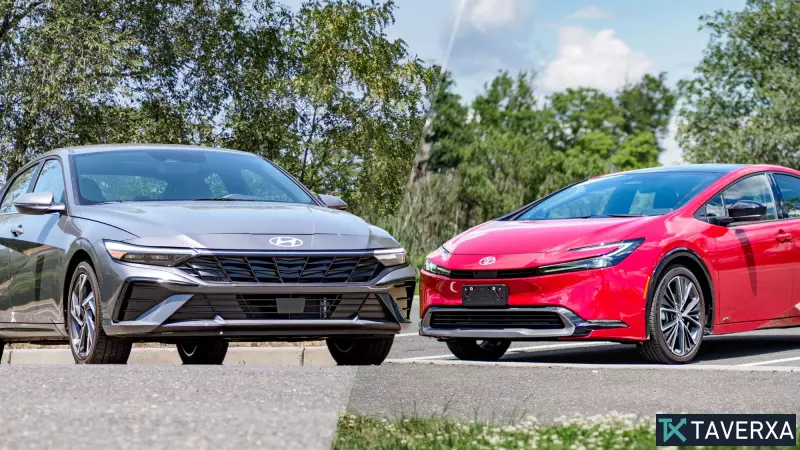
The design department is where these two cars diverge most sharply. The Toyota Prius is a triumph of modern aesthetics. It ditches the 'science project' look of old hybrids for a low-slung, sports-coupe silhouette. The sweeping curved profile and a continuous rear light bar that mimics a built-in spoiler make it an attention-grabber on any road. It feels like a glimpse into the future of automotive design.
The Hyundai Elantra Hybrid, by comparison, is far more traditional. While it features a sporty low-profile grille and a sharp, geometric design language with triangular creases along the side panels, it lacks the 'wow factor' of the Prius. It is a handsome car, but it plays it safe where the Toyota takes a bold risk.
Real-World Fuel Economy: The Efficiency Showdown
On paper, the Elantra's 50 mpg combined beats the Prius's 49 mpg by a hair. In practice, the gap is more interesting. During our testing, the Elantra Hybrid averaged a spot-on 50 mpg, with a staggering peak of 72.9 mpg during short-range local treks. This proves that Hyundai has effectively narrowed the gap with Toyota's legendary hybrid tech.
The Prius averaged 46.2 mpg overall, falling slightly behind the Hyundai in city environments. However, it excelled in long-distance cruising, hitting 57 mpg on the highway. Both cars require a mindful driving style—carefully monitoring the throttle to keep the "EV" mode active—to achieve these peak numbers.
Driving Performance and Interior Comfort
When it comes to the thrill of the drive, the Prius is the clear victor. Thanks to its 196 hp engine, it is significantly punchier off the line. Whether in ECO or Sport mode, the Prius offers a responsive acceleration that makes overtaking highway traffic effortless.
The Elantra Hybrid is built for the relaxed commuter. While its 139 hp is adequate for daily needs, it lacks the urgency of the Toyota. However, the Elantra wins decisively on interior comfort. The cabin feels airier and more modern, and the rear legroom is vastly superior to the Prius. While the Prius's hatchback design offers a larger, more versatile cargo area, the rear seats feel cramped for adults.
Furthermore, Hyundai's Highway Driving Assist is a standout feature. The dedicated lane-centering button on the steering wheel provides a level of relaxation on long trips that the Prius's suite of assists couldn't quite match.
The Bottom Line: Value and Verdict
The final decision comes down to your financial priorities. The Elantra Hybrid is an incredible value proposition, coming in at a tested price of $31,285—nearly $9,000 cheaper than the Prius. For a buyer prioritizing upfront savings and passenger space, the Elantra is the logical choice.
Conversely, the Prius represents a long-term investment. Despite the $40,270 price tag, Toyota's reputation for reliability and high resale value means you are likely to recoup a portion of that premium when it's time to sell. You get a more powerful car with a futuristic look and a bulletproof powertrain.
The Verdict: If you want a stylish, powerful, and reliable icon, go with the Toyota Prius. But if you want the best real-world value, superior passenger comfort, and maximum fuel savings for your wallet today, the Hyundai Elantra Hybrid is the one to buy.