The Silver Lining of Failure: How the Abandoned Apple Car Fueled Apple's AI Revolution
Discover how Apple's abandoned $10 billion car project secretly laid the groundwork for the Neural Engine and the current Apple Intelligence AI boom.
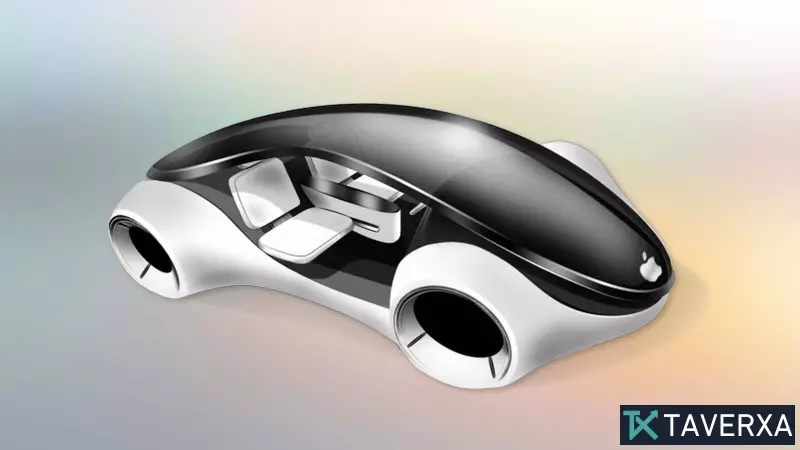
A Decade of Ambition and a $10 Billion Lesson
For over ten years, rumors of the "Apple Car" persisted as one of the most anticipated projects in the tech world. Apple reportedly invested roughly $10 billion and a decade of engineering manpower into creating a Level 5 autonomous vehicle—a car capable of driving itself without any human intervention in any condition. However, in 2024, Apple officially pulled the plug on the project, concluding that the dream of a fully autonomous consumer vehicle was not yet technically or commercially feasible.
While the public narrative focused on the massive waste of capital and time, new reports suggest that the Apple Car project was not a total loss. Instead, it served as the secret catalyst for Apple's current aggressive pivot toward artificial intelligence, providing the foundational research and hardware architecture that now powers Apple Intelligence.
The Birth of the Neural Engine
According to Mark Gurman of Bloomberg, the pursuit of a self-driving car forced Apple to solve a critical problem: how to process immense amounts of sensor data and make split-second decisions in real-time. This requirement for massive, efficient, on-device AI processing led directly to the development of the Neural Engine.
The Neural Engine debuted in 2017 with the A11 Bionic chip in the iPhone X. Unlike a general-purpose CPU, the Neural Engine consists of AI accelerators designed specifically for machine learning tasks. This technology enabled features we now take for granted, such as Face ID and advanced augmented reality (AR). By prioritizing efficiency and privacy—processing data on-device rather than in the cloud—Apple created a blueprint that has since been integrated into every M-series chip, transforming the Mac into a local AI powerhouse.
From Autonomous Driving to the M7 Chip Era
The influence of the car project extends far beyond the iPhone. The architectural lessons learned from the autonomous vehicle pursuit are now reshaping Apple's silicon roadmap. Reports indicate that Apple's AI strategy is now the primary driver of chip design, rather than a secondary feature.
This shift is most evident in the rumors surrounding the upcoming M7 family of chips. Apple is reportedly bypassing certain iterations to jump straight to the M7, with the M7 Ultra expected to deliver a seismic leap in neural processing. This chip is designed to bring Apple's AI performance closer to professional-grade accelerators, such as Nvidia's Blackwell architecture.
Furthermore, the M7 Ultra is expected to support a staggering 1.5TB of memory—double the capacity of the M5 Ultra. While this level of RAM is overkill for a laptop, it is essential for server-side AI processing, allowing Apple to overhaul its cloud server strategy and better support the complex demands of generative AI.
Conclusion: Strategic Pivot or Happy Accident?
The transition from a hardware-heavy automotive project to a software-centric AI boom demonstrates Apple's ability to recycle innovation. By attempting to conquer the most difficult challenge in robotics—Level 5 autonomy—Apple inadvertently built the engine that will power the next generation of iPhones, Macs, and Siri.
Ultimately, the $10 billion spent on the Apple Car wasn't just a bet on a vehicle; it was a massive R&D investment in the future of artificial intelligence. As Apple Intelligence begins to roll out across its ecosystem, it is clear that the ghost of the Apple Car is the real force driving the company forward.