The Presidential Scapegoat: How Iran's Ruling Elite are Positioning Pezeshkian for the Fall of the US MoU
Analyze how Iran's ruling elite are using President Masoud Pezeshkian as a scapegoat for the failing US-Iran Memorandum of Understanding and the internal power struggles of the IRGC.
A Fragile Peace on the Brink
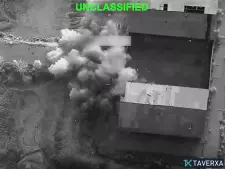
The geopolitical landscape of the Middle East has been thrust back into volatility as the US-led military campaign against Iran escalates. Recent strikes by the United States have resulted in at least 18 fatalities and dozens of injuries, casting a dark shadow over the fragile peace process. At the heart of this tension is the Memorandum of Understanding (MoU), a critical framework signed between Washington and Tehran intended to pave the way for long-term stability. However, as the agreement teeters on the edge of collapse, a sophisticated internal political game is unfolding within the halls of power in Tehran.
The Architecture of Calculated Blame
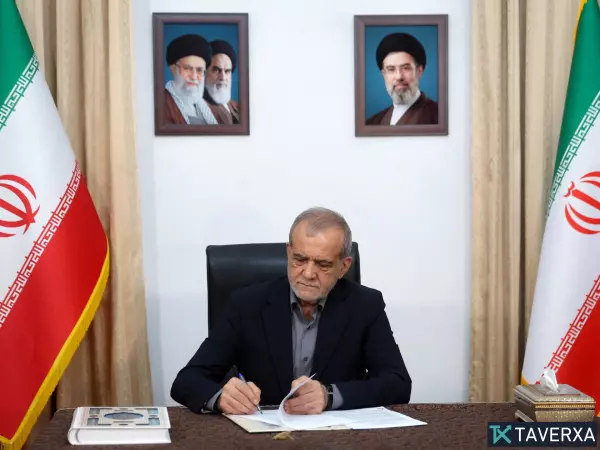
In the wake of the escalating violence, the Iranian leadership has begun a strategic redirection of public and institutional anger. While the MoU was a collective decision of the state, official rhetoric is increasingly isolating President Masoud Pezeshkian as the primary architect of the failure. This is not a random occurrence but a calculated 'blame game' designed to shield the regime's true power brokers.
The blueprint for this strategy was made clear by Supreme Leader Mojtaba Khamenei. In a public statement, the Supreme Leader noted that he held a "different view" of the agreement, claiming he only permitted the deal because President Pezeshkian, in his capacity as head of the Supreme National Security Council, had "explicitly accepted responsibility" for it. By framing the MoU as a personal commitment by the President, the Supreme Leader has effectively created a political firewall between the office of the presidency and the core of the revolutionary leadership.
The Hidden Hand: Ghalibaf and the Military-Bonyad Complex
A striking detail in this narrative is the conspicuous absence of Mohammad Bagher Ghalibaf. As the speaker of parliament and the actual head of the negotiating team, Ghalibaf was the primary driver of the deal. Despite Foreign Minister Abbas Araghchi confirming that the 'nezam' (the system) entrusted Ghalibaf with the negotiations, his name is absent from the Supreme Leader's list of accountable parties.
This omission highlights the dominance of the 'military-bonyad complex'—a potent fusion of the Islamic Revolutionary Guard Corps (IRGC), state security forces, and massive religious foundations (bonyads) like the Mostazafan Foundation. This network controls the bulk of Iran's economy and operates with virtually no civilian oversight. Within this complex, a deep structural fracture has emerged:
- The Technocratic Wing: Led by Ghalibaf, this faction argues that economic recovery and integration with global capital are essential for regime survival.
- The Ideological Wing: Represented by the Paydari Front, this group views any concession to the US as a betrayal and perceives foreign investment—specifically the proposed $300bn Reconstruction and Development Fund—as a Trojan horse for Western penetration.
The Presidency as a 'Circuit Breaker'
President Pezeshkian’s rise to power in 2024 was not based on his political strength, but on his lack of it. Unlike his predecessors—such as Rafsanjani or Rouhani, who possessed deep independent networks—Pezeshkian was elevated as a manageable, moderate face to appease a restless public without threatening the authority of the military-bonyad complex.
In essence, the Iranian presidency has been redesigned as a political 'circuit breaker.' It is an office installed to absorb the surge of public anger and political failure should a policy fail, while being bypassed entirely should the policy succeed. Pezeshkian is the ideal signatory for risks he did not design, serving as a buffer for the IRGC and the Supreme Leader.
Conclusion: A Deferral of Crisis
Currently, the ruling elite are providing Pezeshkian with just enough protection to keep the MoU functioning. However, this is tactical maintenance rather than genuine support. The moment the agreement collapses entirely, the protection will vanish, and the President will be cast as the sole failure.
While scapegoating may temporarily prevent an open conflict between the technocrats and the ideologues within the ruling bloc, it does not resolve the fundamental contradiction in Iran's survival strategy. The tension between economic pragmatism and ideological maximalism remains, and once the current scapegoat is spent, the real battle for the future of the Islamic Republic will begin.