The Legacy of Sheikh Hamad: The Visionary Leader Who Defied the Blockade of Gaza
Discover the legacy of Qatar's Father Emir, Sheikh Hamad bin Khalifa Al Thani, the only Arab leader to break the Israeli siege on Gaza through historic visits and humanitarian aid.
A Defining Moment in Arab Diplomacy
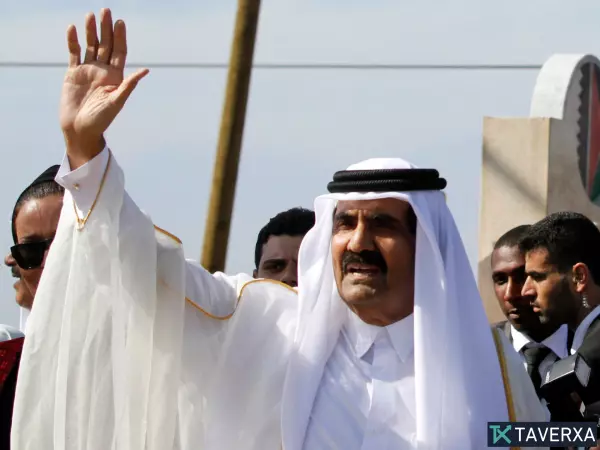
The passing of Qatar’s Father Emir, Sheikh Hamad bin Khalifa Al Thani, has sparked a wave of reflection on a leadership tenure defined by bold diplomacy and an unwavering commitment to humanitarianism. Among his many contributions, Sheikh Hamad is most revered as a steadfast ally of the Palestinian people and the only Arab leader to physically break the suffocating Israeli siege on the Gaza Strip.
In October 2012, at a time when Gaza was characterized by political isolation and a crippling international blockade, Sheikh Hamad took a historic step. Accompanied by Sheikha Moza bint Nasser and a high-level delegation, he entered the enclave, bypassing the diplomatic barriers erected by Western powers and regional actors. This visit was more than a symbolic gesture; it was a direct challenge to the status quo of the occupation.
The Humanitarian Impact of a Historic Visit
During his landmark 2012 visit, the Father Emir didn't just offer words of support; he provided tangible resources. He announced a significant increase in Qatar’s reconstruction grant, raising it from $254 million to $400 million. This funding served as the bedrock for critical infrastructure, including healthcare facilities and housing, that provided a lifeline to thousands of displaced and impoverished Palestinians.
Addressing a crowd at the Islamic University of Gaza—where he and Sheikha Moza were awarded honorary doctorates—Sheikh Hamad spoke out against the double standards of the international community. His presence was hailed by local leaders as an act of "chivalry and magnanimity," signaling to the world that the people of Gaza were not forgotten.
A Personal Connection to the Palestinian Struggle
Sheikh Hamad’s dedication to Palestine was not merely political; it was deeply personal. His history of advocacy began long before the Gaza blockade. In 1999, he became the first Gulf leader to visit the Palestinian territories since 1967, meeting with the late President Yasser Arafat during a period of intense political turmoil.
According to close associates and historians, the Emir viewed the struggles of the Palestinians as his own. When Israeli forces besieged Yasser Arafat’s headquarters in Ramallah, Sheikh Hamad felt the attack as if it were directed at Qatar itself. Furthermore, his lifelong regret of not visiting Jerusalem prior to its 1967 occupation drove him to document the city's rich history and identity through a comprehensive three-hour documentary, ensuring the world would remember the city's heritage.
Defying Regional Consensus for the Greater Good
The Father Emir's stance often placed him at odds with other regional powers. During the devastating 2008–2009 war on Gaza, deep divisions fractured the Gulf Cooperation Council (GCC). In response, Sheikh Hamad called for an emergency Arab summit in Doha, proposing a maritime corridor to bypass the blockade and a $250 million reconstruction fund.
When the summit failed to reach a quorum, the Emir expressed his profound disappointment on live television, stating, "God is sufficient for us and he is the best disposer of affairs," further cementing his reputation as a leader who would prioritize principle over political convenience.
The Enduring and Endangered Legacy
The physical remnants of Sheikh Hamad’s vision include the flagship Sheikh Hamad City in Khan Younis—a $58 million public housing project—and the Sheikh Hamad Hospital for Rehabilitation and Prosthetics, which opened in 2019 as the region's premier facility for amputees.
Tragically, the ongoing genocidal war in Gaza has seen much of this infrastructure erased. Satellite imagery from May 2026 confirms that Hamad City and several surrounding neighborhoods have been wiped from the map. However, the Sheikh Hamad Hospital continues to fight for survival. Despite direct attacks and severe shortages, the facility resumed operations in December, providing the only functioning CT scanner in northern Gaza and managing a 225% increase in amputation cases.
Though the concrete structures may be destroyed, the legacy of the Father Emir—defined by courage, agency, and a refusal to accept the silence of the world—continues to inspire generations of Palestinians and supporters of their liberation.