The End of the 'Dumb' Display: Lenovo Reveals a Vision for the Future of Computer Monitors
Lenovo's GM George Toh predicts a future where monitors use agentic AI to upscale graphics, eliminate cable clutter, and protect eye health with circular polarizers.
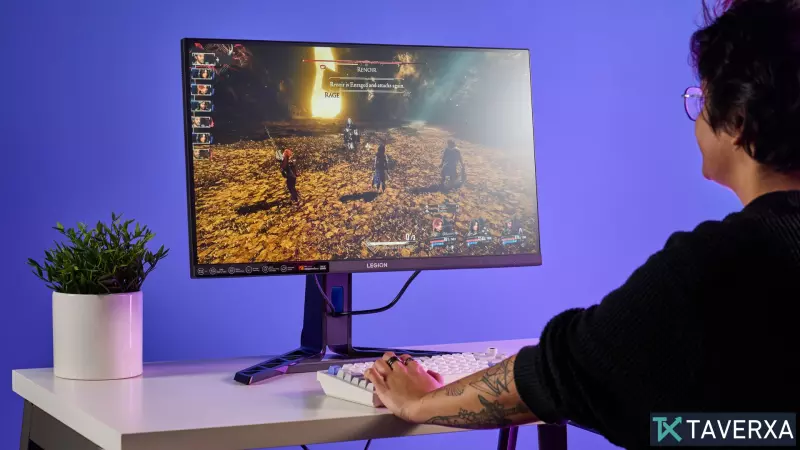
Beyond the Rectangle: A Paradigm Shift in Display Tech
For seven decades, the computer monitor has remained fundamentally stagnant. While resolutions have climbed and panel types have evolved from CRT to OLED, the user experience has remained the same: a passive screen that displays what a computer tells it to. However, in an exclusive conversation with George Toh, Lenovo’s Vice President and GM of Visuals business, it is clear that the industry is on the verge of a massive transformation.
Toh suggests that while the basic physics of the display—the rectangular form factor—will likely remain, the 'intelligence' embedded within that frame is about to change everything. We are moving away from monitors as mere peripherals and toward monitors as the central nervous system of the modern workspace.
The Rise of the Omniscient Workspace Hub
One of the most ambitious shifts Toh predicts is the transition of the monitor from a passive screen to a 'center hub.' Imagine a desk where the monitor is the primary intelligence; as you approach your workspace, the display detects your presence and powers on automatically. This vision extends to seamless hardware integration, where the monitor intelligently manages cameras and peripherals based on the application you are launching.
This evolution aims to kill the 'cable spaghetti' that plagues modern desks. By transforming the monitor into a smart hub, the need for endless dongles and chaotic wiring is minimized, creating a streamlined, intuitive environment where the display is the 'brains' of the entire operation.
Agentic AI: Moving the Heavy Lifting to the Screen
Perhaps the most significant technological leap is the integration of local, agentic AI directly into the monitor's hardware. Currently, gamers and professionals rely on expensive GPUs to handle massive rendering loads. Lenovo's vision is to offload some of this burden to the display itself.
Through a 'deductive AI mechanism,' future monitors will be able to upscale images and fill in resolution gaps on-the-fly. This means a monitor could potentially enhance specific areas of a game—such as a distant enemy in a first-person shooter or a complex dial in a flight simulator—without requiring the GPU to render every pixel at a native 4K resolution. In essence, the monitor becomes a co-pilot for your graphics card, enhancing performance and visual fidelity locally.
Prioritizing Wellness: Saving Your Retinas
Beyond productivity and performance, Lenovo is focusing heavily on the biological impact of screen time. Modern displays are often criticized for being 'interrogation lamps' that cause significant eye strain. Toh reveals a roadmap that goes far beyond simple blue-light filters.
Future wellness features will include AI-driven monitoring that tracks blinking patterns and yawning to prompt users for necessary breaks. Even more impressive is the move toward circular polarizers. Unlike standard screens, these will diffuse light in a manner that mimics natural sunlight, drastically reducing the 'laser-tag' effect on the retinas and preventing the exhausted feeling that typically follows a long shift in front of a screen.
The Outlook: A New Era of Computing
The transition from 'dumb' to 'smart' displays marks a turning point in computing. By combining agentic AI upscaling, integrated hub functionality, and advanced light diffusion, the monitor is evolving into a bodyguard for the GPU, a shield for the eyes, and the definitive manager of the workspace. While it may take a few years for these concepts to reach the mass market, the era of the passive display is officially coming to an end.