The End of the Deadlock: Why Yemen’s 'No War, No Peace' Era is Collapsing
Yemen's fragile truce is collapsing as Houthi rebels and the recognized government mobilize for war. Explore the regional tensions and humanitarian risks.
A Fragile Peace on the Brink
For years, Yemen has existed in a surreal geopolitical limbo—a state of 'no war, no peace.' Since a tenuous truce was brokered in 2022, the devastating conflict between the Houthi rebels and the internationally recognized government has remained largely frozen. However, recent escalations in July 2026 suggest that this fragile stability is disintegrating, threatening to plunge the Middle East's poorest nation back into a full-scale humanitarian catastrophe.
The catalyst for the recent volatility began in late June, as both the Houthi group and the Yemeni government began mobilising fighters. The tension reached a breaking point on July 3, when the first publicly announced flight between Tehran and Sanaa in over a decade landed in the Houthi-controlled capital. This symbolic move, signaling a strengthening bond between Iran and the Houthis, sparked immediate retaliation. Within days, fighting in the Hodeidah governorate left dozens dead, marking the most severe violence the region has seen in four years.
The Airport Flashpoint and Regional Spillover
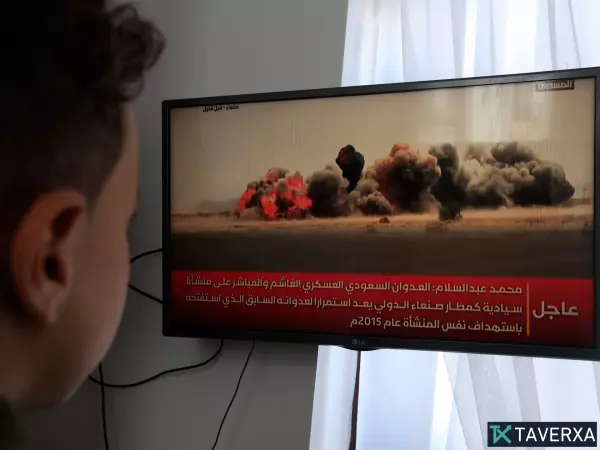
The situation escalated further on Monday when the Yemeni government launched air strikes targeting the runway at Sanaa International Airport. The government claimed the action was necessary to block another Iranian aircraft from landing, asserting that their 'patience has run out.' In a swift counter-response, the Houthis fired ballistic missiles toward Saudi Arabia and threatened a total 'siege' of Saudi territory.
Analysts suggest that the conflict in Yemen is no longer an isolated civil war but is increasingly becoming a theater for the broader regional struggle between the United States and Iran. As Iran engages in direct military friction with the U.S. and strikes within the Gulf, the Houthis serve as a critical southern flank. By disrupting maritime traffic in the Red Sea and threatening Gulf states, the Houthis exert significant leverage over global energy security and regional stability.
Political Maneuvering and Internal Pressures
According to Salah Ali Salah of the Sanaa Center for Strategic Studies, the Houthi rhetoric is designed to prepare the domestic population for a return to war. During the relative calm since 2022, the Houthis found it increasingly difficult to justify the crushing economic hardship and famine facing their constituents. By redefining a 'new enemy'—specifically Saudi Arabia and the Yemeni government—the group can pivot the narrative from internal economic failure to external aggression.
Meanwhile, the internationally recognized government has consolidated power in eastern and southern Yemen following the defeat of the Southern Transitional Council late last year. This unification of anti-Houthi forces has emboldened the government to consider a military offensive to reclaim the capital, especially if they believe the current diplomatic stalemate is insurmountable.
The Human Cost of a Renewed Conflict
The prospect of renewed warfare is terrifying for a population already decimated by a decade of strife. According to UN reports, approximately 18.3 million people in Yemen face acute food insecurity, and over 2.2 million children under five are severely malnourished. With the GDP per person having plummeted by 58% since the start of the war, there is little resilience left in the social fabric.
For many Yemenis, the 'no war, no peace' deadlock has become its own kind of torture—a lingering state of uncertainty. Some civilians, exhausted by the limbo, have expressed a desperate desire for a decisive conclusion, regardless of who emerges victorious, provided that the winner takes immediate responsibility for stabilizing the economy and restoring basic services.
Conclusion: A Looming Storm
With trust between the warring parties at an all-time low and UN-led roadmaps for peace remaining unimplemented, the path to a political settlement is narrowing. As Houthi military spokesperson Yahya Saree declared the 'de-escalation phase' over, the world watches with apprehension. If diplomacy fails now, Yemen may not only return to war but could become the epicenter of a much larger regional conflagration.