The Architect of Arab Media: How Sheikh Hamad bin Khalifa Al Thani Revolutionized Information in the Middle East
Explore how Sheikh Hamad bin Khalifa Al Thani revolutionized Arab media by founding Al Jazeera, breaking state monopolies, and challenging Western narratives.
The Legacy of a Visionary Leader
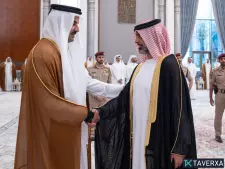
The passing of Qatar’s Father Emir, Sheikh Hamad bin Khalifa Al Thani, at the age of 74, marks the end of an era, but the enduring legacy of his leadership remains etched in the global media landscape. His most profound contribution—the founding of the Al Jazeera News Channel—was not merely the creation of a television station, but a calculated geopolitical and cultural disruption that altered the course of information flow in the Arab world.
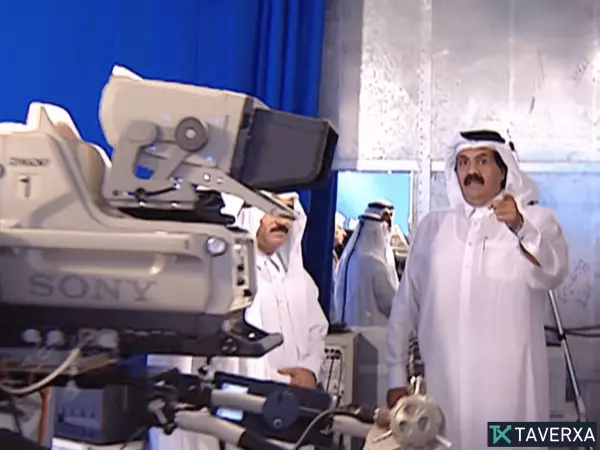
Launched in 1996, Al Jazeera emerged at a time when the Middle East's airwaves were dominated by state-controlled broadcasting, where news was often a tool for government propaganda. By breaking this monopoly, Sheikh Hamad established a platform that challenged the hegemony of both regional autocracies and Western media narratives, providing a voice to the voiceless and a mirror to the region's complex realities.
A Departure from Tradition: The Birth of a Revolution
The seeds of this media revolution were sown long before the first broadcast. In 1993, while still the Crown Prince, Sheikh Hamad began articulating a transformative vision for Qatar and the wider region. Mohamed Krishan, a founding anchor, recalls a pivotal meeting where the future Emir's boldness became apparent. "It was clear the man had a bold, transformative vision," Krishan noted, describing Sheikh Hamad as an official who defied the traditional norms of Gulf leadership.
Upon ascending to the throne in 1995, Sheikh Hamad moved with decisive speed, ordering the launch of a professional news channel within a mere six months. By the summer of 1996, a diverse team of journalists converged in Doha, greeted with a mandate that was unheard of in the region: to work with professional ethics, absolute independence, and a ceiling of freedom that shocked the incoming staff.
Taysir Allouni, a prominent journalist who joined from Spain, recalled his initial skepticism. The idea that a Gulf state would host a network with such openness seemed impossible. However, the reality was a commitment to "the opinion and the other opinion," deploying correspondents into the field to witness history firsthand rather than relying on curated Western news agencies.
The High Cost of Independence
This commitment to editorial independence did not come without a staggering political price. Al Jazeera’s willingness to broadcast sensitive topics—including criticisms of regional governments and the complexities of conflicts in Iraq and Afghanistan—made Qatar a target of intense diplomatic pressure.
Ahmed al-Sheikh, the former director of news, recounted a moment of extreme tension when a CIA director reportedly urged Sheikh Hamad to muzzle the network. The Father Emir’s response was a masterclass in diplomatic defiance: "You are the ones who always spoke to us about media, freedom of the press... and democracy, and now you are asking me to muzzle Al Jazeera?"
The pressure escalated from diplomatic threats to physical violence. The network's infrastructure was targeted; the Kabul office was bombed during the war in Afghanistan, and similar attacks occurred during the 2003 US occupation of Iraq. Classified memos later revealed that the US administration had even considered bombing Al Jazeera's headquarters—a plan reportedly thwarted by British intervention.
The human cost has been equally devastating. To date, the network has lost 24 journalists and staff members in targeted attacks across Syria, Libya, Yemen, the Gaza Strip, and the occupied West Bank, underscoring the dangerous frontline the network occupies in the pursuit of truth.
An Enduring Global Institution
Despite decades of hostility and existential threats, Al Jazeera evolved from a daring experiment into a global media powerhouse, officially becoming the Al Jazeera Media Network in July 2005. Sheikh Hamad’s philosophy was simple yet profound: the network existed to deprive failures of their cover-ups and to side with the human being and the truth.
As the network approaches its 30th anniversary, it stands as a testament to the belief that free expression is the only way to enlighten minds and shape a progressive society. Sheikh Hamad bin Khalifa Al Thani did more than build a channel; he built a bridge between the Arab world and the global community, ensuring that the region's narrative would finally be told by its own people.