Strategic Gambles in the Gulf: Could the US Seize Control of Iran's Southern Islands?
Analysts examine the military and political feasibility of the US taking control of Iran's southern islands amidst escalating conflict in the Persian Gulf.
Introduction: A New Flashpoint in the Persian Gulf
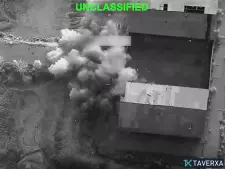
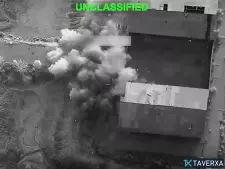
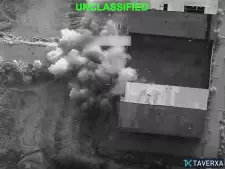
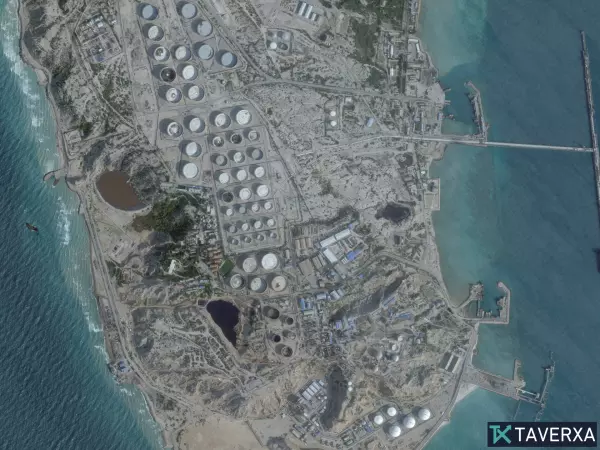
As tensions escalate in the US-Israel war on Iran, the military focus has shifted toward the strategic waters of the Persian Gulf. Recent US strikes targeting the islands of Qeshm, Kish, and Abu Musa, along with heavy bombardment of coastal cities like Bandar Abbas, have reignited a critical geopolitical question: Is Washington planning a territorial seizure of Iranian land?
While such a move would be a dramatic military spectacle, security analysts warn that the strategic rewards may be far outweighed by the staggering costs and political risks. The possibility of a ground operation first surfaced in March, with reports of Department of Defense preparations for raids on Kharg Island—the epicenter of Iran's crude oil exports. Although a memorandum of understanding signed on June 17 briefly quieted these fears, recent comments from President Donald Trump, who refused to rule out such operations, have brought the scenario back to the forefront of international security discussions.
The Tactical Reality: Capability vs. Sustainability
From a purely technical standpoint, the United States possesses the overwhelming naval, air, and amphibious power required to capture Iranian islands. With approximately 50,000 troops stationed across the Middle East, the US maintains the logistical infrastructure to execute a rapid seizure. However, experts distinguish between the act of capturing territory and the ability to hold it.
Andreas Krieg, associate professor in security studies at King’s College London, notes that while small outposts like Hengam could be overrun quickly, larger islands such as Qeshm present a different challenge. Qeshm's proximity to the Iranian mainland makes it vulnerable to constant artillery fire, drone strikes, and missile barrages. Consequently, any US garrison on these islands would not be a secure base, but rather a target under continuous attrition.
The Human and Political Cost of Occupation
An amphibious campaign of this scale would require an immense commitment of manpower. Estimates suggest that even a "limited" operation would necessitate 5,000 to 10,000 personnel, including combat troops, engineers, medical support, and air defense units. The logistical chain required to supply these troops—crossing waters filled with Iranian mines and drones—would turn the mission into an open-ended commitment to sustainment rather than a tactical victory.
Beyond the military risks, the political blowback within the United States would be significant. Nader Hashemi, a professor of Middle East politics at Georgetown University, suggests that the domestic political cost, particularly among the "MAGA" base, would be immense. The specter of a "forever war" and comparisons to the Iraq War make a territorial occupation a high-risk gamble that few in Washington are truly willing to take.
The Strategic Fallacy of Island Seizure
The central argument for seizing the islands is often the desire to secure the Strait of Hormuz and ensure the freedom of navigation. However, analysts argue that occupying an island does not actually neutralize Iran's ability to disrupt shipping. Iran’s missile batteries, drone launch sites, and IRGC command centers are largely mobile or tucked deep within the mainland.
To truly stop Iran from closing the Strait, the US would need to occupy a significant portion of the southern coastline, effectively escalating a maritime dispute into a full-scale ground war. Without such an escalation, the US would simply be holding "political liabilities"—territories that provide little strategic advantage while inviting constant Iranian retaliation.
Global Implications for Energy and Trade
The fallout of a US seizure would extend far beyond the immediate combat zone. A territorial grab would be viewed by Tehran as a definitive act of aggression, likely triggering an all-out effort to mine the Strait of Hormuz and attack Gulf energy infrastructure. This would cause global oil prices to spike and insurance premiums for commercial shipping to soar.
Furthermore, such a move would strain relations with Gulf Cooperation Council (GCC) states. While these allies desire a secure Strait of Hormuz, they are wary of becoming staging grounds for a US occupation, fearing that their own soil would become primary targets for Iranian retaliation. Ultimately, what begins as a mission to protect trade could end by permanently destabilizing the world's most vital energy corridor.