Saving the Sound of a Nation: The Race to Digitise Radio Mogadishu’s Historic Archives
Somalia is racing to digitise 400,000 hours of historic broadcasts from Radio Mogadishu, saving decades of music, culture, and political history from decay.
A Vault of Vanishing Memories
In a quiet, air-conditioned room in Mogadishu, Somalia, thousands of reel-to-reel tapes sit stacked on steel shelves, shrouded in thick layers of dust. To a casual observer, they may look like relics of a bygone era, but to the people of Somalia, these tapes represent a colossal sonic map of the 20th century. From the early 1950s onward, these recordings captured the heartbeat of a nation—its news bulletins, political speeches, legendary music, and the diverse voices that once defined the Somali public sphere.
Currently, a dedicated small team of archivists is engaged in a high-stakes race against time. Led by archivists like Abdiqadir Geedi Robleh, the team is working to digitise approximately 400,000 hours of broadcasts before the magnetic tape deteriorates beyond recovery. For Robleh, the process is as emotional as it is technical; playing a long-lost love song by the prominent singer Mohamed Mooge Liban is not just an act of preservation, but a journey back to his own youth.
The Legacy of Radio Mogadishu
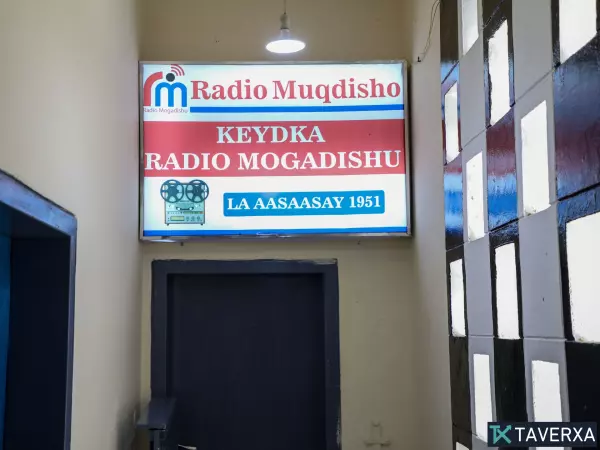
Founded in 1951 during the Italian colonial era, Radio Mogadishu evolved into Somalia's most influential public broadcaster. In an era where oral tradition was prized above the written word, the station became the primary vehicle for creating a shared sense of nationhood. It didn't just report the news; it shaped the cultural landscape, acting as a 'national factory' for the country's most talented musicians, poets, and playwrights.
At its peak, the station's reach extended far beyond Somalia's borders, influencing audiences in Ethiopia, Tanzania, and across the Middle East. Its radical pan-African broadcasting style mirrored the influential Radio Cairo of the Nasser era, projecting a voice of independence and continental solidarity.
Political Ideology and the 'Revolutionary' Airwaves
The role of the station shifted dramatically following the 1969 coup led by Major General Mohamed Siad Barre. Under his socialist, revolutionary government, Radio Mogadishu became a potent instrument of state ideology. The airwaves were filled with a blend of nationalist content and anti-colonial fervor, featuring songs like Halimo Khalif Magool’s 'Oh Africa, still asleep,' which urged the continent to awaken and seize its destiny.
The station's commitment to anti-imperialism was reflected in its extensive coverage of liberation struggles in Mozambique and the fight against apartheid in South Africa. Furthermore, Radio Mogadishu played a pivotal role in regional diplomacy and subversive broadcasting; it provided the first-ever radio programs in Oromo and Sidama languages, offering a voice to marginalized communities in Ethiopia whose languages had been suppressed by the Amharic-speaking elite.
Surviving War and Decay
The archives have survived against incredible odds. During the collapse of the government in 1991 and the subsequent civil war, the records were nearly lost to looting and conflict. Police Colonel Abshir Hashi Ali is credited with risking his life to protect the vault, driven by the belief that the archive was a wealth that belonged to all Somalis.
However, the elements and accidents have been equally unforgiving. A severe electrical fire in 2018 destroyed portions of the collection, and the humidity of the coast has led to the degradation of roughly 10% of the tapes. Current estimates suggest that while 85% of the 45,000 tapes remain playable, the window for salvage is closing rapidly.
A Global Effort for Local History
Recognizing the archive's universal value, the Somali Information Ministry has partnered with UNESCO’s regional office for Eastern Africa. The goal is to register the collection under UNESCO’s 'Memory of the World' programme. In early June, archivists from across the country gathered for workshops to standardize the preservation process.
Despite the international support, resources remain thin. Station director Abdi Jeite notes that while new tools and training have arrived, only about 10% of the archive has been successfully converted to digital formats since the drive began in 2012.
Why Digitisation Matters for the Future
For historians and the youth of Somalia, these archives are more than just old recordings—they are the only existing documentary records of a country whose written history was largely erased during decades of war. Iman Mohamed, a historian at the University of Minnesota, emphasizes that without these records, researchers are forced to rely on foreign archives or fragile oral memories.
Recovering these sounds allows a new generation of Somalis to understand the political and cultural forces that shaped their identity, ensuring that the voices of the past are not silenced by the passage of time or the scars of conflict.
Related Posts