Power Struggle or Unified Front? Deciphering Iran's Command Structure Amid Escalating Conflict with the US
Explore the internal power dynamics of Iran during its conflict with the US. Discover how the IRGC, President Pezeshkian, and Mojtaba Khamenei are navigating the crisis.
The Battle for Narrative: Chaos vs. Cohesion
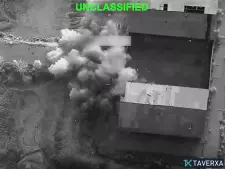
In the wake of a devastating conflict that has seen the assassination of former Supreme Leader Ayatollah Ali Khamenei and several high-ranking officials, the internal dynamics of the Iranian government have become a central point of geopolitical speculation. From Washington, US President Donald Trump has painted a picture of a leadership in shambles, claiming that the Iranian authorities are fighting among themselves to the point where "nobody knows who is in charge."
However, the reality on the ground in Tehran suggests a more calculated, albeit fractured, stability. While the US attempts to project an image of a confused and incoherent regime, Iranian authorities have countered this by maintaining a rigid and unified stance on their most critical strategic priority: the control of the Strait of Hormuz.
The Ascent of the Security Elite
As the conflict persists, the center of gravity in Iranian decision-making has shifted decisively toward the military and security apparatus. The Islamic Revolutionary Guard Corps (IRGC) is no longer just an arm of the state; it is increasingly the state's primary architect of foreign policy. This "security elite" has presented a monolithic front, opting to escalate military operations rather than retreat under US pressure.
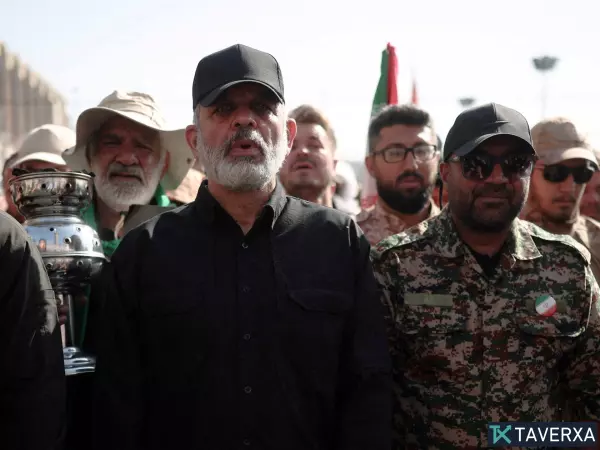
Key figures steering this course include Ahmad Vahidi, the IRGC Commander-in-Chief, and Ali Abdollahi, head of the joint wartime command. They are supported by Ali Azmaei, the new commander of the IRGC Navy, who is tasked with enforcing Iran's strict maritime mandates in the Strait of Hormuz. These leaders have recently emerged from the shadows, making rare public appearances to signal their determination to solidify military gains.
Coordination is managed by Mohammad Bagher Zolghadr, the secretary of the Supreme National Security Council. A veteran of the IRGC old guard, Zolghadr has signaled a hardline approach: negotiations are only permissible from a position of strength and military leverage, ensuring that Tehran-backed allies in Lebanon and elsewhere remain integral to the national defense strategy.
The Marginalized Diplomats and the Presidential Struggle
In stark contrast to the rising military wing, the civilian government finds itself in a precarious position. President Masoud Pezeshkian, who has consistently lobbied for diplomatic resolutions, appears to wield significantly less influence than his military counterparts. Despite his formal role as head of the security council, Pezeshkian is often viewed as a figurehead, frequently becoming the scapegoat for failed diplomatic initiatives.
In a recent televised address, Pezeshkian attempted to quell rumors of a rift between the presidency and the military, stating, "I will defend them strongly and consider it my honour." This effort to project unity comes at a time when state media, influenced by hardliners, has attempted to paint the government and military as separate entities—a narrative the President claims is an Israeli invention.
Supporting the diplomatic effort is Foreign Minister Abbas Araghchi and the chief negotiator Mohammad Bagher Ghalibaf. Ghalibaf, a former IRGC commander and mayor of Tehran, is uniquely positioned to bridge the gap between the theocratic establishment and the diplomatic corps. Nevertheless, both men face intense scrutiny and hostility from the most extreme factions within the regime.
Hardline Factions and the Shadow of the New Leader
The most uncompromising element of the Iranian establishment is the Paydari Front, led by Saeed Jalili. This faction, which holds significant sway over the parliament and state media, rejects any concessions to the US regardless of the humanitarian or economic cost. Their influence is evident in the recent parliamentary sessions, where lawmakers called for the death of Ayatollah Khamenei to be avenged.
At the pinnacle of this complex hierarchy sits Mojtaba Khamenei, the son of the late Supreme Leader. While he has inherited the mantle of absolute authority, he does not yet command the singular, unquestioned clout his father possessed. Operating largely from the shadows, Mojtaba is backed by the military-security elite and has recently reaffirmed his commitment to a "divine mission" of vengeance.
While Mojtaba has authorized certain Memorandums of Understanding (MoUs) to avoid immediate total collapse, he has done so only after the security council accepted full responsibility for the outcomes. This suggests a leadership style that is cautious, delegating risk while maintaining the ultimate power to veto or validate the actions of the state.