Piracy or Policy? The Global Backlash to Trump's Proposed 20 Percent Hormuz Toll
President Trump's proposal for a 20 percent toll on ships in the Strait of Hormuz has drawn international condemnation and labels of piracy. Explore the legal, military, and economic implications.
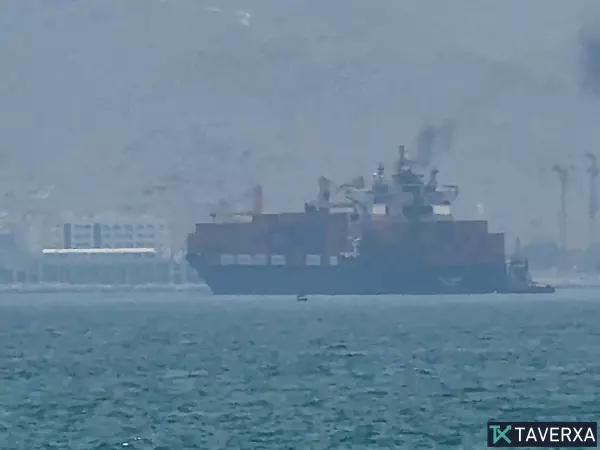
President Donald Trump has ignited a firestorm of international controversy with his latest declaration: the United States will re-establish a naval blockade of Iran and assume the role of 'Guardian of the Strait of Hormuz.' Most provocatively, the administration has proposed a 20 percent toll on all cargo transiting through this vital maritime chokepoint, a move that critics and world leaders are characterizing as 'piracy.'
The Strategic Gamble
The announcement, disseminated through Fox News and the Truth Social platform, details an operation aiming to restrict Iranian ships and their customers. Trump claims the toll is a matter of 'fairness' to reimburse the United States for the security costs of policing the volatile waterway. However, military analysts suggest this may be an improvised political maneuver rather than a well-vetted strategic policy, reflecting a desperation for leverage as traditional diplomatic and military options in the region dwindle.
Legal and Commercial Hurdles
The proposal faces immediate and significant obstacles. International maritime law, supported by bodies like the International Maritime Organization (IMO), strictly prohibits the imposition of tolls on transit through international straits. Experts argue that attempting to monetize the strait could backfire, effectively validating Tehran's own previous threats to levy fees and weakening the U.S. position on 'freedom of navigation.' Furthermore, shipping companies prioritize operational safety over political posturing. The current climate of uncertainty forces vessels into a dangerous dilemma: risk interception by Iranian forces or violate the U.S. blockade, both of which carry unacceptable insurance and security risks.
Global Condemnation
Diplomatic fallout was swift. Brazilian President Luiz Inacio Lula da Silva did not mince words, explicitly labeling the toll as 'piracy.' The move has also put the U.S. at odds with its own established legal stances, with observers noting that U.S. officials previously condemned the very idea of toll-collecting as a violation of international law when suggested by Tehran. As tensions continue to mount following recent military exchanges between the U.S. and the IRGC, analysts warn that such erratic policy shifts may only serve to embolden Iran rather than force a de-escalation.