Is AI Male or Female? A Deep Dive into the Humanization of Artificial Intelligence
We explore why humans feel the need to assign gender and personhood to AI, the history of voice assistant gendering, and the psychological impact of the 'companion economy'.
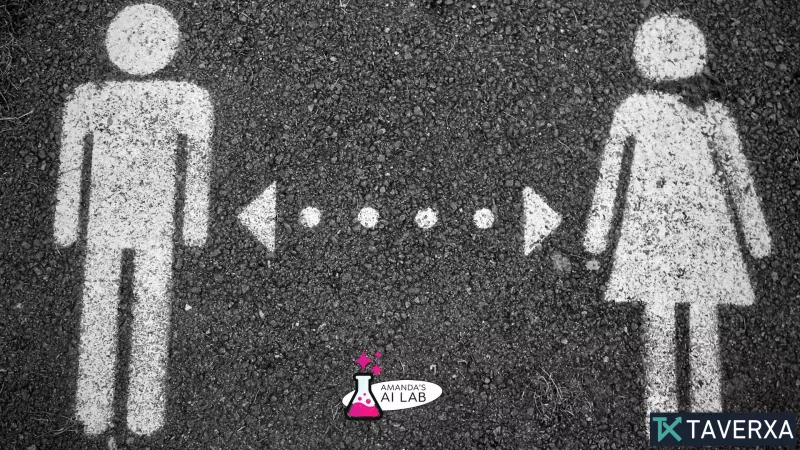
The Paradox of Personhood
For decades, we have been projecting human qualities onto our technology. We give names to our cars, apologize to furniture we collide with, and, in an increasingly digital world, we find ourselves assigning gender to the AI assistants that power our daily lives. But why does our brain, evolved for a world of human interaction, insist on treating software as a person?
The Lingering Legacy of 'Female' AI
When early voice assistants like Siri and Alexa debuted, they were overwhelmingly female-coded. A 2019 UNESCO report, "I'd Blush If I Could," highlighted the problematic implications of this design choice. By assigning a subservient, female-coded persona to technology, tech companies inadvertently reinforced stereotypes about women being obliging and available at the push of a button. Although companies have moved toward more neutral, customizable voices, the psychological residue remains: we still implicitly expect these tools to embody human-like traits.
Why We Anthropomorphize Technology
Research suggests that humanizing AI is a deeply ingrained cognitive shortcut. A 2021 study involving over 3,000 participants found that users perceived female-coded AI as more 'human' because of perceived warmth. Our brains have evolved to detect minds everywhere; assuming something is a thinking agent was historically safer than assuming it was not. When an AI produces fluent, context-aware speech, our internal systems automatically file it under 'personhood,' regardless of the code running beneath.
The Rise of the 'Companion Economy'
The lines between digital tools and emotional relationships are blurring. With the surge in AI companion apps—which have seen a 700% increase in popularity between 2022 and 2025—millions are now forming deep, emotional bonds with non-sentient entities. Users report experiencing real grief and loss when these AI companions are altered or taken offline, revealing that for many, these digital entities are filling a significant void in their lives.
The Danger of Blurring the Lines
As AI continues to advance, the most important realization may be the need for boundaries. When we treat AI as a 'friend' or a 'partner,' we risk shifting accountability away from the humans who created the systems. A 2026 study in Collabra: Psychology suggests that the more we anthropomorphize AI, the more likely we are to hold the tool, rather than the developer, responsible for its output. It is crucial to remember that while these tools are transformative and useful, they remain tools—not people.