I Tried 'HyperTexting' for a Week to Escape Algorithms — Here’s What I Learned
I replaced my social media feeds with the algorithm-free app HyperTexting for a week. Here is why the silence was deafening and what I learned about digital discovery.
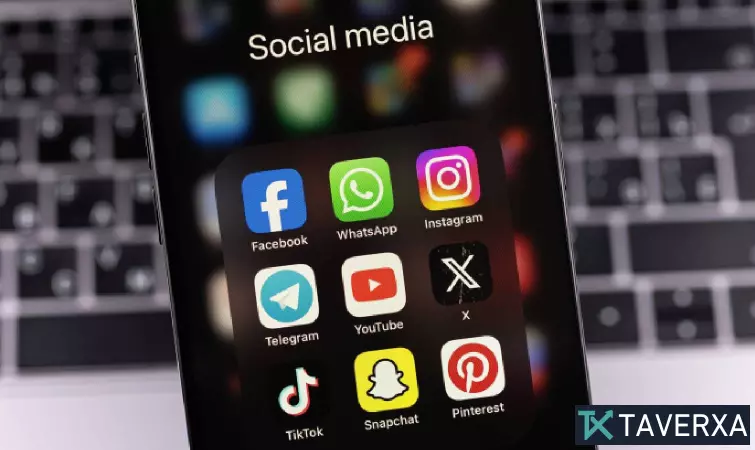
In an era where our digital lives are meticulously curated by black-box algorithms, the desire to reclaim agency over one's feed is stronger than ever. Platforms like Instagram, TikTok, and YouTube have perfected the art of keeping users scrolling through 'For You' pages, sponsored content, and engagement-bait, often leaving us feeling drained and distracted. Seeking an escape, I decided to spend a week using 'HyperTexting,' an alternative application that claims to offer a clean timeline experience—completely free of algorithms, ads, and AI-driven content recommendations.
The Allure of an Algorithm-Free Feed
HyperTexting functions on a simple premise: your feed consists only of the content you manually select. This includes RSS feeds, specific creators, blogs, and news publications you choose to follow. There is no automated suggestion engine, no infinite scroll, and no invasive advertising. At the start of my experiment, the experience was profoundly liberating. Without the constant nudges and psychological hooks designed to keep me glued to the screen, I found myself reading intentionally rather than doomscrolling. My screen time dropped significantly, and my morning routine no longer involved falling down an algorithmic rabbit hole.
The Hidden Cost of Total Control
However, by the fourth day, the novelty began to wear off, and a surprising realization set in: I missed the serendipity that algorithms provide. While I had succeeded in removing the 'noise,' I had also inadvertently silenced the signal. I realized that my own manual curation was creating a filter bubble of my existing interests, making my feed static and predictable.
Social media, despite its flaws, serves as a gateway to discovery. It introduces users to niche communities, obscure writers, and news stories they would never have searched for manually. Without an engine to surface content, I stopped discovering anything new. The absence of an 'infinite scroll'—while healthy for time management—made the app feel strangely unfinished, highlighting just how accustomed we have become to passive consumption.
Redefining Our Relationship with Algorithms
My week-long experiment with HyperTexting didn't turn me into an anti-algorithm purist. Instead, it shifted my perspective. The problem isn't the existence of recommendation systems; it is what they are currently optimized for. Modern platforms prioritize engagement metrics and ad revenue above all else, often at the expense of user wellbeing and quality discovery.
We don't necessarily need an algorithm-free internet, nor do we want a world where invisible machines dictate our entire digital intake. The future likely lies in a hybrid model—one where users retain control over their primary inputs while still allowing for curated, serendipitous discovery that expands our horizons rather than just trapping us in a loop. Ultimately, I realized I don't want the algorithms gone entirely; I just want them to serve my interests instead of their advertisers'.