I Tested Starlink-Powered 4G in a Dead Zone: Is Space-Beamed Internet the Future?
I took my phone into a dead zone to test Starlink-powered 4G. Here is how well it works and whether it can actually replace your cellular provider.
Can You Really Get 4G From Space?
The promise of global, ubiquitous connectivity has long been the holy grail for major satellite providers. While satellite internet has historically been used for high-latency home connections or specialized emergency beaconing, a new generation of 'Direct-to-Cell' services—most notably powered by Starlink—is aiming to change that. I decided to head into the deep, signal-less wilderness to see if we are truly on the cusp of ditching traditional cellular towers for good.
The Reality of Satellite Connectivity
Currently, satellite-based 4G is designed as a failsafe. My testing confirmed that modern smartphones, like my Galaxy S26 Ultra, are programmed to treat satellite connectivity as a last resort. If your phone detects even a weak cellular or Wi-Fi signal, it will refuse to ping the satellites overhead. It is only when all other communication channels fail that the device initiates a connection to orbit.
Putting it to the Test: The Dead Zone Experiment
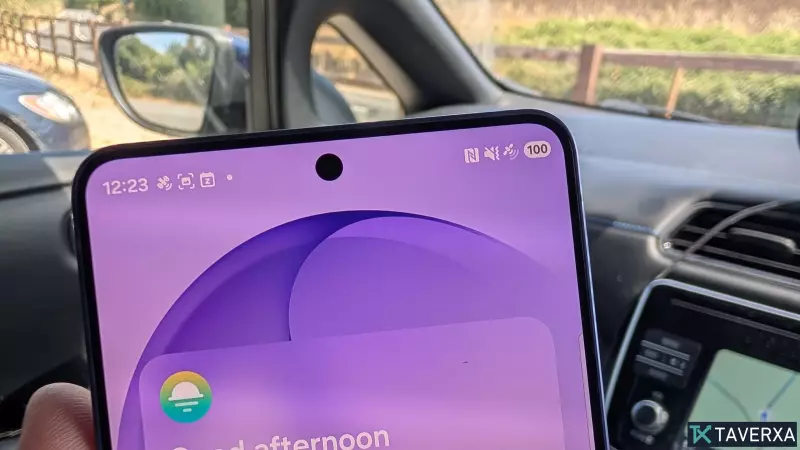
I traveled to a known dead zone about 30 miles outside of London. In this remote, rural area, the standard cell signal drops off entirely. Upon entering the area, my phone transitioned to the 'Satellite 4G' mode.
What I found was surprising: despite the technology, it isn't magic. Inside my car—a standard vehicle with a steel roof—the connection managed a single bar of signal. Moving into an open field improved this to two bars, but never higher. The latency and throughput are nowhere near what we expect from 5G or even standard 4G towers. Loading a simple map on Google Maps took upwards of a minute, a stark reminder that data traveling to space and back has significant physical limitations.
What You Can (and Can't) Do
This service isn't for streaming 4K video or scrolling through your social media feeds. In fact, most of these high-bandwidth apps remain entirely offline. The system is currently restricted to essential services: navigation, messaging, weather updates, and basic communication. It is a lifeline, not a broadband replacement.
The Verdict: A Vital Backup, Not a Replacement
After spending time in the field, it is clear that while satellite 4G is an incredible technological achievement, it is not yet a replacement for terrestrial infrastructure. It is, however, an invaluable piece of safety tech for hikers, travelers, and those living in remote areas. For a modest monthly fee, having the ability to reach out to the world when all else fails is a game-changer, even if you have to wait a little longer for your map to load.