HoverAir Aqua Review: The Fearless Waterproof Drone for Water Sports Enthusiasts
Read our comprehensive HoverAir Aqua review. Discover the waterproof drone that floats, self-rights, and captures 4K water sports action without the fear of sinking.
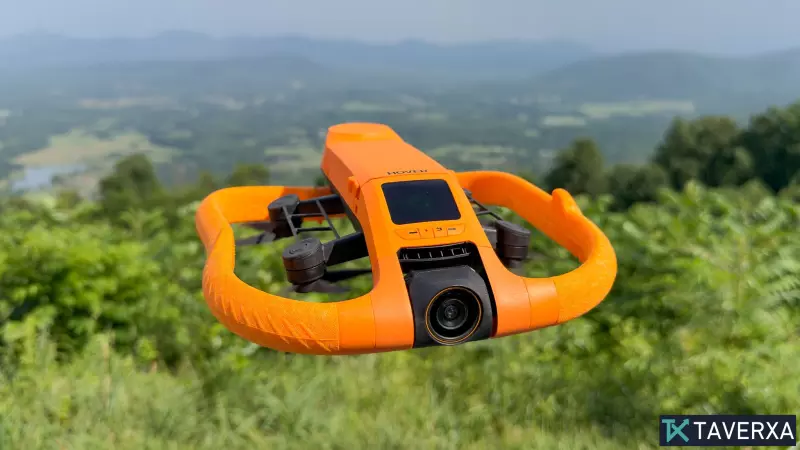
A New Frontier in Aerial Photography: Drones That Embrace the Water
For years, the greatest fear of any drone pilot has been the dreaded 'water landing.' Whether due to a signal loss, a depleted battery, or a simple piloting error, a plunge into a lake or ocean usually meant the permanent end of a costly piece of equipment. However, the HoverAir Aqua aims to erase that anxiety entirely. Designed specifically for water sports and coastal environments, this IP67-rated drone transforms the water from a hazard into a landing pad.
During a rigorous real-world test on the beaches of the Outer Banks, North Carolina, the HoverAir Aqua proved that its rugged engineering isn't just a gimmick—it's a game-changer for adventurers who want high-quality footage without the high-stress fear of equipment loss.
Technical Specifications at a Glance
- Price: Starts at $1,299 (Standard Combo)
- Weight: 249g (Ultra-lightweight)
- Camera: 1/1.28-inch CMOS sensor
- Video Quality: Up to 4K at 100fps
- Flight Time: Rated up to 23 minutes
- Durability: IP67 Water Resistance
- Storage: 128GB internal memory
The Standout Features: Buoyancy and Bravery
Water-Proof and Water-Proofing
The most striking feature of the HoverAir Aqua is its integrated foam propeller guards. These aren't just for safety; they act as personal flotation devices. In testing, the drone floated effortlessly on calm water, allowing it to take off and land directly from a pool or the shoreline. This capability is revolutionary for filming surfing, jet-skiing, or kayaking, where traditional drones would be too risky to operate.
The 'Magic' Self-Righting Mechanism
Beyond simply floating, the Aqua features a self-righting mechanism. If a wave or a splash flips the drone upside down, it can autonomously flip itself back over and resume flight. This feature not only provides a safety net but also serves as an impressive display of engineering that makes the drone feel virtually indestructible in aquatic environments.
Confidence in Tight Spaces
The foam 'pool noodle' guards serve a dual purpose. While they provide buoyancy, they also act as heavy-duty bumpers. This makes the Aqua exceptionally safe to fly in confined areas. During testing, the drone was flown directly through the open doors of a parked vehicle—a maneuver that would typically result in shattered props or damaged paint with a standard drone.
Operational Versatility: How to Fly the Aqua
The HoverAir Aqua offers a modular approach to control, catering to both casual users and cinematic creators:
- On-Board Controls: A bright 1.6-inch AMOLED screen on top of the drone allows for quick mode changes and settings adjustments with helpful auditory cues.
- The Lighthouse Beacon: A wearable RTK (Real-Time Kinematic) tracking beacon can be strapped to the arm. This creates a precise virtual tether, ensuring the drone stays locked on the subject even if water spray temporarily obscures the camera's view.
- Smartphone Integration: Using Wi-Fi, users can control the drone via a touchscreen app for a traditional cinematic experience.
- Land and Sea Combo: For those requiring surgical precision, a dedicated joystick remote controller is available, snapping onto the phone for a more tactile flying experience.
The Trade-Offs: What Comes with the Ruggedness?
Innovation rarely comes without a cost. To achieve its waterproof and buoyant nature, the HoverAir Aqua makes a few significant compromises.
Acoustic Intensity
Unlike the stealthy flight of a DJI Mavic Mini, the Aqua is remarkably loud. Due to its smaller propellers and aerodynamic drag from the foam guards, it emits a high-pitched, buzzy whirr. It is far from a stealth drone and will likely attract attention whenever it is in the air.
Limited Obstacle Avoidance
Because it is designed for wide-open spaces (like lakes and beaches), the Aqua's obstacle avoidance is limited to downward-facing radar. While it tracks subjects well in the open, it struggles with lateral obstacles. Testing revealed that it can collide with structures like gazebos or trees if the path isn't clear, meaning pilots must remain vigilant in wooded or urban areas.
Battery Endurance
While rated for 23 minutes, real-world usage—including launch and framing—averages between 15 to 18 minutes per battery. This is a noticeable drop compared to the 30+ minutes seen in non-waterproof competitors, a direct result of the added weight and drag of the flotation system.
Final Verdict: Is it Worth the Plunge?
The HoverAir Aqua is a highly specialized tool. If you are a typical landscape photographer, the high price tag and loud noise may be deterrents. However, for the water sports community, it is an essential piece of gear. It removes the psychological barrier of flying over water, allowing for creative shots that were previously impossible or too risky.
Rugged, buoyant, and genuinely fun, the HoverAir Aqua is the ultimate companion for anyone whose summer is spent on the water.