Ghost Font: The Clever Optical Illusion That Stumps AI
Discover Ghost Font, a clever motion-based optical illusion that humans can read instantly but leaves many modern AI models struggling to decode.
In an era where Artificial Intelligence can instantly transcribe audio, recognize complex handwriting, and analyze intricate imagery, a new challenge has emerged that leaves many models perplexed: 'Ghost Font.' This innovative, experimental typography project, created by designer Eric Lu, is sparking conversation about the fundamental differences between human perception and machine vision.
What Exactly is Ghost Font?
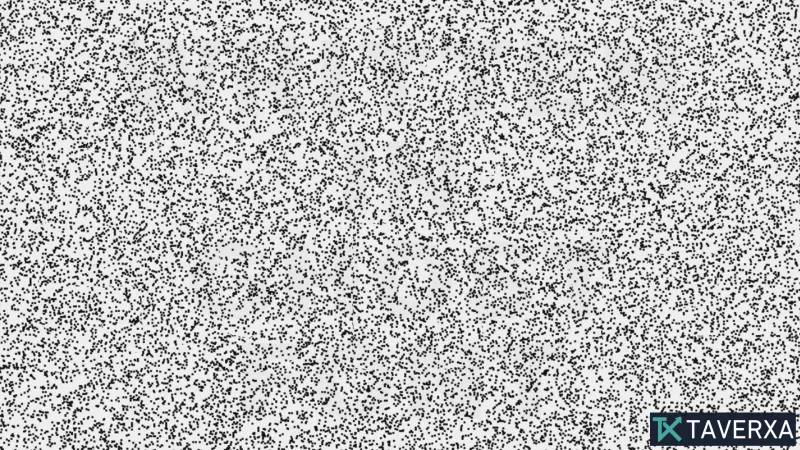
Unlike traditional fonts that rely on fixed, high-contrast outlines to define characters, Ghost Font is a dynamic, motion-based illusion. It creates letters using hundreds of tiny, moving dots. The dots forming the letters move in one direction, while the background dots drift in another.
When a human observes this animation, our brains naturally process the motion, allowing us to recognize the shapes almost instantly. However, when the animation stops, the effect vanishes, leaving only a chaotic, unreadable pattern of dots.
The AI Blind Spot
Many modern multimodal AI models analyze visual information as a sequence of discrete snapshots. Because Ghost Font lacks the static edge-detection patterns these systems are trained to recognize, the technology often struggles to isolate the moving letters from the decoy background.
While this is a fascinating experiment, it is crucial to note that Ghost Font is not a form of encryption. It does not provide true security; given enough time and advanced optical-flow processing, AI systems can eventually learn to decipher the message. However, the project serves as a compelling reminder that there are still unique aspects of human visual cognition that remain a hurdle for current machine learning architectures.
Putting It to the Test
For those interested in exploring this phenomenon, the project is open to the public at GhostFont.org. By generating your own message and uploading it to various AI chatbots like ChatGPT, Claude, or Gemini, you can observe how different models interpret—or fail to interpret—the visual data. Some models may default to identifying the decoy text, while others might guess incorrectly, showcasing the variable success of AI in decoding dynamic visual puzzles.