Fragile Diplomacy: Will US-Iran Peace Talks Survive the Latest Escalation?
As US and Iran trade strikes and violate a recent ceasefire MoU, will diplomacy prevail or is the region heading toward a full-scale war? Explore the depth of the conflict.
A Seesaw of Diplomacy and Destruction
The geopolitical landscape in the Middle East has once again been plunged into uncertainty following a volatile week of military exchanges between the United States and Iran. Just weeks after signing a Memorandum of Understanding (MoU) intended to pave the way for a lasting peace deal, both nations have reverted to a cycle of strategic strikes and public vitriol. Despite the escalating violence, US officials insist that the door to diplomacy remains open, raising critical questions about whether a peaceful resolution is still attainable.
The Anatomy of a Recent Escalation
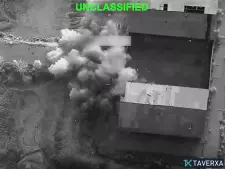
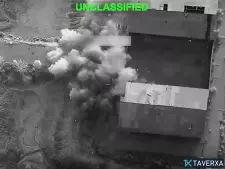
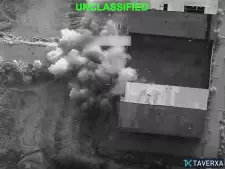
The current crisis was triggered by a dispute in the Strait of Hormuz, one of the world's most vital maritime chokepoints. Tensions flared when the Islamic Revolutionary Guard Corps (IRGC) attacked commercial vessels, alleging that the ships had deviated from an IRGC-approved route. In response, the US launched a massive wave of strikes on 85 targets within Iran between Tuesday and Wednesday.
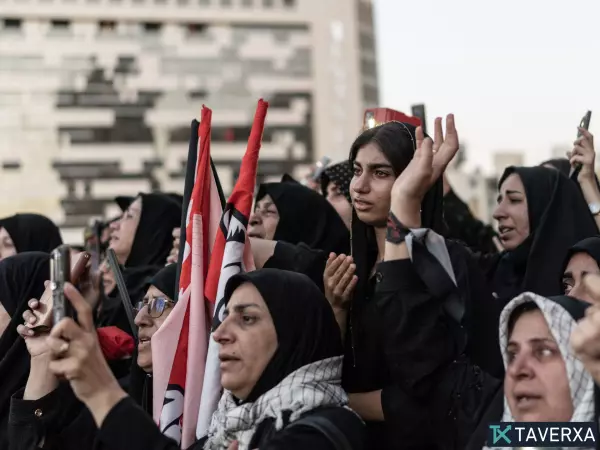
Tehran retaliated by targeting US military infrastructure in neighboring Gulf states, prompting a second US offensive that hit 90 more targets, including coastal and eastern provinces. Iranian officials have labeled these strikes as "war crimes," claiming that civilian infrastructure was caught in the crossfire. The violence occurred during a particularly sensitive time, coinciding with the state funeral processions for the late Supreme Leader Ayatollah Ali Khamenei, who was killed in earlier US-Israeli strikes in February.
Conflicting Signals from the White House
The prospect of peace has been further complicated by the erratic messaging from US President Donald Trump. During a NATO summit in Ankara, Trump declared the MoU "over," describing the Iranian leadership in derogatory terms and suggesting that further negotiations would be a "waste of time."
However, by Thursday, the President appeared to pivot, stating aboard Air Force One that a full-scale war is not the objective and acknowledging that Tehran "wants to make a deal." This duality—publicly condemning the Iranian regime while privately allowing negotiators to continue their work—has left international observers guessing about Washington's true strategic intent.
The Terms of the Fragile MoU
Signed on June 17, the MoU established a 60-day ceasefire window to negotiate a permanent agreement. The key pillars of the deal included:
- Cessation of Hostilities: An immediate end to military operations on all fronts, specifically including Lebanon.
- Maritime Security: The US agreed to lift its naval blockade of the Strait of Hormuz, while Iran guaranteed the safe passage of commercial ships.
- Economic Incentives: The US pledged to lift sanctions on Iranian oil.
- Nuclear Constraints: Iran reaffirmed its commitment to not develop nuclear weapons.
Points of Contention and "Vague" Wording
Analysts argue that the MoU was doomed by its ambiguity. In the Strait of Hormuz, the agreement failed to define which shipping routes were "safe," leading to a conflict between IRGC-approved paths and older routes preferred by Oman and the US. Iran views the use of non-approved routes as a breach of sovereignty, while the US views Iranian attacks on those ships as a violation of the ceasefire.
Furthermore, the Lebanon clause has become a major sticking point. While the US and Iran agreed to end operations in Lebanon, Israel—which is not a signatory to the MoU—continued its bombardment and occupation of southern Lebanon. Iran argues that the US cannot guarantee a ceasefire if it allows its closest ally to continue military operations.
Will the Talks Resume?
With the state funeral of Ayatollah Ali Khamenei concluded in Mashhad, the window for talks to resume around July 11 has opened. However, the trust deficit is at an all-time high. Iranian officials, including Parliament Speaker Muhammad Ghalibaf, have denounced US "bullying" and warned that further strikes will meet a proportional response.
Despite the gloom, some experts believe negotiations are still likely. Alex Vatanka of the Middle East Institute suggests that Tehran may now view "calibrated military pressure" and diplomacy as parallel tracks rather than contradictions. Ultimately, neither Washington nor Tehran seems prepared for the economic and human cost of a total, full-scale war, making a return to the negotiating table the most pragmatic—albeit fragile—path forward.