Europe's Strategic Pivot: The Launch of the Integrated Anti-Ballistic Missile Coalition
Nine European nations and Ukraine launch the Integrated Anti-Ballistic Missile Coalition to reduce reliance on US tech and counter Russian missile threats.
A New Era of European Defense Sovereignty
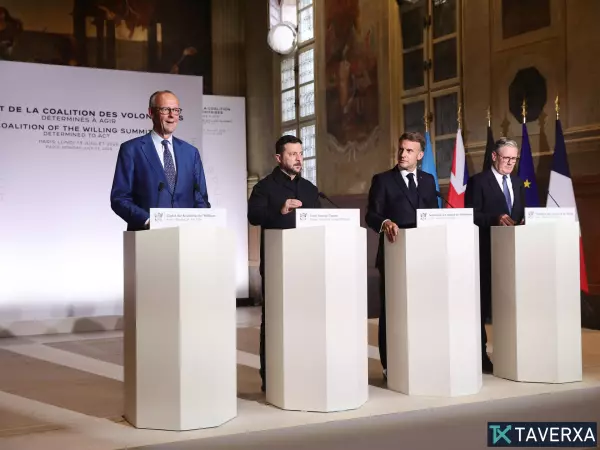
In a landmark move toward strategic autonomy, the leaders of nine European nations and Ukraine convened in Paris on Monday to unveil the Integrated Anti-Ballistic Missile Coalition. This joint program aims to establish a sophisticated, indigenous missile defense architecture, moving away from a heavy reliance on non-European technology and funding. The coalition represents a critical shift in how the continent views its security in the face of an evolving threat landscape dominated by Russia's missile capabilities.
The initiative was announced during the 'Coalition of the Willing' summit—a broader group of 35 nations coordinated by France and the UK to support Ukraine. While the larger summit touched upon arms deliveries and energy security, the creation of this specific anti-ballistic shield serves as a direct response to the vulnerabilities exposed by the ongoing conflict in Ukraine.
The Strategic Motivation: Breaking the Dependence on Washington
For decades, Europe has leaned heavily on the United States for high-end missile defense. The US-made Patriot system has been the gold standard, but the war in Ukraine has highlighted two critical flaws: cost and scarcity. Patriot interceptors are prohibitively expensive, costing millions of dollars per missile, and production lines are struggling to meet the global surge in demand.
French President Emmanuel Macron emphasized that the program is a choice to "build the Europe of defence," signaling that the continent can no longer depend solely on Washington's goodwill or industrial capacity. By creating a shared industrial base and technological framework, the coalition hopes to produce interceptors that are not only effective but sustainable and affordable.
Who is Leading the Charge?
The coalition is composed of ten founding members: Denmark, France, Germany, Italy, the Netherlands, Norway, Spain, Sweden, the United Kingdom, and Ukraine. This grouping combines Europe's most powerful defense industries with the unique, real-world combat data provided by Ukraine.
Notably absent from the initial signing are Poland, Finland, and the Baltic states—countries that sit on the front lines of the Russian border. Their absence, along with that of the United States, suggests a complex diplomatic landscape where different European blocs are weighing various procurement strategies, such as the German-led European Sky Shield Initiative (ESSI), which France has historically viewed with skepticism due to its heavy reliance on US and Israeli tech.
The 'Ukrainian Factor': From Victim to Architect
Ukraine is not merely a recipient of aid in this coalition; it is a primary technical partner. As Olesia Horiainova of the Ukrainian Security and Cooperation Centre notes, Ukraine possesses a unique level of expertise in countering massive barrages of high-tech ballistic weapons—experience that even the US military lacks in the current era.
Kyiv brings two major assets to the table:
- Combat Intel: Deep knowledge of how to neutralize Russian Iskander and Kinzhal missiles.
- Innovation: The domestic Freyja interceptor program, which aims to provide a low-cost alternative to the Patriot.
The economic logic is simple: if Europe can mass-produce interceptors based on Ukrainian models or licensed Patriot technology manufactured within the region, the cost per kill would drop significantly, allowing for a much denser and more effective shield across the continent.
Challenges and the Road Ahead
While President Volodymyr Zelenskyy has expressed optimism that a mass-produced, low-cost system could be operational within 12 months, military analysts remain cautious. The gap between a diplomatic declaration and a functioning battery of missiles is vast. Bureaucratic hurdles within the EU and the inherent complexity of aerospace engineering often lead to delays.
Skeptics point to Germany's recent procurement of the Israeli Arrow 3, which took years to activate and is not expected to be fully operational until 2030. The success of the Integrated Anti-Ballistic Missile Coalition will depend on whether these ten nations can truly synchronize their industrial capacities and bypass traditional procurement sluggishness to meet the urgency of the current geopolitical crisis.