Escalation in the Gulf: US Air Strikes Target Iran as Ceasefire Teeters on the Brink
Detailed analysis of the latest US military air strikes across Iran, the resulting regional retaliation, and the critical threat to global energy choke points like the Strait of Hormuz.
A Region on the Edge of Total War
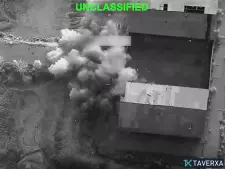
The geopolitical landscape of the Middle East has shifted violently as the United States military launched a massive campaign of hundreds of air strikes across Iranian territory over the past week. According to Iranian health officials, the onslaught has resulted in at least 35 deaths and approximately 300 injuries, marking a severe escalation in hostilities that threatens to dismantle a fragile ceasefire agreement.
Adding to the intensity of the conflict, the United States has reimposed a stringent naval blockade on Iran. Washington maintains that its targets are exclusively military installations, specifically those positioned along Iran's southern coastline and in strategic proximity to the Strait of Hormuz. However, these actions come at a time when both nations had previously signaled a move toward de-escalation, leaving the international community fearing a return to all-out war.
Iran's Regional Retaliation and International Outcry
Iran has not remained passive in the face of these strikes. In a reciprocal move, Iranian forces have targeted US military facilities across several neighboring countries. This regional sprawl of conflict has drawn sharp condemnation from the Gulf Cooperation Council (GCC). Secretary-General Jasem al-Budaiwi described the attacks on Bahrain, Kuwait, and Jordan as "treacherous," noting that strikes on critical infrastructure and the injury of Kuwaiti military personnel have pushed the region toward "further chaos and instability."
The escalation is not limited to direct strikes; Qatar and the United Arab Emirates have reported the interception of multiple missiles and drones in recent days, highlighting a volatile environment where regional allies of the US are now squarely in the crosshairs.
Strategic Mapping: The Geography of the Strikes
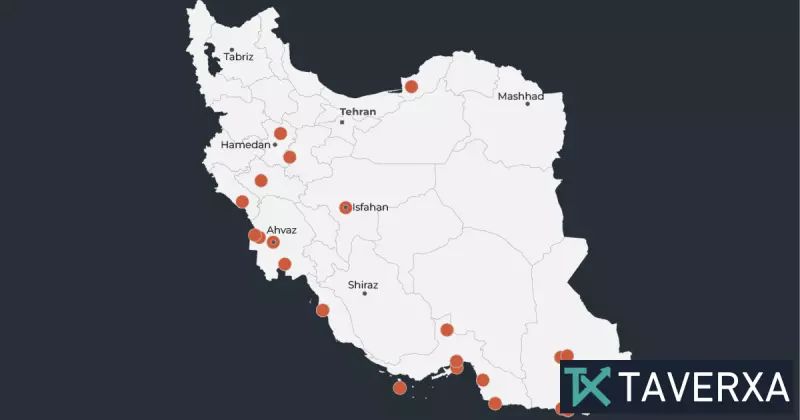
The scale of the US campaign is evident in the sheer number of Iranian cities and islands reported to have been hit. Iranian media has confirmed explosions in a wide array of locations, including major hubs like Isfahan and Ahvaz, as well as strategic coastal and island outposts such as Bandar Abbas, Bushehr, Chabahar, Qeshm, and Sirik. Other targeted areas include Aqqala, Bampur, Dasht-e Azadegan, Dehloran, Farvar, Hajiabad, Hoveyzeh, Iranshahr airport, Jask, Kabudarahang, Khondab, Konark, Bandar-e Mahshahr, and Vesiyan.
Data from the Armed Conflict Location and Event Data (ACLED) project suggests this is part of a broader pattern, with strikes also recorded in May and June targeting the Shahid Raahbar naval base and other coastal sites. The focus on the southern coast is no coincidence; Iran utilizes more than 30 islands in these waters to form a "defensive arc," allowing them to monitor global shipping and deploy advanced missile and drone systems to protect their oil and gas infrastructure.
The Choke Point Crisis: Hormuz and Bab al-Mandeb
Central to this conflict is the Strait of Hormuz, the world's most vital energy artery. Before the current conflict erupted on February 28, roughly 100 ships transited the strait daily, transporting about 20 million barrels of crude oil—representing one-fifth of total global consumption.
While a preliminary memorandum of understanding (MoU) on June 17 briefly reopened the waterway, traffic has remained alarmingly low. PortWatch data reveals that between June 18 and July 12, an average of only 24 ships passed per day. With the current US blockade of Iranian ports, experts warn the strait could reach a complete standstill.
Furthermore, there are growing concerns regarding Bab al-Mandeb, the strategic link between the Red Sea and the Indian Ocean. Iran has hinted at using Houthi allies in Yemen to close this second choke point. If both the Strait of Hormuz and Bab al-Mandeb were closed, approximately 25% of the world's energy trade and a significant portion of Asia's exports to Europe would be paralyzed. The stakes are summarized by the critical percentages of global maritime oil and LNG trade passing through these points: the Strait of Hormuz handles 27% of oil and 20% of LNG, while Bab al-Mandeb and the Suez Canal each handle roughly 11% of maritime trade and 8% of LNG.
The Deterrent Dilemma
Defense analysts, including Tehran-based expert Mehdi Yazdi, argue that the Strait of Hormuz is Iran's only remaining effective deterrent. Yazdi suggests that any negotiation requiring Iran to abandon its influence over the strait would strip the nation of its primary leverage. Consequently, as long as the US continues to operate from regional bases to strike Iranian soil, Tehran views those bases as legitimate military targets, ensuring a cycle of retaliation that shows no sign of easing.