Crisis in the Congo: Ebola Treatment Center Paralyzed by Staff Strikes Amid Record Outbreak
Staff at a key Ebola treatment center in DR Congo strike over unpaid wages as the virus spreads to two new provinces in Africa's worst outbreak.
A Healthcare System at a Breaking Point
The Democratic Republic of the Congo (DRC) is currently facing a public health catastrophe as the most severe Ebola outbreak in African history continues to escalate. The situation reached a critical tipping point this week when essential staff at the Rwampara General Hospital in Ituri province—the epicenter of the crisis—staged a massive walkout. The strike has effectively brought one of the region's primary treatment facilities to a complete standstill, leaving patients vulnerable and the virus unchecked.
The walkout was triggered by severe payroll failures, with health workers alleging they have not received wages for several months. The striking personnel include a wide spectrum of critical frontline responders, including epidemiologists, case investigators, drivers, and gravediggers. Bahati Claude, a health worker at the center, expressed the desperation of the staff, questioning how it was possible for the government to fail in providing payments for two consecutive months while the crisis intensified.
Rapid Geographical Expansion
The timing of the labor unrest could not be more perilous. The DRC’s National Public Health Institute recently confirmed that the virus has leaped beyond its initial clusters into two additional northeastern provinces: Haut-Uele and Tshopo. This expansion means that five provinces are now actively grappling with confirmed cases, signaling a dangerous acceleration of the virus's spread.
According to the latest official data, the toll of the outbreak has risen to 1,926 confirmed cases, resulting in 702 deaths. The World Health Organization (WHO) has issued an urgent plea for an accelerated response, calling for synchronized efforts from local, national, and international partners to prevent a total collapse of containment efforts.
Complex Barriers to Containment
The medical crisis is compounded by a volatile security and social landscape. In northern DRC, paramilitary rebels continue to fight for control over mineral-rich territories, often obstructing the movement of health workers and humanitarian aid. This insecurity makes it nearly impossible to maintain a consistent surveillance and vaccination network.
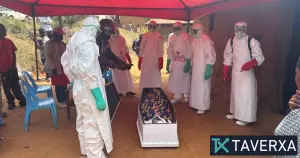
Beyond the conflict, health officials are battling a tide of misinformation. Deeply rooted cultural burial practices and a pervasive distrust of government authorities have led to tragedies. In some communities, Ebola has been mischaracterized as a form of witchcraft, leading to violent attacks on health workers. Families, clinging to traditional rites, have frequently ignored safety protocols to hold traditional burials, inadvertently triggering new clusters of infection.
Economic Fallout and Global Risks
The United Nations has warned that the human cost is mirrored by a devastating economic collapse. The outbreak has already pushed nearly one million people into extreme poverty, disrupting agriculture and trade. The International Rescue Committee (IRC) further warned that as transmission accelerates in the heart of the DRC, the risk of the virus crossing borders into neighboring South Sudan is becoming an imminent threat.
The global reach of the virus was highlighted on Monday when a second United States citizen—a man in his 60s working for a Christian aid organization—was admitted to a special isolation unit at Frankfurt University Hospital in Germany. While his condition is currently reported as stable, the case underscores the risks faced by international aid workers operating in the region.
Government Response
DRC Health Minister Roger Kamba has acknowledged the payroll disputes, citing administrative challenges and errors in employee lists as the primary cause for the delay in payments. Kamba assured the public and the striking workers that the government possesses the means to resolve the issue and is working to ensure that the correct personnel are paid immediately. However, for the thousands of people in the path of the virus, the hope is that these administrative hurdles are cleared before the outbreak spirals further out of control.