Breaking the Dependency: Can Nigeria's Drone Innovation Secure Africa's Defence Sovereignty?
Explore how Nigeria's Terra Industries is challenging foreign defense dependencies through indigenous drone manufacturing and its impact on African security.
The Era of Foreign Reliance in African Defence
For decades, the security landscape across the African continent has been characterized by a deep-seated dependency on external powers. From Turkish Bayraktar drones patrolling borders to Chinese surveillance networks in urban centers and Russian aircraft serving as the backbone of national air forces, African nations have historically been positioned as consumers rather than creators of military technology. This reliance creates a strategic vulnerability, where national security is often tied to the political whims and supply chains of foreign capitals.
However, a new wave of indigenous innovation is emerging from West Africa, aiming to pivot the continent from a buyer's market to a production hub.
Terra Industries: A New Frontier in Indigenous Tech
At the center of this shift is Terra Industries, an ambitious Abuja-based start-up founded in 2024 by young entrepreneurs Nathan Nwachuku and Maxwell Maduka. Unlike many tech firms that act as mere assemblers of imported kits, Terra Industries is pushing for true vertical integration. The company designs and manufactures its own software, airframes, propellers, and lithium-ion battery packs.
Remarkably, over 70 percent of the inputs for their systems are sourced locally, marking a significant departure from the standard industry model in the region. Their current portfolio includes advanced drones, autonomous surveillance towers, and unmanned ground vehicles (UGVs). These systems are already operational across eight African countries and Canada, protecting strategic assets valued at approximately $11 billion, including gold mines, oil refineries, and power plants.
Addressing the Modern Security Imperative
The demand for locally produced drones is driven by the evolving nature of conflict in Africa. In the Sahel region, the proliferation of inexpensive commercial drones has transformed the battlefield. Groups such as Jama’at Nusrat al-Islam wal-Muslimin (JNIM) have increasingly utilized drone technology for attacks, with data from the Armed Conflict Location and Event Data (ACLED) showing a surge in such activities through 2025.
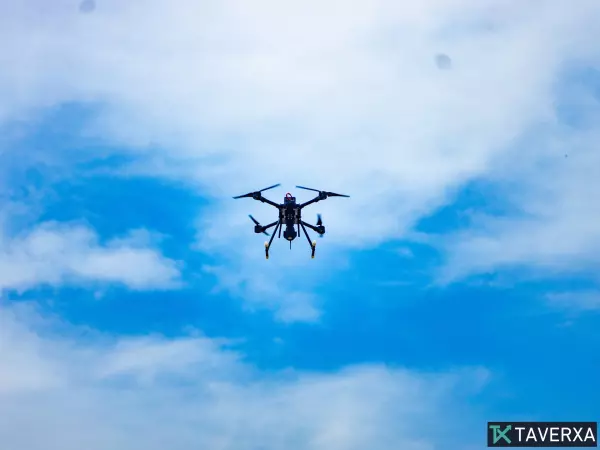
In response to these asymmetrical threats, Terra Industries developed the Kama interceptor drone. Capable of reaching speeds of 300kph, the Kama is designed to neutralize hostile drones in environments where traditional, multi-million dollar air defense systems are either too costly or impractical to deploy. Furthermore, the Archer drone provides persistent aerial surveillance, a critical tool for coastal states battling piracy in the Gulf of Guinea and nations struggling with porous borders.
Scaling for Global Impact
Terra Industries is not looking merely at the domestic market. The company is currently expanding its footprint, with a second production facility in Ghana poised to become Africa's largest drone manufacturing hub. By 2028, the goal is to reach an annual production capacity of 50,000 units.
CEO Nathan Nwachuku views this as a blueprint for the Global South. "The threats our systems are designed to address exist across South Asia and South America," Nwachuku stated, noting that these regions share the same dependency on foreign suppliers and face similar security challenges.
The Venture Capital Surge
The financial world has taken notice of this potential. Terra Industries recently secured $34 million in seed funding, one of the largest early-stage rounds in the history of African technology. The investment was led by 8VC, founded by Palantir co-founder Joe Lonsdale, with additional backing from Lux Capital and Valor Equity Partners—firms known for supporting disruptive defense giants like SpaceX and Anduril.
This level of investment signals a growing confidence in Africa's ability to compete in the high-stakes arena of advanced manufacturing and defense tech.
The Sovereignty Debate: Production vs. Power
Despite the technological triumphs, experts warn that manufacturing capacity does not automatically equate to defence sovereignty. Janice Greaver of the Pan African Sustainable, Innovation and Development Associates (PASIDA) argues that the lack of oversight and accountability remains a critical hurdle.
Greaver points out that local sourcing is a positive step, but true sovereignty requires clear ownership of intellectual property and robust civil society oversight. Without these, there is a risk that nations are simply trading a dependency on foreign governments for a dependency on unaccountable domestic private capital.
As Nigeria and other African nations continue to innovate, the ultimate measure of success will not be how many drones they can build, but whether they can establish the institutional frameworks necessary to regulate, manage, and sustain these technologies independently.